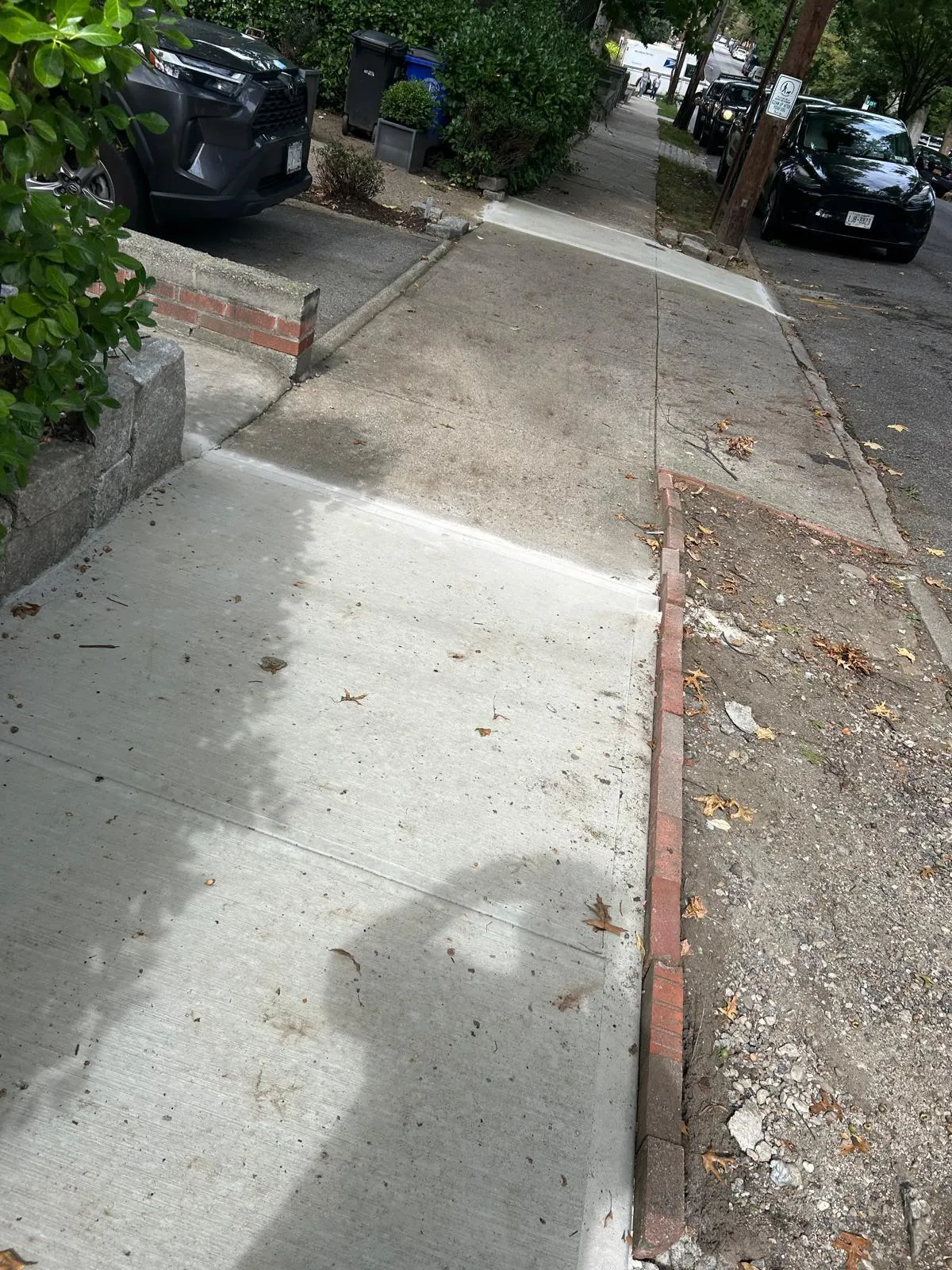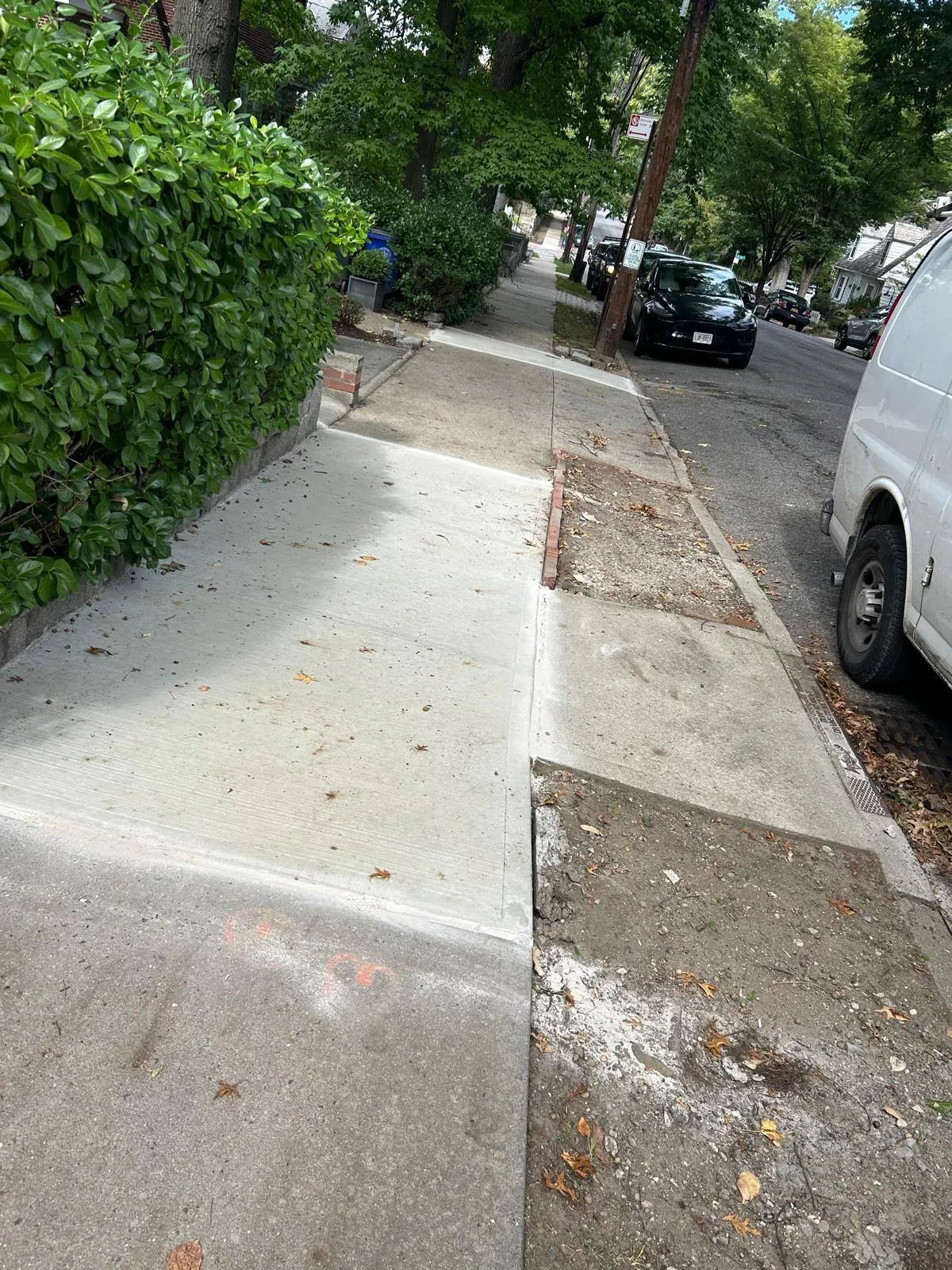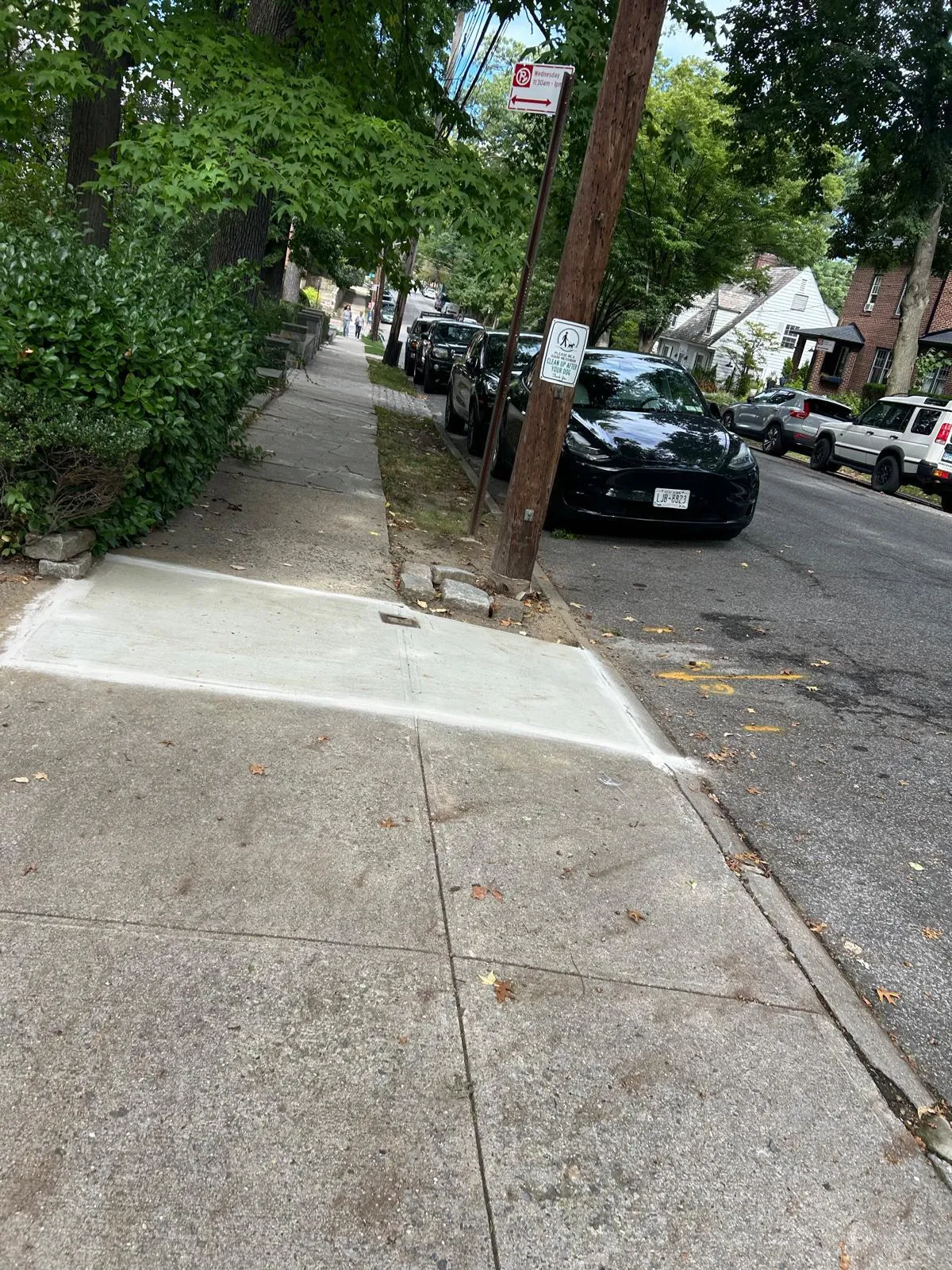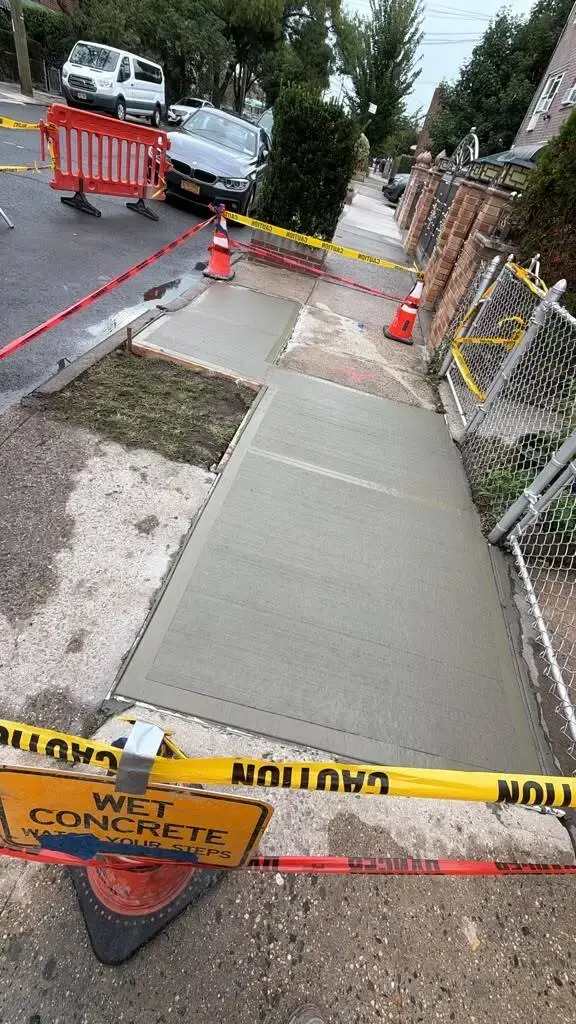
Most homeowners don't think about their sidewalk until a violation notice arrives in the mail. At a brick home in Spuyten Duyvil, years of daily use had worn five slabs down to the point where the surface was uneven and unsafe to walk on. The owner received a DOT notice, searched online for help, and found our crew at Sidewalk Repair Contractors Bronx. Here is how we took the project from that first call to a closed violation.
- Project
- Trip Hazard Repair and NYC DOT Sidewalk Violation Removal
- Client
- Residential Homeowner
- Location
- 3021 Arlington Ave, Bronx, NY 10463
- Neighborhood
- Spuyten Duyvil, Riverdale, Bronx
- Property Type
- Two-story, detached single-family brick residence
- Damage Cause
- General age-related wear and tear, combined with heavy foot traffic, caused deterioration of five concrete sidewalk slabs, resulting in uneven surfaces and pedestrian trip hazards.
- Services Provided
- Removal and replacement of five damaged sidewalk slabs, NYC DOT sidewalk construction permit filing, sidewalk closing permit coordination, 811 utility mark-out coordination, new concrete installation, and final NYC DOT violation dismissal inspection and sign-off.
- Estimated Project Cost
- Approximately $4,100, including required permits, approvals, concrete removal, and sidewalk replacement.
- Total Sidewalk Area Repaired
- Approximately 125 square feet / 5 concrete slabs
- Project Completion Time
- Up to approximately 60 days, covering permit coordination, construction, inspection, and final NYC DOT violation sign-off.
- How the Customer Found Us
- The homeowner found our company through a Google search after receiving an NYC DOT sidewalk violation notice and looking for a contractor to repair the damaged sidewalk and clear the violation.
What Caused the Damage
Not every failed sidewalk has a dramatic backstory. This one simply wore out. Concrete has a long life, but it is not permanent, and decades of weather combined with constant foot traffic gradually broke down the surface. Edges crumbled, slabs settled at different rates, and small height differences between neighboring sections grew into real trip hazards.
That kind of slow deterioration is easy to overlook from the front door. A DOT inspector walking the block does not overlook it. Raised or broken edges are one of the most common reasons a violation gets written, and a walkway used every day by residents, neighbors, and visitors only makes the problem more urgent.
Responsibility follows the property. Under NYC Administrative Code §7-210, the owner is responsible for maintaining the sidewalk in front of their building, no matter what caused the damage. Ordinary wear counts just as much as anything else, so a notice like this one is the owner's to resolve.
Site Assessment
During our visit, we identified five slabs showing enough wear to qualify as trip hazards, covering roughly 125 square feet. The damage was concentrated at the joints and edges, where height differences were most noticeable and the concrete had started to break apart.
Because the problem was widespread across those five slabs, a surface patch would not have held up or satisfied DOT. Replacing the affected slabs gave the homeowner a level, durable walkway and a repair that would stand up to inspection.
How We Handled the Process
Permits and Approvals
Before any concrete came out, we took care of the paperwork.
- Sidewalk Construction Permitthe main DOT authorization for removing and replacing the slabs
- Sidewalk Closing Permitto keep pedestrians clear of the work zone during construction
- 811 Utility Mark-Outrequested ahead of excavation so underground lines were identified before digging
Since no landmark or historic district designation was confirmed for the property, we did not need to add an LPC review to the timeline, and DOT's standard review track applied.
Construction
With permits in hand, the crew worked through the repair in stages.
- DemolitionThe five worn slabs were broken out and removed from the site.
- Base preparationThe subgrade was cleared, leveled, and compacted so the new concrete would sit on a firm, even bed.
- Concrete placementNew slabs were poured to DOT-required thickness, with expansion joints placed to handle future ground movement and limit cracking.
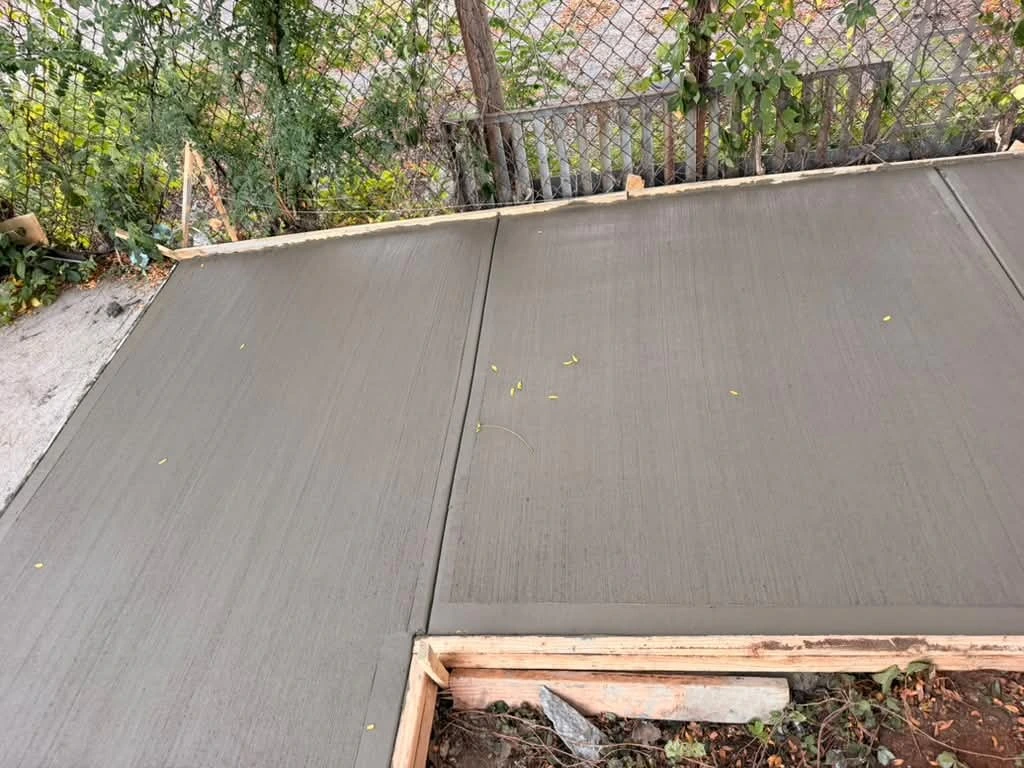
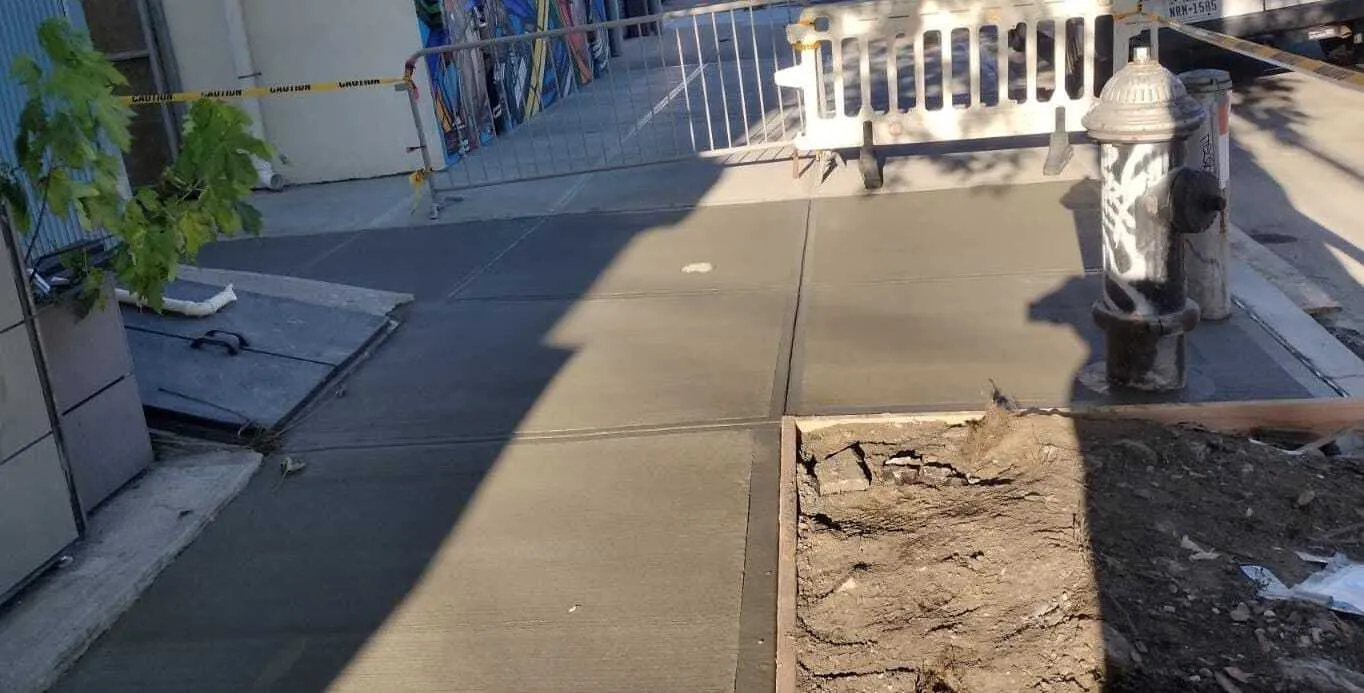
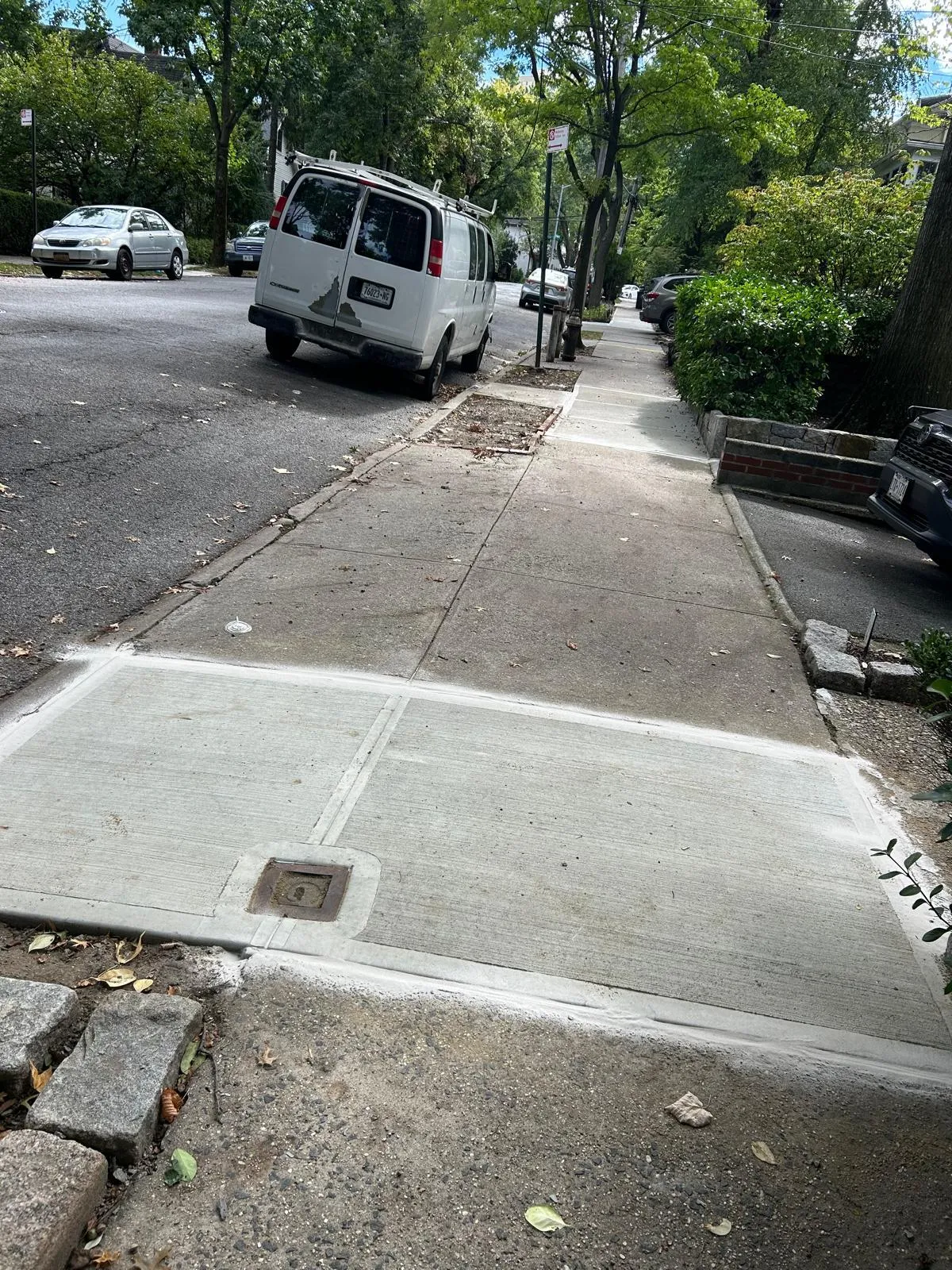
- Finishing and curingThe surface was finished flush with the neighboring sidewalk and left to cure before it was opened to foot traffic.
Final DOT Inspection
After the concrete cured, we scheduled the DOT inspection and attended it for the homeowner. The work met requirements, and the violation was dismissed and signed off.
Results
Five slabs, about 125 square feet of sidewalk, were replaced with smooth, level concrete. The trip hazards are gone, the walkway is safe for everyone who uses it, and the DOT violation has been cleared. The homeowner went from a stressful notice to a finished, compliant sidewalk without having to deal with the permits or inspections personally.
Client Testimonial
"When the violation notice came, I had no idea where to start, so I searched online and called these guys. They explained the whole process, handled every permit, and dealt with the inspection. The sidewalk looks brand new and the violation is gone."
Property Owner, Spuyten Duyvil, Bronx
Why Spuyten Duyvil Homeowners Choose Sidewalk Repair Contractors Bronx
A violation notice can feel overwhelming, especially when you have never dealt with DOT before. We take that weight off the homeowner by managing permits, utility mark-outs, construction, and the final inspection as one project. You get a single point of contact and a clear path from notice to sign-off.
Need Sidewalk Violation Repair in Spuyten Duyvil or Anywhere in the Bronx?
If wear, cracking, or uneven slabs have put your sidewalk out of DOT compliance, Sidewalk Repair Contractors Bronx handles the entire process, from permits and utility coordination to construction and final sign-off. Contact us today for a free estimate and a consultation with our trusted sidewalk experts.
Photos From This Job