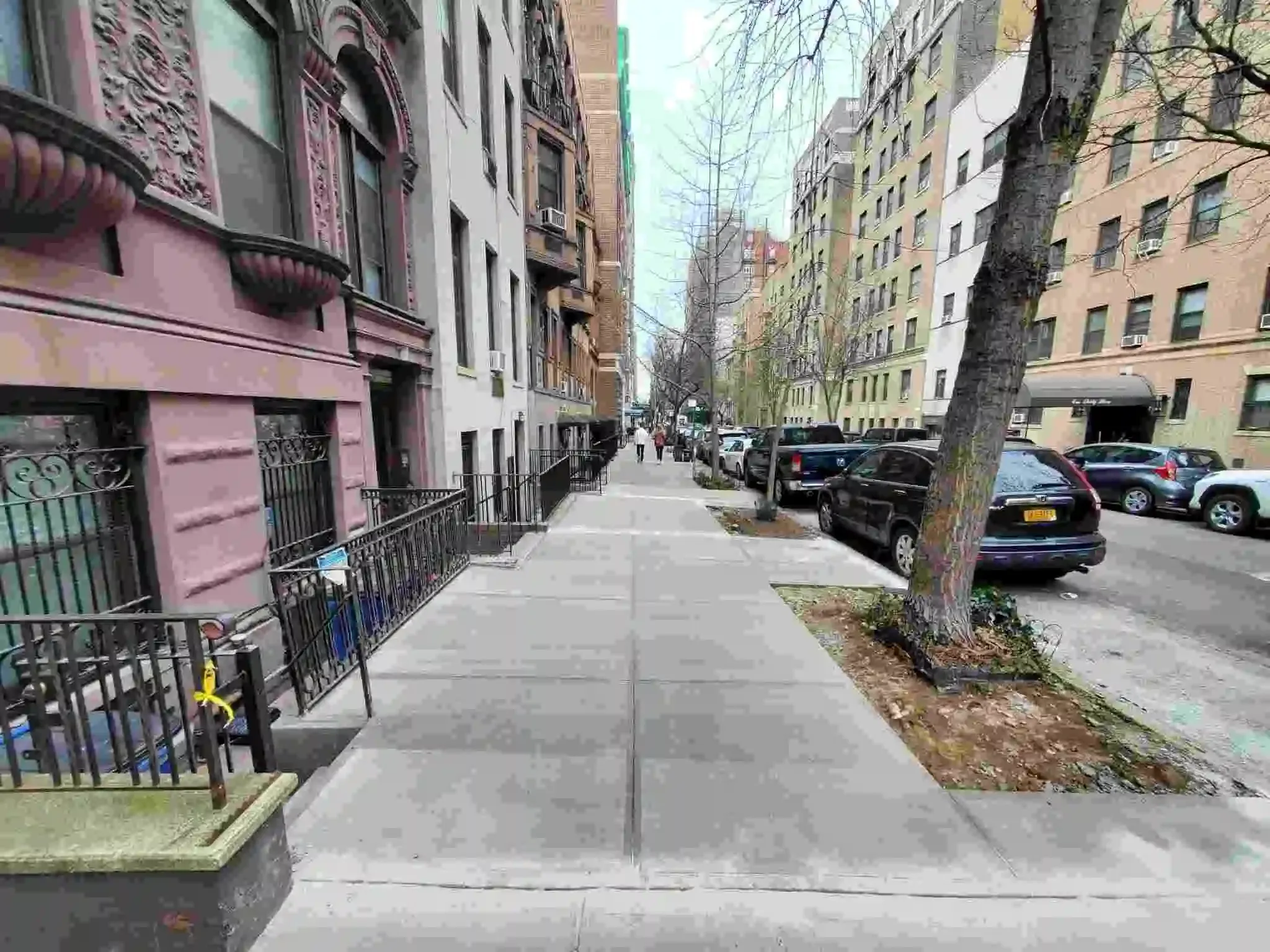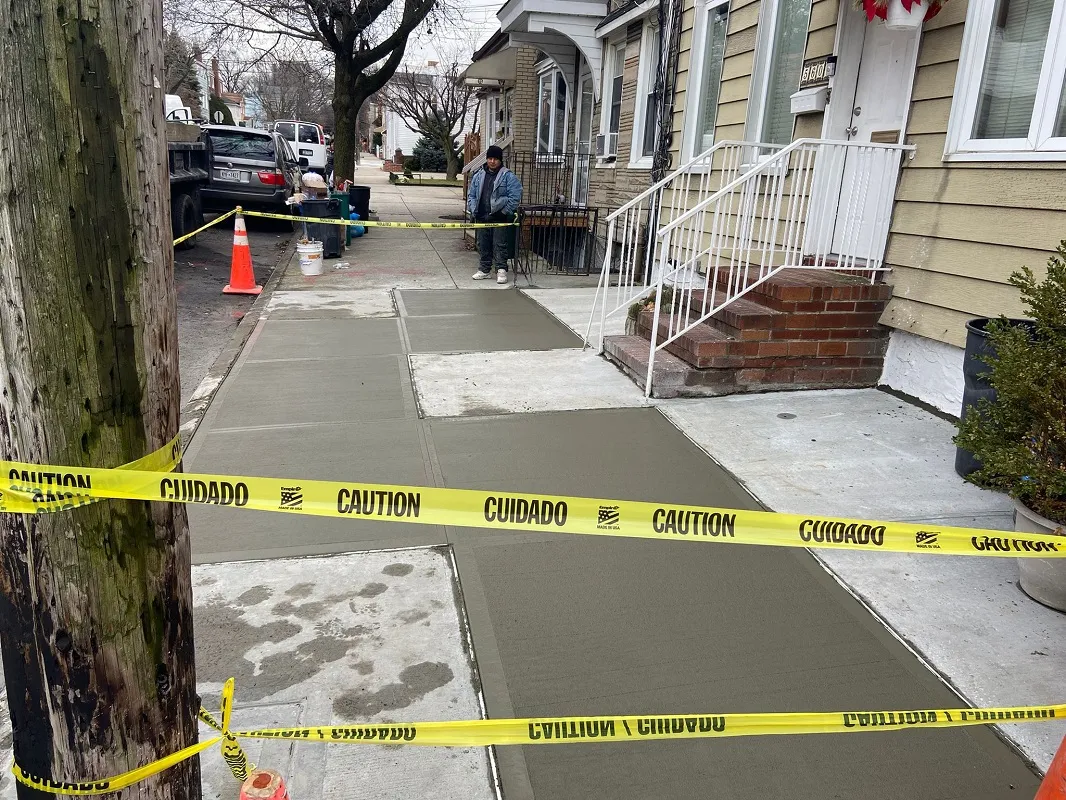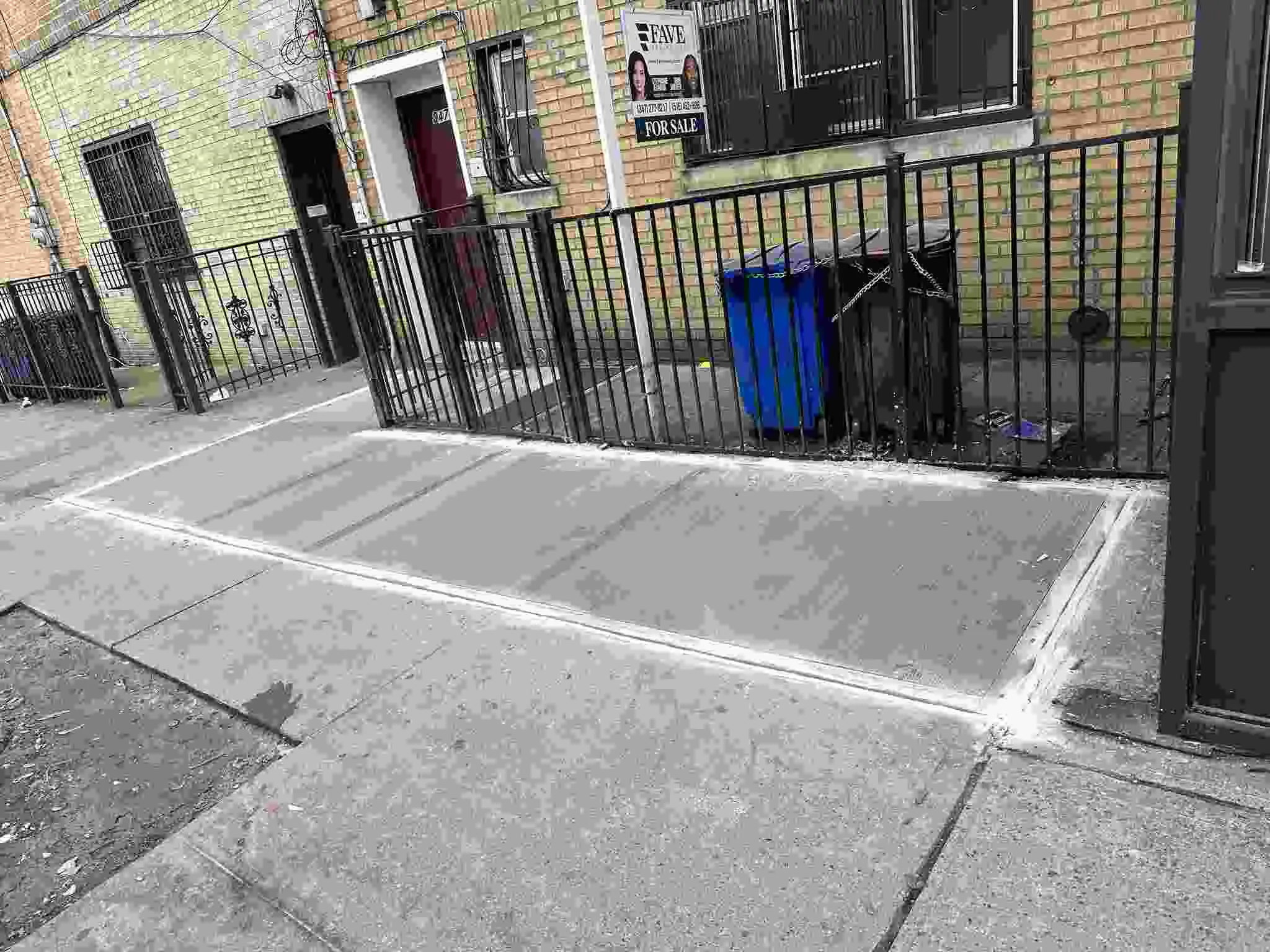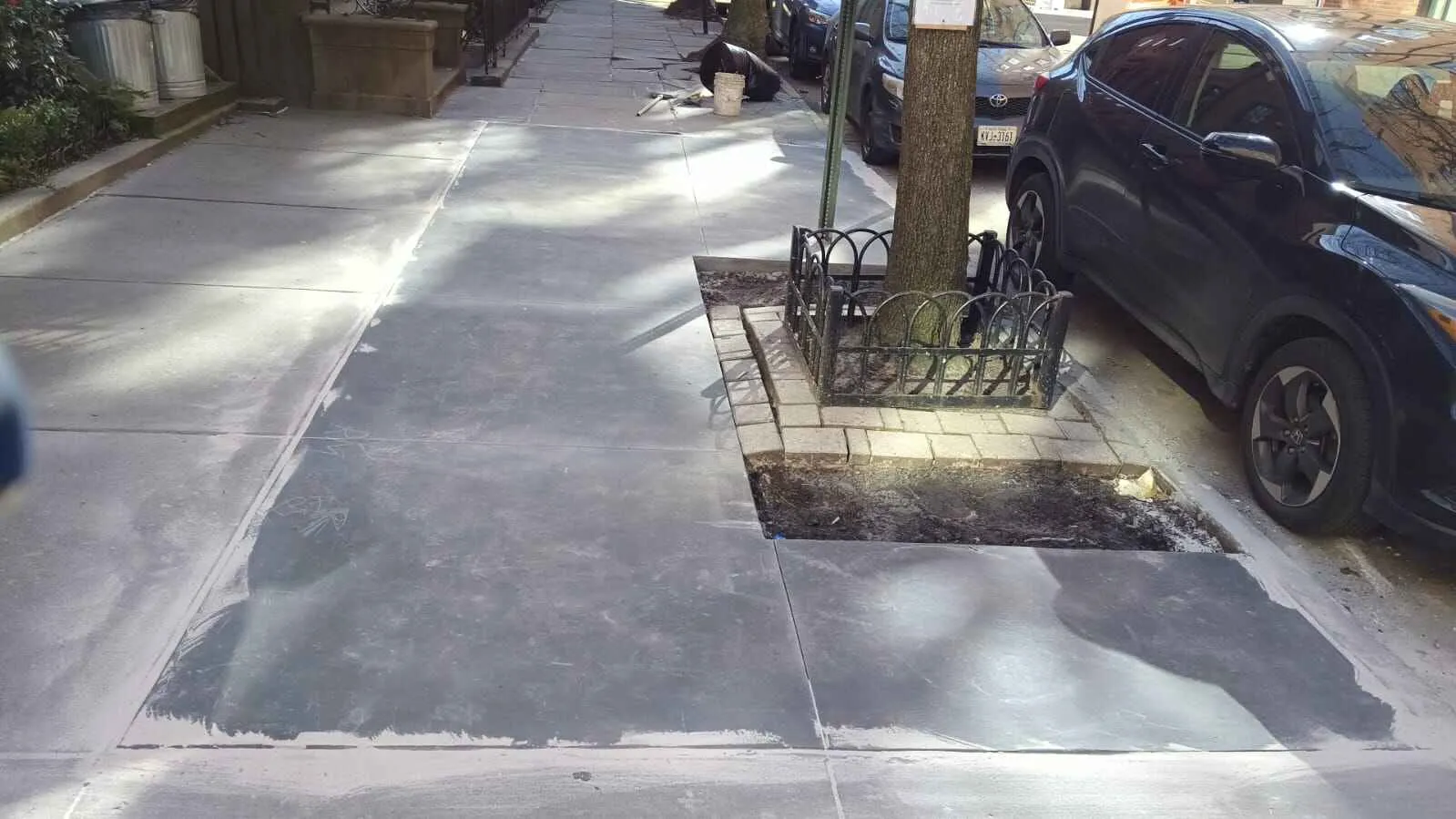
- Trip hazard
- Vertical difference between adjacent flags ≥ 1/2 inch
- Surface defect
- ≥ 1" in all horizontal directions and ≥ 1/2" deep
- Rocking flag
- An undermined flag with a visible void, or one that rocks or seesaws, is a defect
- Liability
- § 7-210: owners potentially liable for injuries from an unsafe sidewalk
- Accepted repair
- Full-depth flag replacement; patching individual flags is not permitted
You can measure this yourself in ten minutes
Unlike most of what gets discussed on contractor websites, "uneven" has an exact definition in New York City. Under § 19-152, a trip hazard exists where the vertical surface difference between adjacent sidewalk flags is greater than or equal to 1/2 inch.
Take a straightedge across the joint and a tape or coin to the gap. Half an inch is smaller than most owners expect: roughly the thickness of two stacked quarters. If you are at or over it, you have a citable condition whether or not an inspector has been down your block yet.
There is a second test that catches damage within a single flag rather than between two: a surface defect measuring 1 inch or more in all horizontal directions and 1/2 inch or more in depth also qualifies.
An undermined flag below which there is a visible void, or a loose flag that rocks or seesaws, is separately listed as a defect. Stand on each corner in turn: if it tips, the problem is under the slab, not on it.
Why Bronx flags go out of level
- Street tree roots. The leading cause on residential blocks. Roots thicken and lift the flag from below. They cannot be cut without written NYC Parks permission, so the repair has to be designed around them: see tree root damaged sidewalk repair.
- Base washout. Water moving fines out from under the slab, frequently traced to a downspout discharging straight onto the sidewalk line.
- Utility trench settlement. A cut backfilled without proper compaction keeps consolidating for years, and the flags above it follow.
- Frost heave. Freeze-thaw cycling lifting slabs seasonally, particularly where drainage is poor.
- Vehicle loading on pedestrian-spec concrete. A 4-inch flag driven over daily cracks and then steps.
Sunken flags: the same defect, from below
A flag can go out of level in two directions. The neighbours lift it, or its own support disappears and it settles. Concrete does not sink on its own: whatever is holding it up moves. So with a sunken flag the useful question is never "how do we lift this slab", it is "where did the support go".
- Water carrying the base away. The most common cause we find: a downspout discharging at the sidewalk line, a leaking service, or roof water with nowhere else to go, moving fine material out from under the slab over a few seasons until a void forms.
- Trench backfill that was never compacted. Utility cuts settle for years if the backfill went in loose. The give-away is settlement in a band running across the walk rather than in a single flag.
- Organic material left in the subgrade. Roots, stumps or topsoil built over rather than removed decompose and consolidate.
- Structure below. Where a vault or cellar extends under the sidewalk, settlement can mean structural movement rather than base loss: a different job entirely, covered on our vaulted sidewalk repair page.
Long before a flag becomes an obvious dip, it will hold a puddle after rain that its neighbours do not. That is already a citable improper-slope condition, and it accelerates the freeze-thaw damage that follows. An undermined flag with a visible void beneath, or one that rocks or seesaws, is a listed defect in its own right.
This is also why lifting or mudjacking a settled slab is not our default answer. If water is still moving through, the void re-forms and the slab drops again; and on a cited flag, lifting does not satisfy DOT in any case. We would rather open it up, remove the unsuitable material, rebuild the 6-inch foundation and deal with the water source, so the repair does not settle on the same schedule as the original.
Unevenness is a liability problem before it is a compliance problem
Section 7-210 makes property owners potentially liable for personal injuries caused by their failure to maintain reasonably safe sidewalks. That is not contingent on a violation having been issued. A half-inch lip on your frontage is a live exposure from the day it forms.
It is also worth knowing how DOT decides where to inspect: properties are selected on specific criteria including blocks where injuries have been reported to the City or where complaints have been filed. A frontage that has already caused a fall is more likely, not less, to attract an inspection.
What a repair that passes actually involves
Grinding or leveling the lip removes the immediate hazard and nothing else. On a cited flag it will not clear the DOT violation: patching of individual flags is not permitted, and every flag numbered on your inspection report has to be replaced.
- Diagnose the causeRoot, void, trench, load. This decides the whole approach and whether Parks has to be involved before anything is touched.
- PermitsDOT sidewalk permit; NYC Parks Tree Work Permit where a City tree is within 50 feet.
- Remove full depthThe flag out whole, plus any free-standing flags left unsupported alongside it.
- Correct what is underneathRebuild the 6-inch foundation, remove unsuitable material, address the water source if there is one.
- Pour to specification4 inches (7 at a driveway or corner quadrant), joints at the required spacing, fall toward the curb of 1-3 inches per 5 feet.
- Dismissal where applicableInspection request filed and followed through to the County Clerk record.