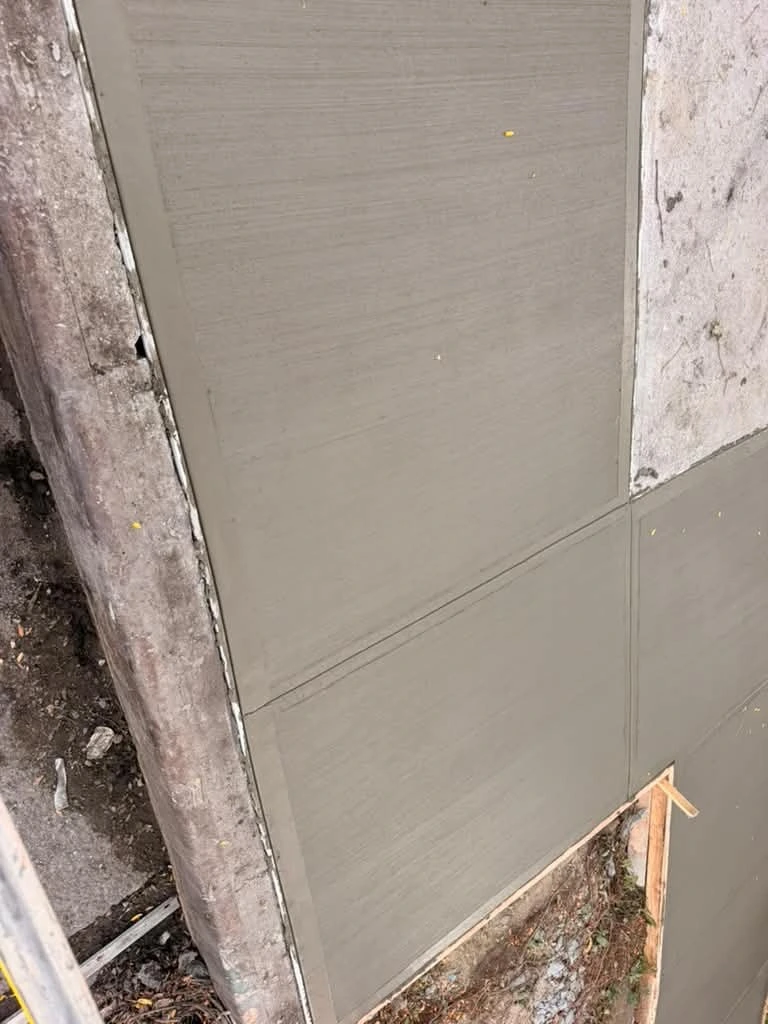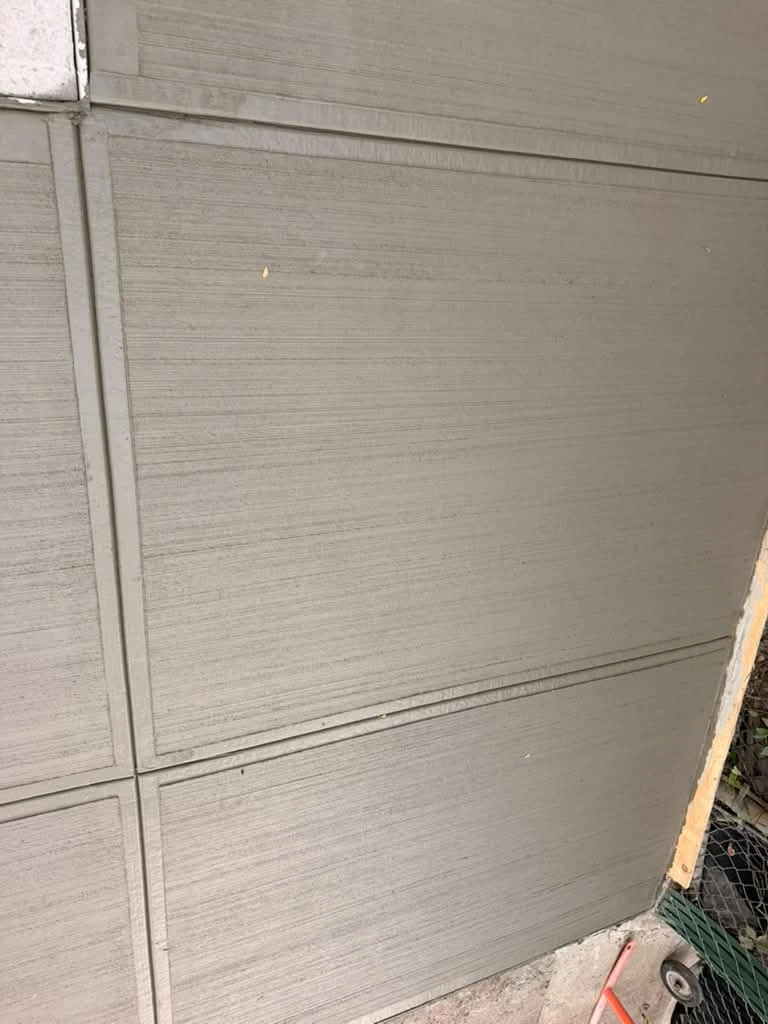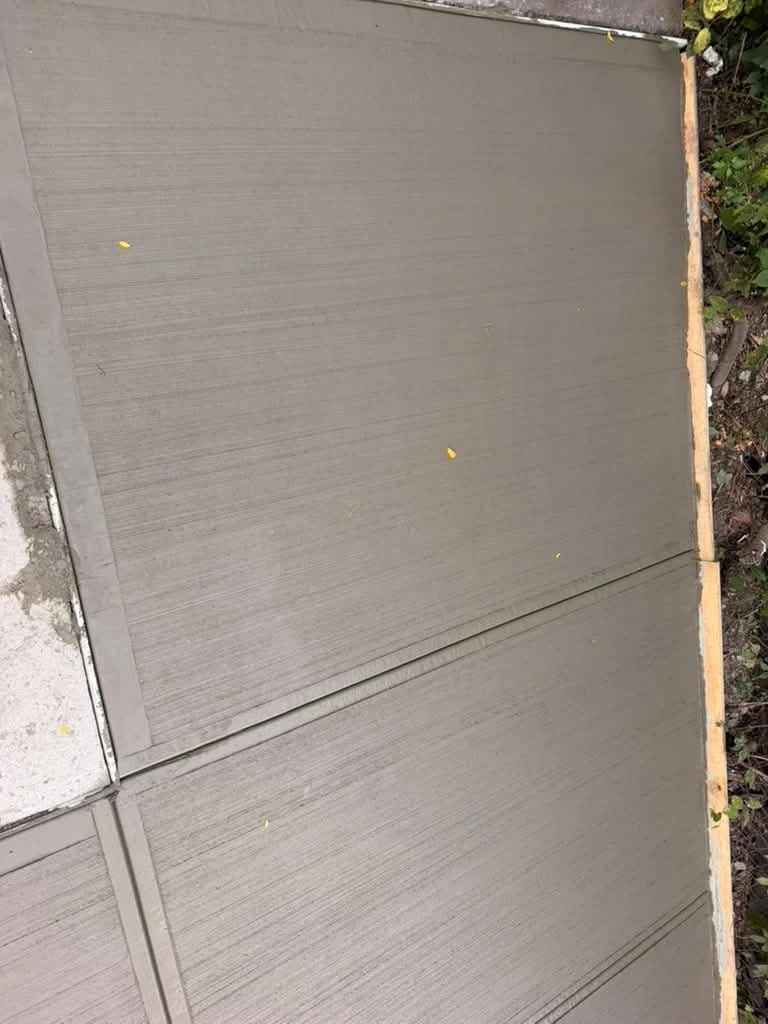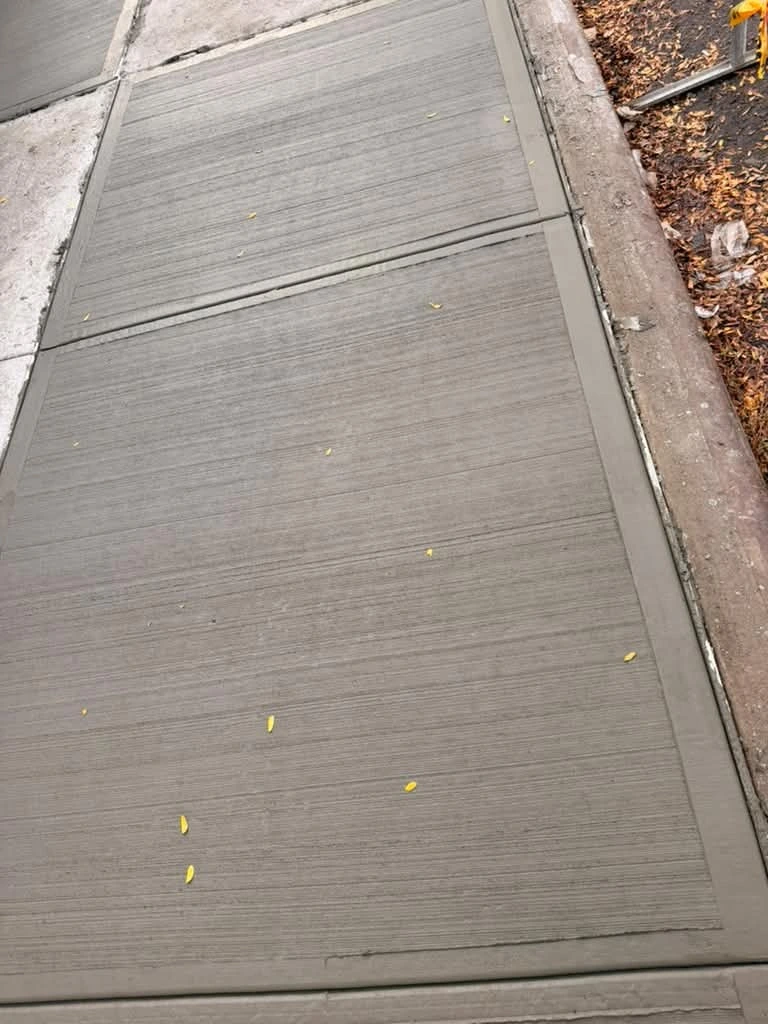
Tree roots don't announce themselves. They spread quietly under the concrete, gaining a little more space each year, until one slab sits noticeably higher than its neighbor. On a commercial frontage, that lip is a liability. At a property in Westchester Square, roots had lifted a whole run of slabs and turned the walkway into an obstacle course for anyone on foot. Here is how our crew at Sidewalk Repair Contractors Bronx took the owner from an open DOT violation to a clean sign-off.
- Project
- Tree Root-Damaged Sidewalk Repair and Violation Removal
- Client
- Commercial / Industrial Property Owner
- Location
- 1303 Herschell St, Bronx, NY 10461
- Neighborhood
- Westchester Square, East Bronx, near Zerega Avenue and Westchester Avenue
- Property Type
- Commercial / Industrial Property
- Historic/Landmark Status
- The property does not appear to be located within an NYC LPC-designated historic district or designated as an individual NYC landmark.
- Damage Cause
- General age-related wear combined with expanding tree roots that lifted multiple concrete slabs, leaving uneven surfaces and pedestrian tripping hazards.
- Services Provided
- Removal and replacement of eight root-damaged sidewalk slabs, authorized root pruning and root management as required, NYC DOT sidewalk construction permit filing, sidewalk closing permit coordination, 811 utility mark-out coordination, NYC Parks Tree Work Permit coordination, new concrete installation, and final NYC DOT violation dismissal inspection and sign-off.
- Estimated Project Cost
- $4,500, including required permits, approvals, tree root work, concrete removal, and sidewalk replacement.
- Total Sidewalk Area Repaired
- Approximately 200 square feet / 8 concrete slabs
- Project Completion Time
- Up to approximately 60 days, covering permit coordination, construction, inspection, and final NYC DOT violation sign-off.
What Caused the Damage
Concrete is strong under pressure from above, but it has very little answer for pressure from below. As the roots of a nearby street tree thickened, they pushed up against the underside of the slabs and raised them out of alignment. Age made things worse. Older concrete has already lost some of its flexibility, so once the lifting started, the slabs cracked and tilted instead of settling back into place.
The result was a string of uneven joints and raised edges along the frontage. For a commercial or industrial site with deliveries, employees, and customers moving past every day, that is exactly the kind of condition a DOT inspector flags.
Ownership matters here too. Under NYC Administrative Code §7-210, the owner is responsible for maintaining the sidewalk in front of the property, and commercial owners do not get the exemption that applies to some small residential homes. The tree may belong to the city, but the walkway beside it is the owner's problem. If someone trips on a lifted slab, the liability lands with the property, not with the tree.
Site Assessment
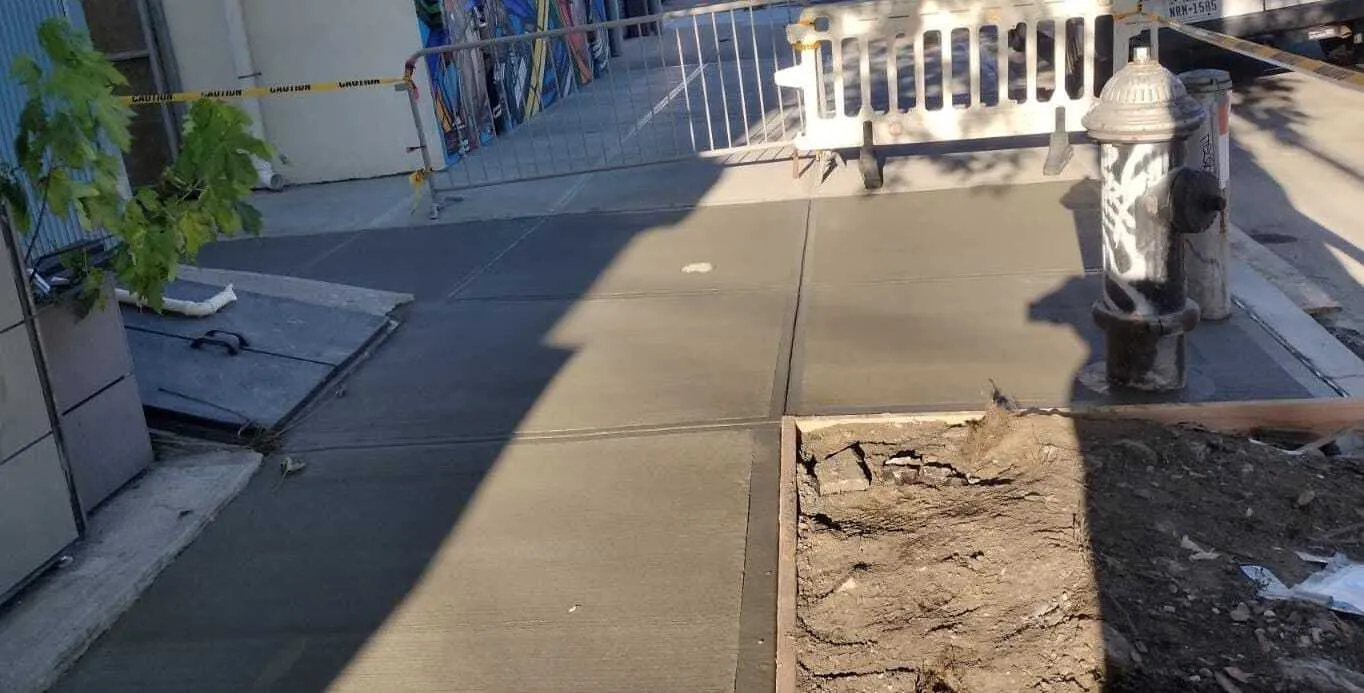
When we walked the frontage, we counted eight slabs affected by root lift, covering roughly 200 square feet. The worst of them were raised at the joints, and a few had cracked straight through where the roots pressed hardest.
Patching or grinding would only have treated the surface. The roots would still be sitting under the concrete, and the same slabs would heave again within a few seasons. So we planned a full replacement of the damaged section, along with root management so the new concrete could go in on a stable, properly prepared base.
How We Handled the Process
Permits and Approvals
Nothing was demolished until the paperwork was in place. We filed and coordinated the following.
- Sidewalk Construction Permitthe main DOT authorization for removing and replacing the slabs
- Sidewalk Closing Permitto protect pedestrians and keep the work area clearly separated during construction
- 811 Utility Mark-Outrequested before excavation so underground lines were identified ahead of time
- NYC Parks Tree Work Permitneeded because any work that touches a street tree's roots requires Parks Department authorization
That last permit is the one owners most often overlook. Cutting into roots without approval can create separate problems with the city, so we coordinated it as part of the same project. With no historic district overlay on the property, the DOT permits followed the standard review track.
Construction
Once approvals cleared, the crew moved through the repair in clear stages.
- DemolitionThe eight lifted slabs were broken out and hauled away, exposing the ground and the roots beneath.
- Root managementWhere roots were pushing into the slab footprint, authorized pruning was carried out within the limits of the Parks permit, so the tree was not put at risk.
- Base preparationThe subgrade was cleaned out, leveled, and compacted to give the new concrete an even bed.
- Concrete placementNew slabs were poured to DOT-required thickness, with expansion joints set to absorb future ground movement and reduce the chance of another crack in the same place.
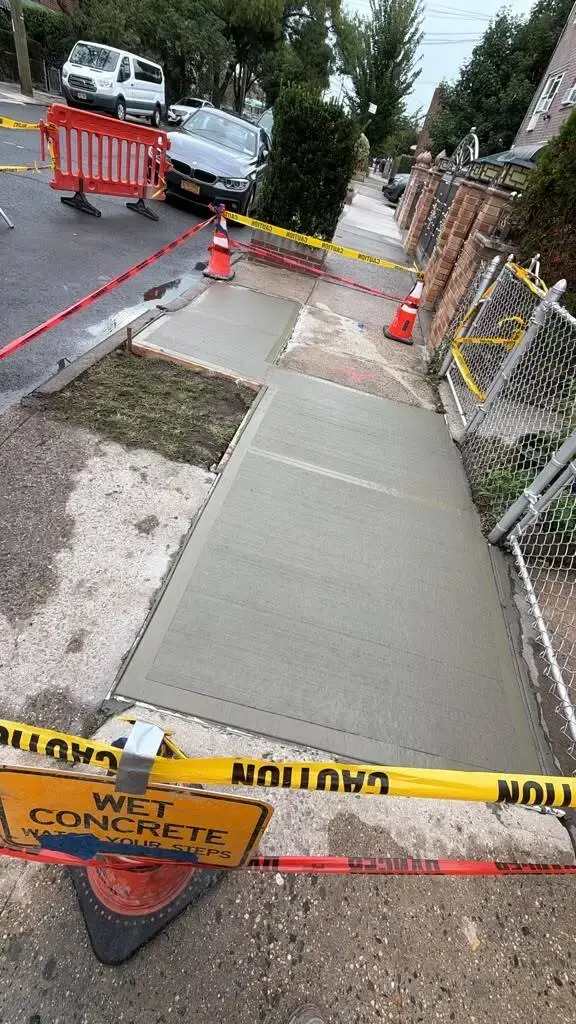
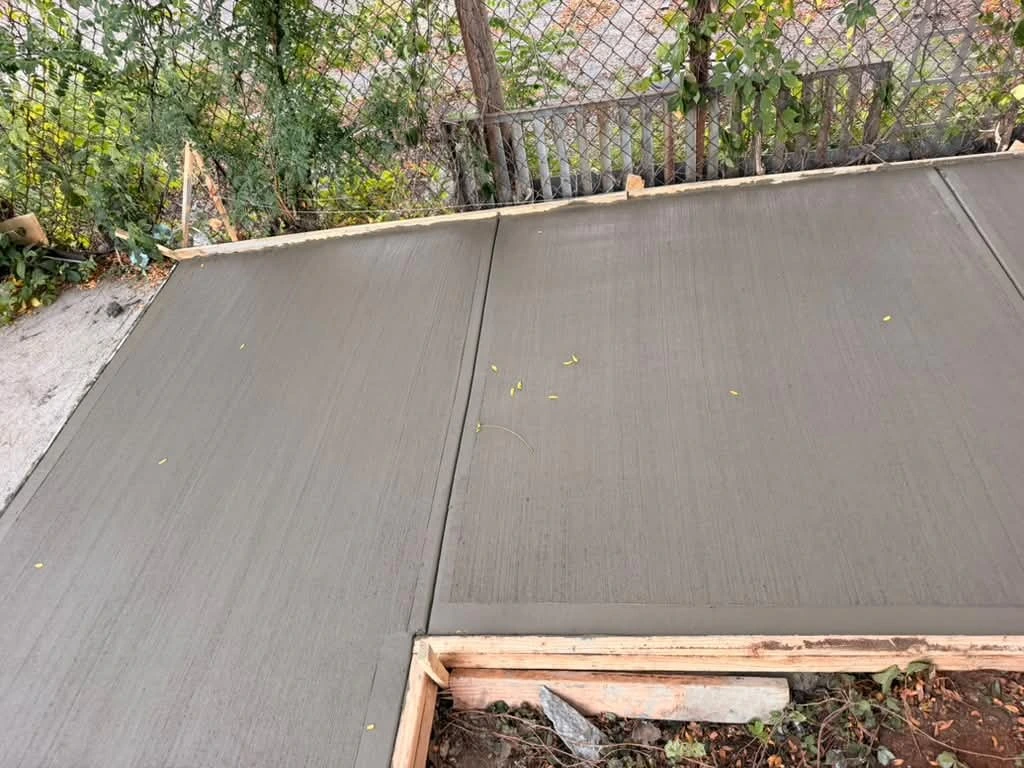
- Finishing and curingThe surface was finished flush with adjoining sections and left to cure before the sidewalk was reopened.
Final DOT Inspection
After curing, we scheduled the DOT inspection and were on site for it. The repaired section met requirements, and the violation was dismissed and signed off by DOT officials and cleared from the property record.
Results
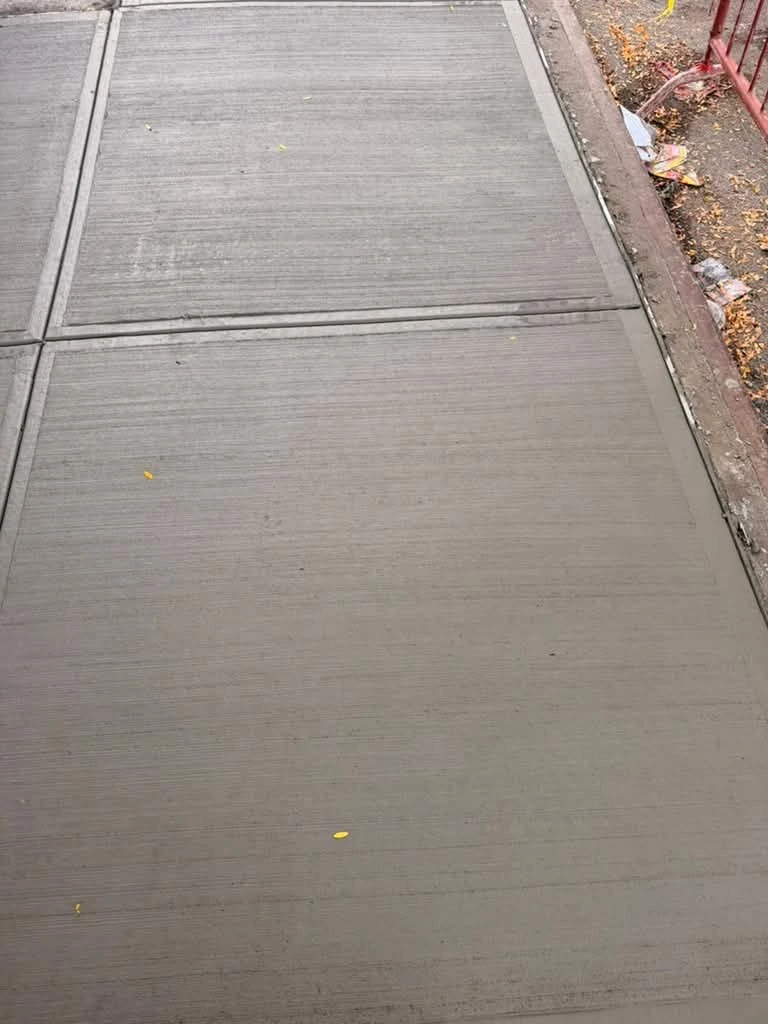
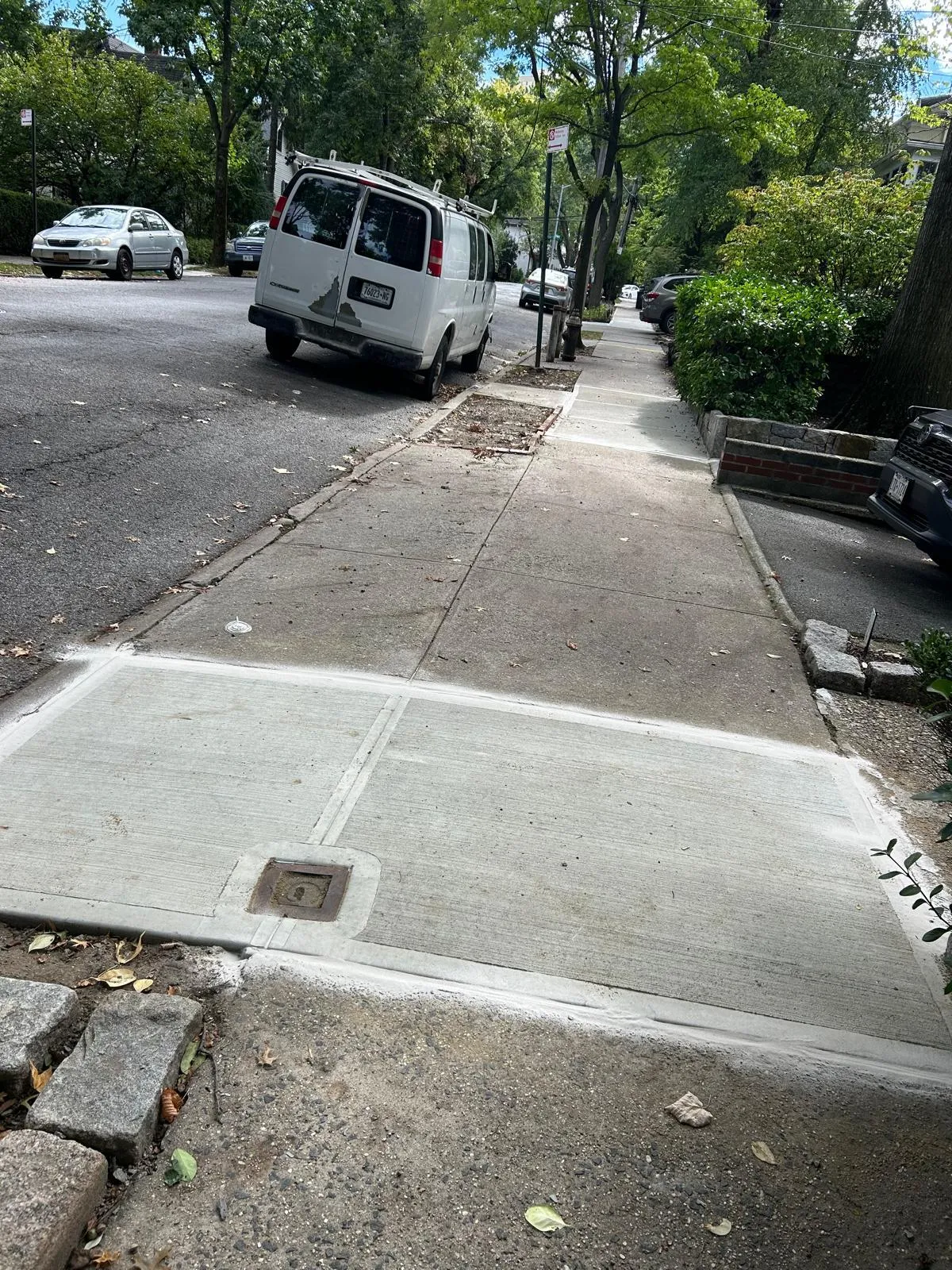
Eight slabs, about 200 square feet of walkway, are now level, continuous, and safe to use. The tripping hazard is gone, the roots were dealt with the right way under the proper permit, and the DOT violation is closed. The owner has a clean frontage and no open questions about permits or compliance.
Client Testimonial
"We knew the sidewalk was a problem, but we had no idea the tree meant a separate city permit on top of DOT. The team took care of all of it and kept us updated the whole way. The new sidewalk looks great, and the violation is finally off our books."
Property Owner, Westchester Square, Bronx
Why Westchester Square Property Owners Choose Sidewalk Repair Contractors Bronx
Root damage is not a job where you can just pour new concrete and walk away. The permits, the tree, and the DOT inspection all have to line up, and missing one step can stall a violation for weeks. We handle the whole sequence under one roof, so owners are not left coordinating between agencies on their own.
Need Sidewalk Violation Repair in Westchester Square or Anywhere in the Bronx?
If tree roots, cracking, or general wear have put your sidewalk out of compliance, Sidewalk Repair Contractors Bronx manages the entire process, from permits and tree coordination to construction and final DOT sign-off. Contact us today for a free estimate and a consultation with our trusted sidewalk experts.
Photos From This Job