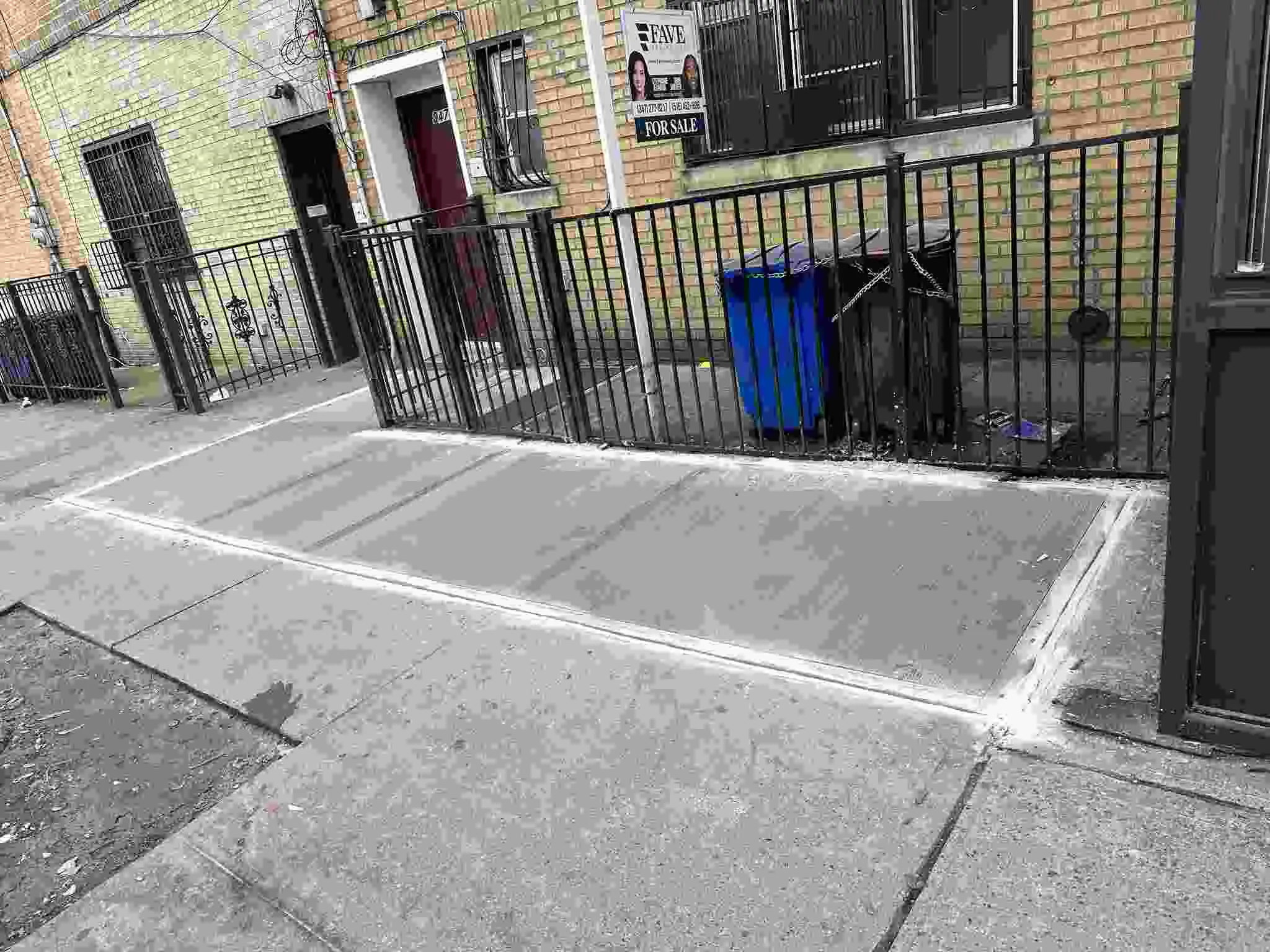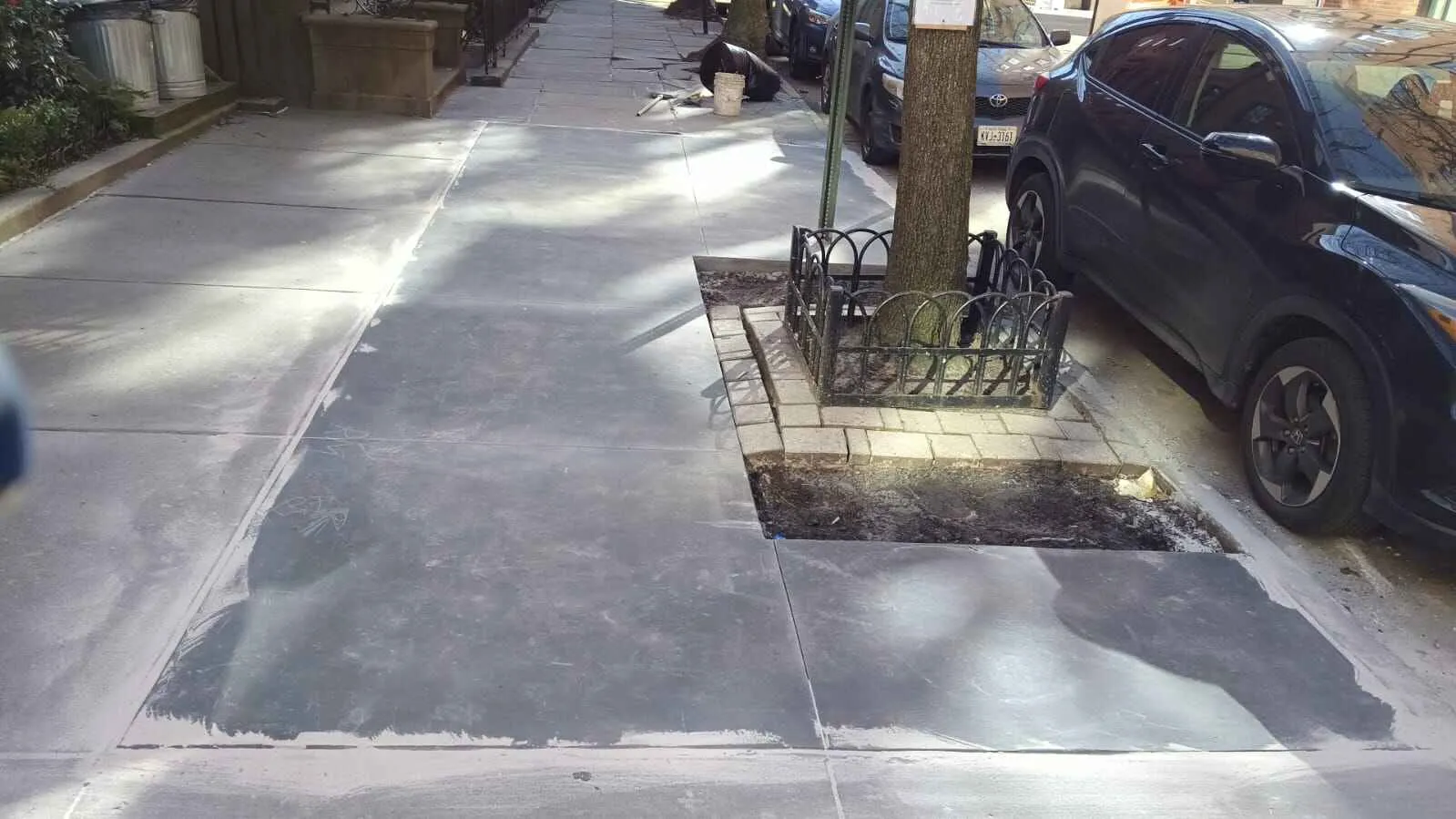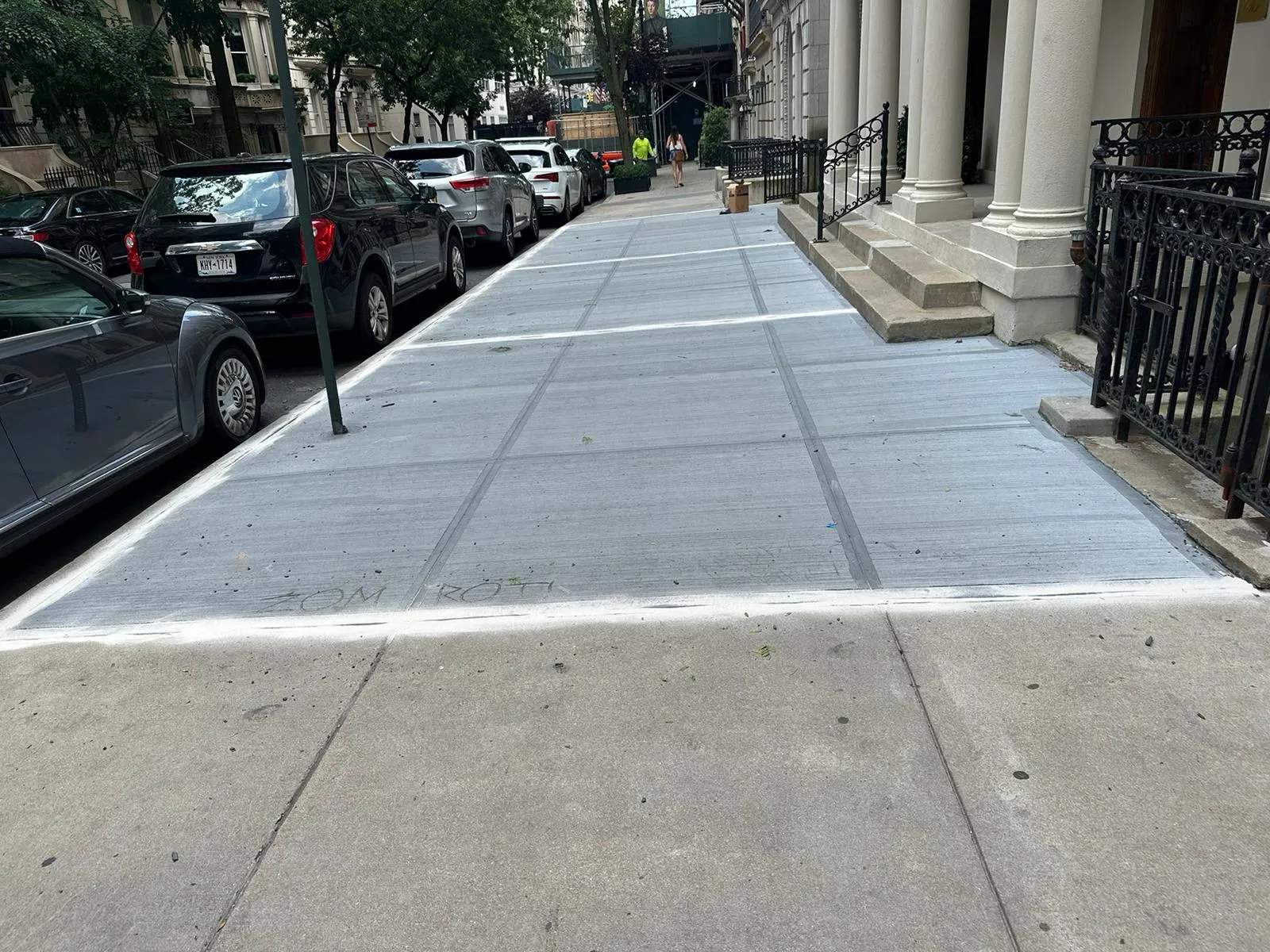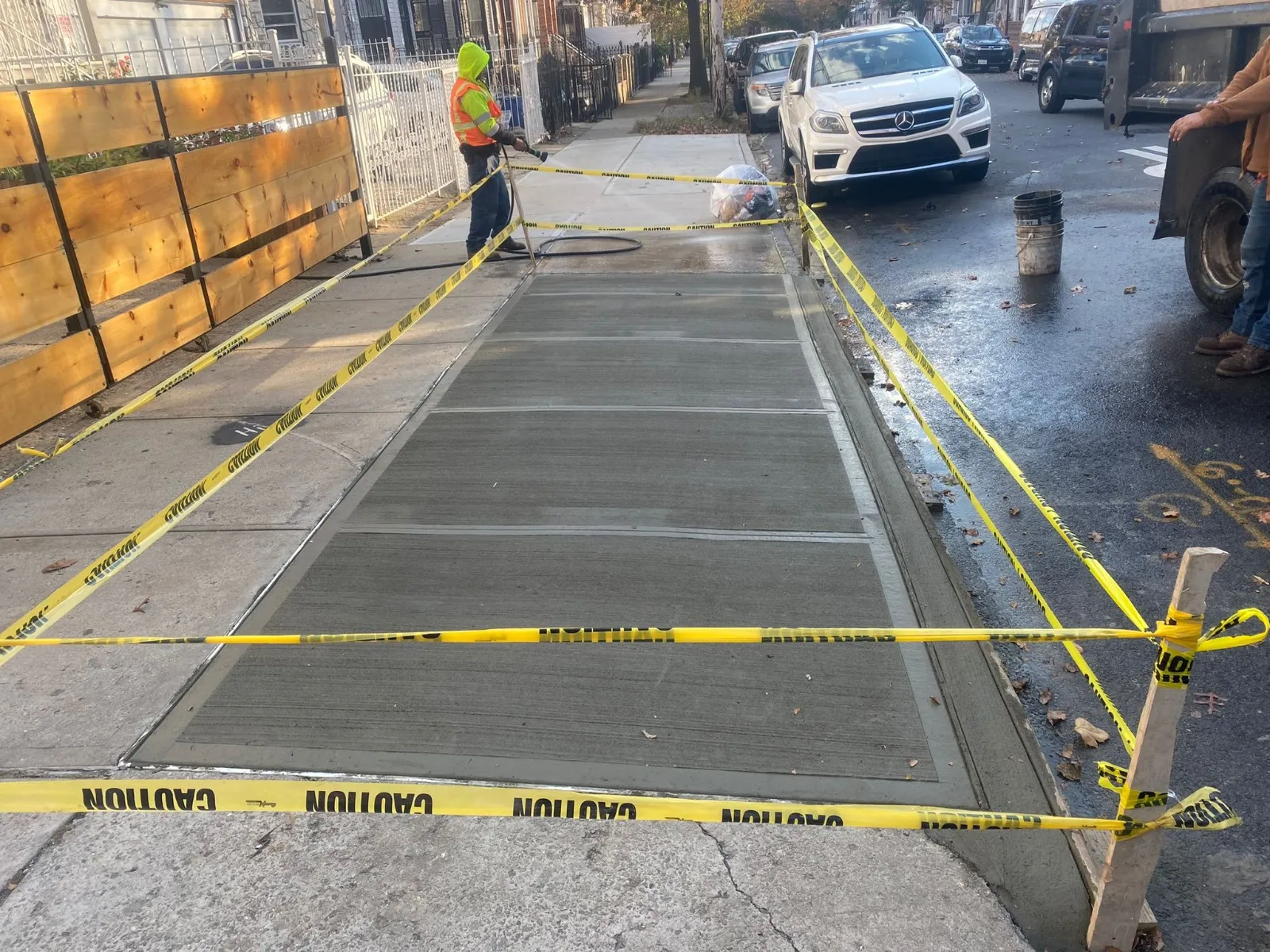
- Citable crack
- Cracked so that pieces may be loosened or readily removed: e.g. full-depth, joint to joint, ≥ 1/4" wide
- Structural integrity defect
- A flag sharing a common joint (not an expansion joint) with a defective flag, with a crack running joint to joint
- Not automatically citable
- Hairline shrinkage and surface crazing on a sound, stable flag
- Filling a cited crack
- Not accepted: partial-depth repair is patchwork, itself a defect
- Expansion joints
- Specified at 20-foot intervals, full depth, recessed and sealed
Not every crack is a violation, and that saves you money
Plenty of contractors will quote to replace any flag with a visible line in it. NYC's actual test is narrower, and knowing it is the difference between replacing two flags and replacing eight.
Section 19-152 targets flags "cracked to such an extent that one or more pieces of flag(s) may be loosened or readily removed", giving the worked example of full-depth cracks that extend from joint to joint and are 1/4 inch wide or greater.
Read that carefully. Three things have to be true together: the crack goes full depth, it runs joint to joint, and it is wide enough that material can come free. Fine surface crazing, shallow shrinkage cracking and hairline lines that do not go through the slab are not that.
Run a key along the crack. If it catches and material crumbles out, and the line runs the full width of the flag, you are likely in citable territory. If it is a hairline you can barely feel, you are probably looking at maintenance, not a violation.
The rule that catches the flag next door
This is the one that surprises owners when the inspection report arrives with more flags listed than they expected.
Among the listed defects is one described as involving structural integrity: a flag that has a common joint: not an expansion joint, with a defective flag, and that has a surface crack meeting from one joint to another joint. In other words, a cracked flag beside an already-defective flag is pulled in with it, because the pair are working as one and the sound one is going to fail next.
It is a sensible rule, and it is why a repair scoped honestly is sometimes larger than the one you were hoping for.
Can a crack be filled?
It depends entirely on whether the flag is cited.
- No violation, sound flag, hairline crack: sealing keeps water out of the slab and is reasonable preventive maintenance. Water in a crack through a Bronx winter is how a small crack becomes a big one.
- Cited flag: filling is not an option. Less-than-full-depth repair is defined as patchwork and is itself a defect, and DOT does not permit patching of individual flags. A filled crack on a numbered flag fails the dismissal inspection.
What about resurfacing the whole surface?
Owners with widespread surface wear rather than one bad crack often ask about an overlay: bonding a thin layer of new material over the existing slab. The dividing line is the same one that governs crack filling: is the slab itself sound? If the concrete beneath is stable, uncracked, properly supported and draining correctly, and the problem is confined to the top few millimetres, an overlay can be reasonable maintenance. If any of those are untrue, resurfacing hides the defect for a season and then telegraphs it straight back through.
And if NYC DOT has cited the flag, resurfacing is not on the table at all. An overlay is a less-than-full-depth repair: exactly what § 19-152 defines as patchwork, a defect in its own right. The compliant route on a cited flag is full-depth flag replacement to specification.
Freeze-thaw cycling and de-icing salt: water absorbed into the surface freezes, expands and lifts thin flakes away, dozens of cycles a winter. Concrete that was overworked or sealed while bleed water was still present starts life with a weak top layer and scales early regardless of weather. If the slab scaled because it was finished badly, an overlay on the same substrate can debond, which is why we assess before recommending one.
Why cracks come back in exactly the same line
Because a crack is where the slab relieved a stress it had no other way to release. Fill it, and the stress is still there.
The usual underlying causes are worth naming because they are fixable:
- Joints missing or wrongly spaced. Expansion joints are specified at 20-foot intervals, with filler to the full depth of the sidewalk, recessed and sealed. Without them, the slab picks its own crack line.
- An uneven or soft base. The slab bridges a soft spot and cracks over it.
- A root bearing on the underside. Point loading from below on a slab designed for uniform support.
- Vehicle loads on a 4-inch section. Sidewalk built to pedestrian specification and used as a crossing.
- Freeze-thaw with de-icing salt. Widening existing cracks every winter until they meet the threshold.
What we do
- Measure rather than guessDepth, width and whether the crack runs joint to joint: the three things the rule actually turns on.
- Check the neighboursIncluding the structural-integrity rule about flags sharing a common joint.
- Tell you which flags genuinely need replacingAnd which are fine, even where that means a smaller job.
- Address the causeBase, joints, drainage, root, so the new flag is not cracking on the same line in three years.
- Replace full depth to specificationWith joints placed correctly and slope set toward the curb.
Do not wait for it to get worse
DOT encourages owners to perform repairs before a condition becomes a defect that would give rise to a violation, and § 7-210 liability runs the whole time you are deciding. Practically, a crack assessed early is often one flag. The same crack after two Bronx winters of water, freeze and salt has usually taken its neighbours with it.