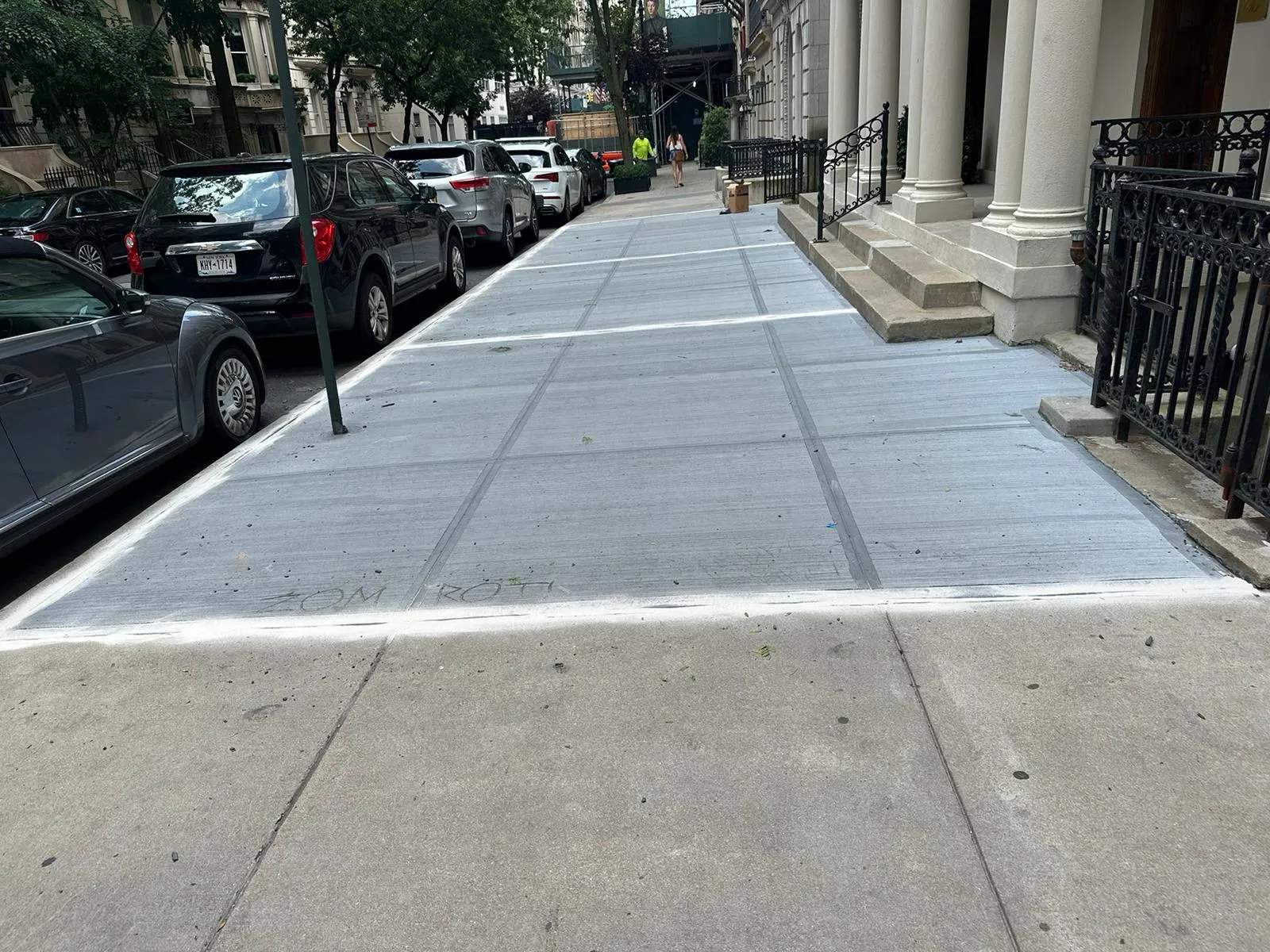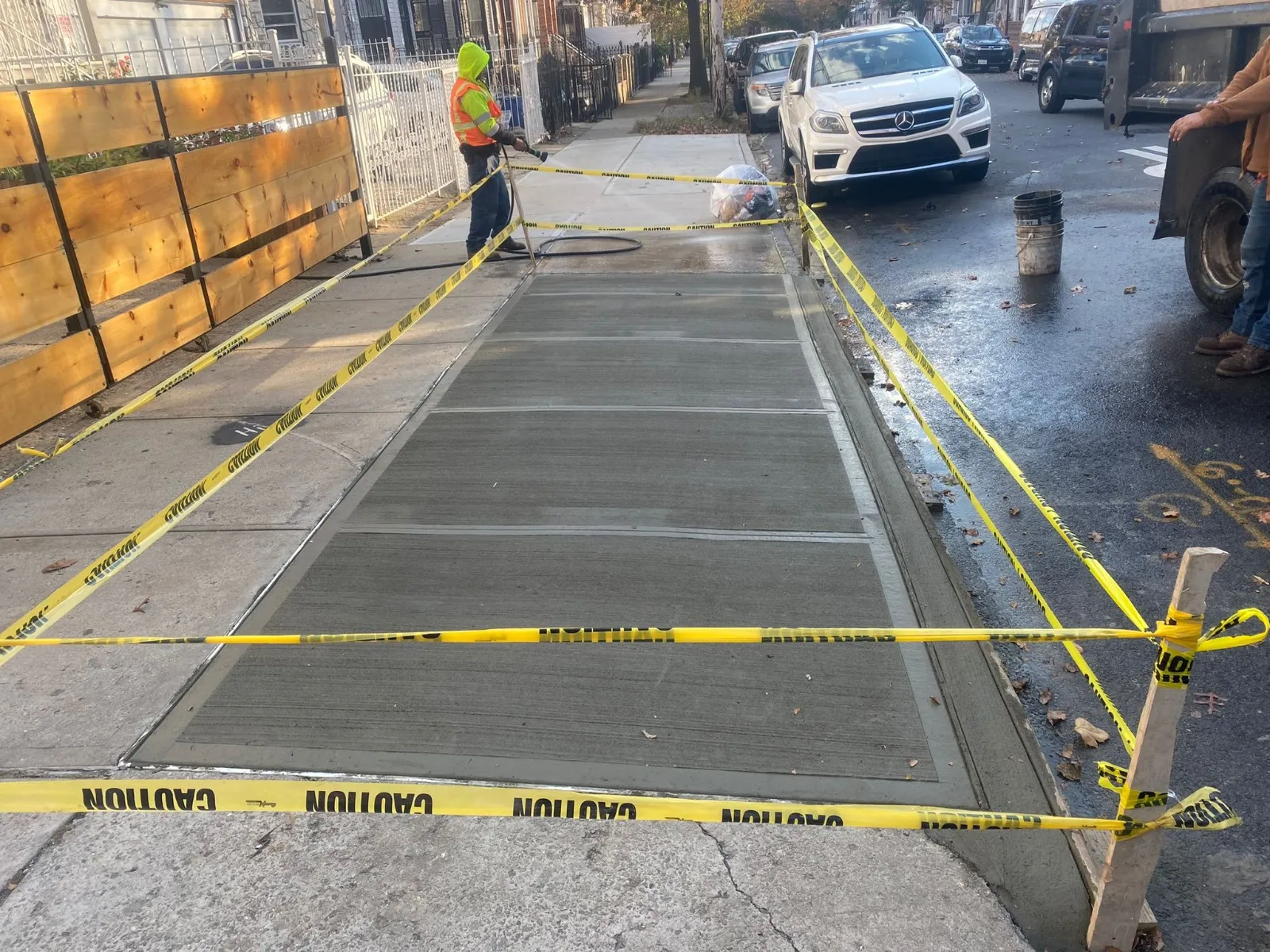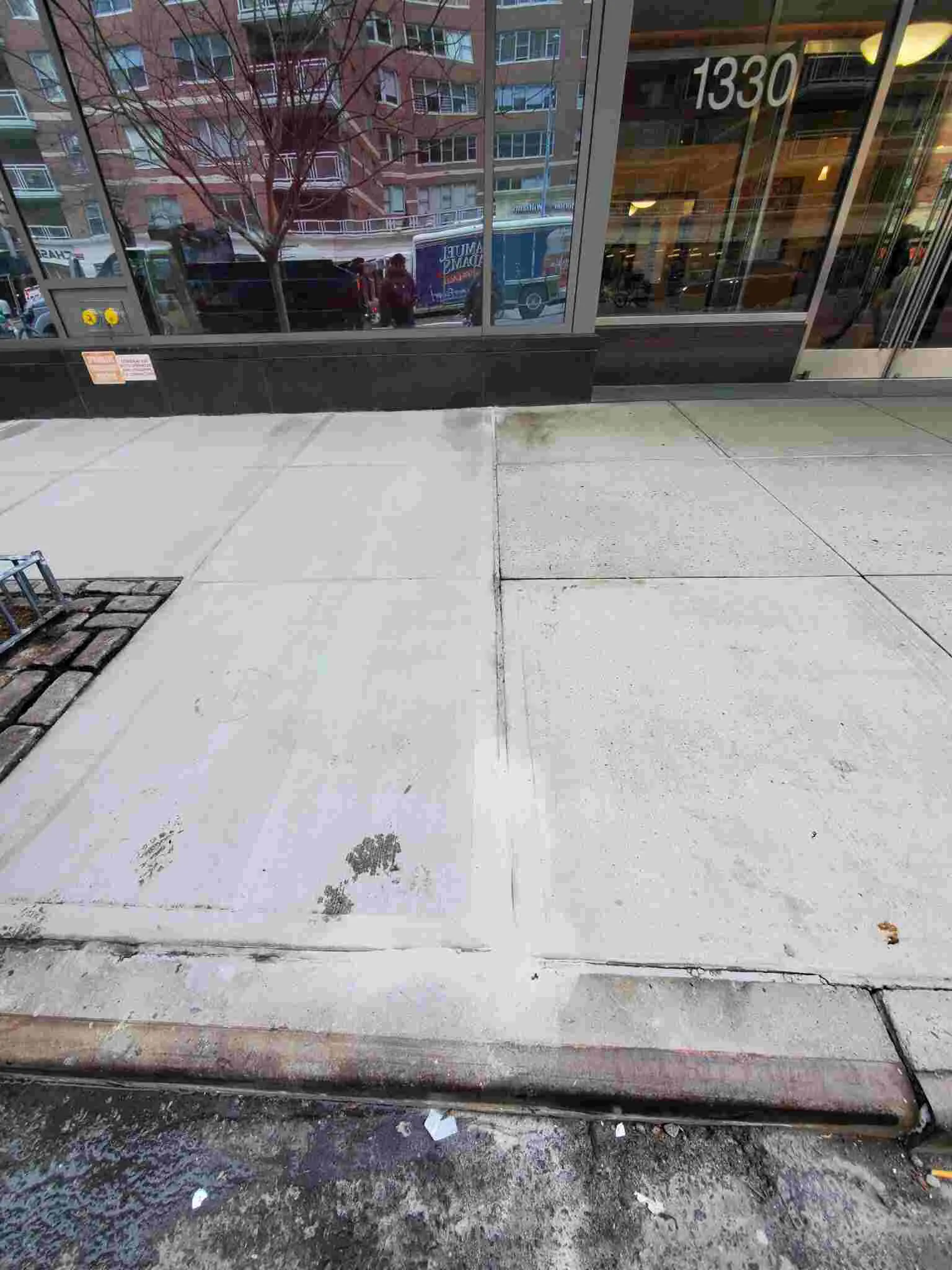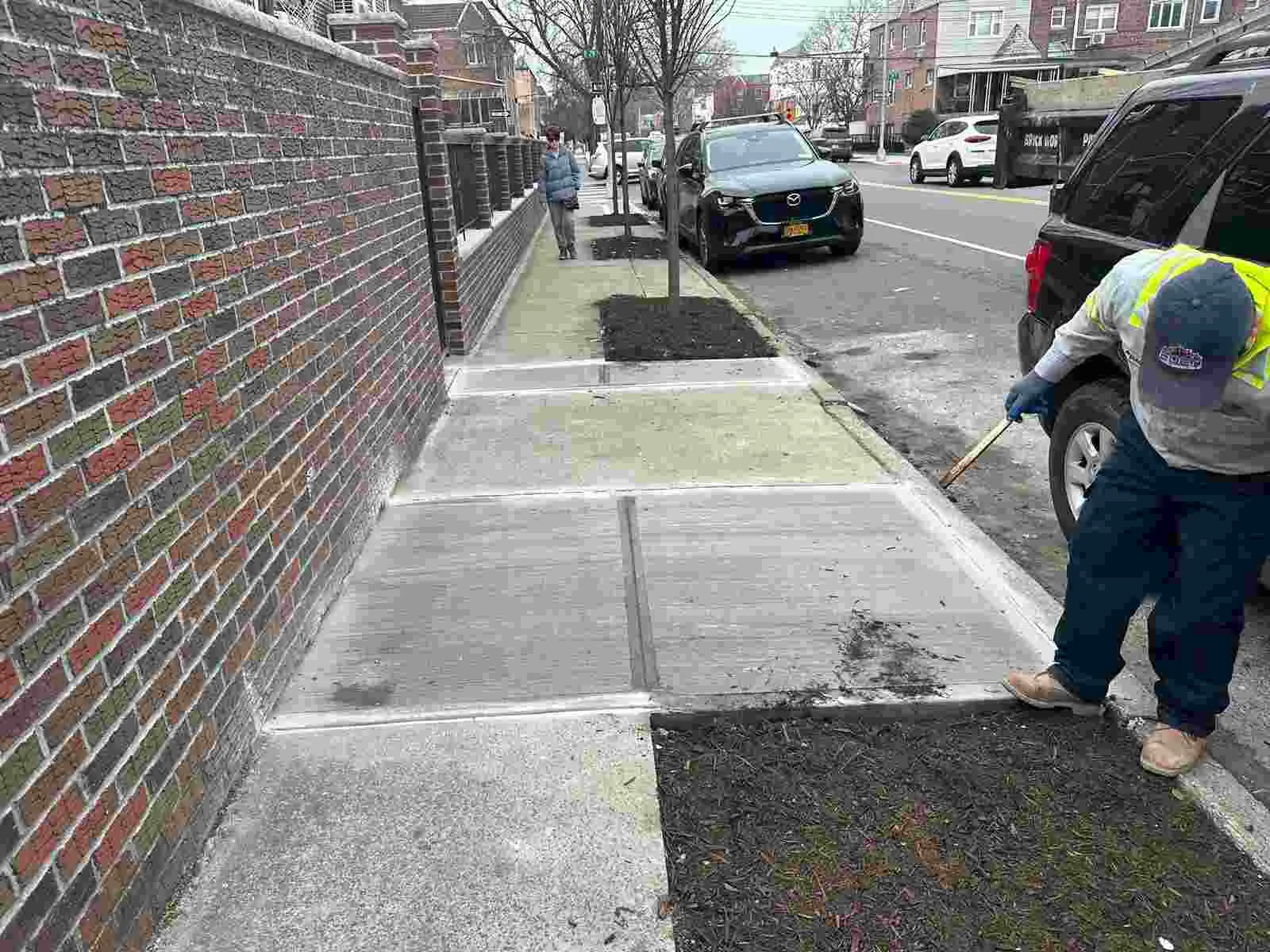
- Who repairs it
- Owners are encouraged to; DOT states it may repair or replace missing and defective curb at no cost
- Why it matters
- Sidewalk must be laid to the legal curb grades and drain toward the curb
- Required fall
- 1"-3" in 5' toward the curb, measured perpendicular
- At driveways
- Concrete section is 7" rather than 4", curb deliberately dropped
- Permit
- Curb sits in the public right of way. DOT permitted work to City standards
The honest answer on who pays
You will find contractor sites stating flatly that curb repair is free and DOT's responsibility. The City's own wording is more careful, and the difference matters when you are planning a job.
NYC DOT states that property owners are encouraged to repair or replace missing or defective curb, and that DOT may repair or replace missing and defective curb at no cost to you.
"May … at no cost" is a discretionary programme running on the City's schedule and priorities. If your curb is the reason your new sidewalk will pond, or you are closing a sale in eight weeks, waiting on it is a gamble. Many owners have the curb done alongside a sidewalk replacement for exactly that reason.
Why a failing curb ruins a good sidewalk
Curb is the datum. Permanent sidewalks must be laid to the legal curb grades, and the walking surface has to fall toward the curb at between 1 and 3 inches per 5 feet. Both of those references point at the same physical object.
Pour new flags against a curb that has settled, rotated or broken away and one of two things happens. Either you match the new sidewalk to the failed curb, and inherit the ponding, which is itself a listed defect because flags must drain toward the curb and must not retain water, or you build to correct grade and leave a lip at the curb line where the two no longer meet.
What a defective curb looks like
- Missing sections: the most obvious, and explicitly named in DOT's guidance.
- Settlement: the curb has dropped relative to the roadway, so water runs along the curb line and stands instead of reaching the catch basin.
- Rotation: the curb has tipped outward or inward, usually from vehicle contact or base washout, so the reveal is inconsistent along the block.
- Spalling and break-up: the face is breaking away, most commonly where vehicles mount it or where de-icing salt has been heavy.
- Reveal mismatch: the curb height no longer matches the adjoining properties, which is a defect in the streetline and a problem for any curb cut nearby.
Curb at a driveway is a different build
Where vehicles cross, the curb is deliberately dropped rather than kept at full reveal, and the concrete behind it is thicker. NYC's own cost arithmetic treats driveway areas as 7-inch concrete rather than the 4 inch used for standard sidewalk, which tells you what the City expects a vehicle crossing to be built to. Where the drop is a formal curb cut, a separate DOB approval track applies before any permit is issued. That is covered on our curb cut installation page.
How we handle curb work
- Establish the legal curb gradeWe check what the grade should be against the adjoining properties and the roadway, rather than simply matching whatever has settled.
- PermitCurb is public right-of-way work and is permitted through DOT, to City construction standards.
- Remove and rebuild the baseA curb that dropped usually dropped for a reason. We deal with the base rather than resetting stone onto the same failure.
- Set the curb to line and revealMatched to the adjacent lots so the streetline stays continuous.
- Tie the sidewalk inThe adjoining flags are set to fall toward the new curb within the required 1-3 inches per 5 feet, so the drainage problem does not survive the job.
Bronx context
Curb damage on Bronx blocks concentrates in two places. Corners take the worst of it: turning vehicles ride the curb face and the intersection quadrant is also where the accessible ramp lives, so a corner rebuild often has to solve curb, quadrant and ramp together. The second is anywhere with informal parking access: a curb that has been driven over for years without ever being built as a crossing breaks down predictably, and repairing it without addressing the 7-inch section behind it just resets the clock.