- Time to repair
- 75 days from the date you receive the notice (per the certified mail receipt)
- Fine
- None. A sidewalk violation carries no monetary penalty
- Where it is filed
- With the County Clerk. It stays until the City reports satisfactory repair
- Does a permit extend it?
- No. Taking out a permit does not extend the 75 days
- If you do nothing
- City may repair, DOF bills you, monetary lien placed; 90 days to pay before interest
- To close it out
- A dismissal inspection is always required
The part most owners get wrong: when the clock starts
A Notice of Sidewalk Violation gives you 75 days. That much is widely repeated. What is repeated far less often, and what actually matters if the notice sat in a managing agent's inbox for three weeks, is that the 75 days begin when the violation is received by the property owner, as indicated on the certified mail receipt, not the date printed on the notice itself.
If the mail date and the receipt date differ, the receipt governs. Find it before you assume you are already late.
DOT states this directly: a sidewalk permit does not extend the 75-day period. If you intend to repair privately, you or your contractor must take out the permit and begin repairs within the 75 days. Winter is not an exemption either: a contractor should be scheduled to start as soon as weather permits.
There is no fine, so what does the violation actually cost you?
Nothing directly, which is why some owners file it away. The exposure is elsewhere, and it is real:
- It sits with the County Clerk. A copy is filed there and remains on file until the Clerk receives official notification from the City that satisfactory repairs have been made. That is what surfaces in a title search and holds up a sale or a refinance.
- The City can do the work and bill you. If repairs are not made in the window, DOT may send its own contractor. The Department of Finance then issues a bill and a monetary lien is placed against the property. You have 90 days to pay before interest accrues.
- Liability keeps running. Section 7-210 makes property owners potentially liable for personal injuries caused by failure to maintain a reasonably safe sidewalk. An open violation is documentary evidence that the condition was known.
Reading your Preliminary Inspection Report
The PIR is the scope of work. It is also the document that tells you whether the violation is even yours.
- Confirm it is your propertyViolations are occasionally issued against the wrong address. Match the PIR to your frontage: the width, the dimensions, the position of trees, signs, utility caps and cellar doors. If it still does not match, 311 can run a Sidewalk Violation Search.
- Note every numbered flagEach flag marked with a number has to be replaced, and any other defects present must be corrected.
- Look for 6B markingsThese are free-standing flags: ones that come loose once the defective flags beside them are removed. DOT recommends replacing them. Skipping them is a common cause of a failed re-inspection.
- Check for tree-damaged flagsIf the City ends up doing the work, tree-damaged flags are non-assessable. You are not charged for them. Worth identifying before you accept any City bill.
- Disagree? Ask for a re-inspectionYou can dispute a new sidewalk violation through 311 within 75 days of receiving it.
What a compliant repair has to look like
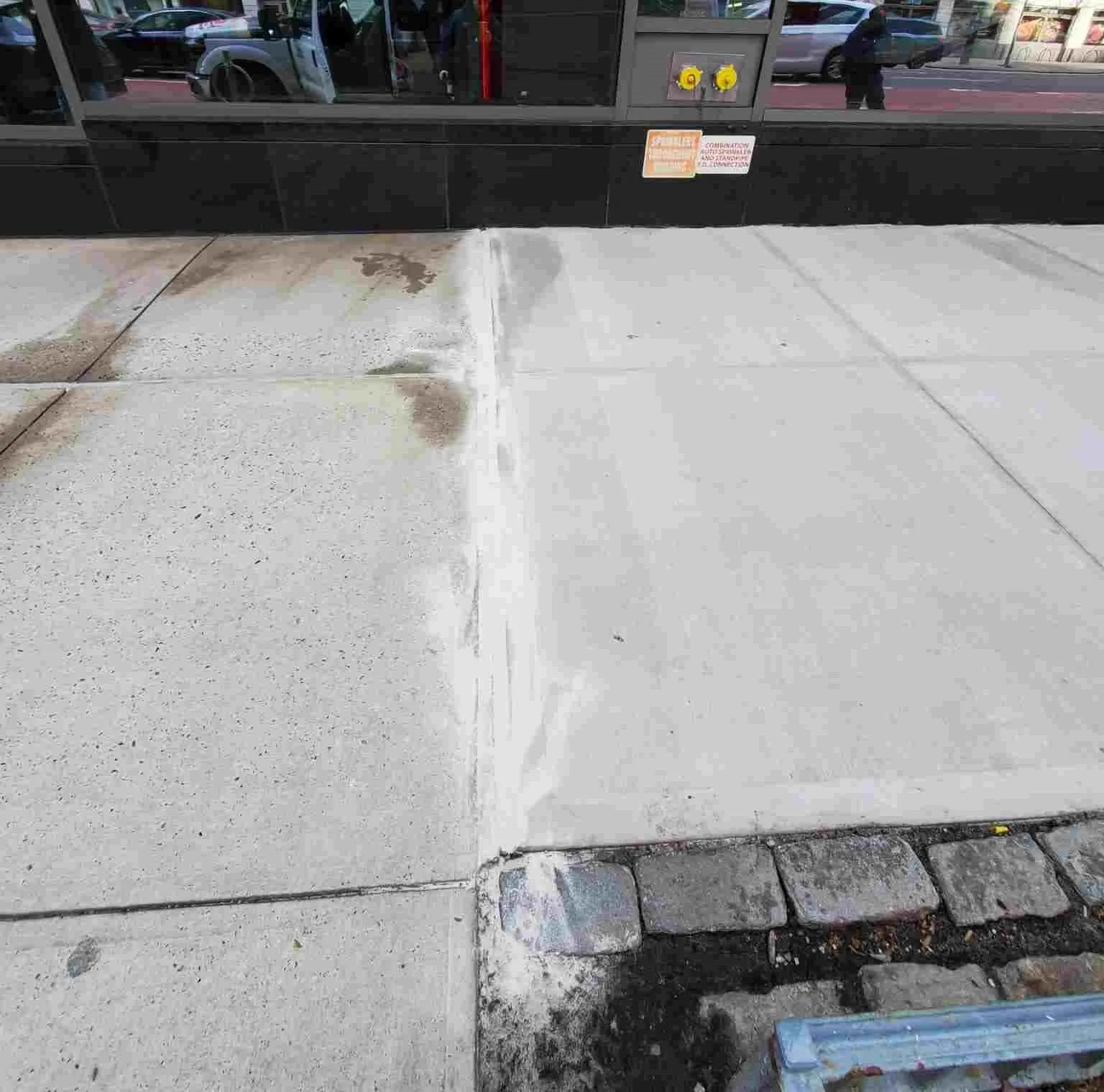
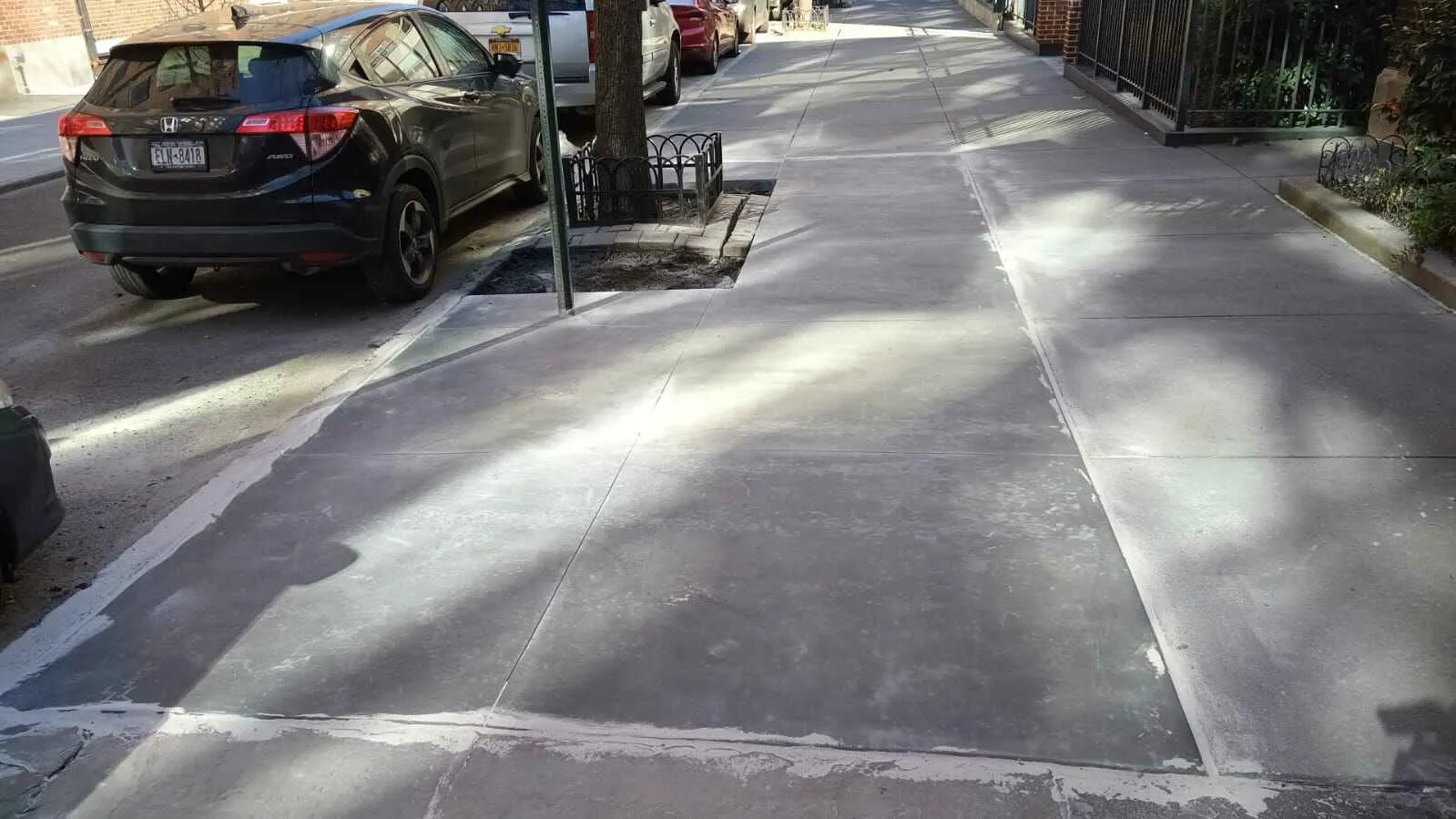
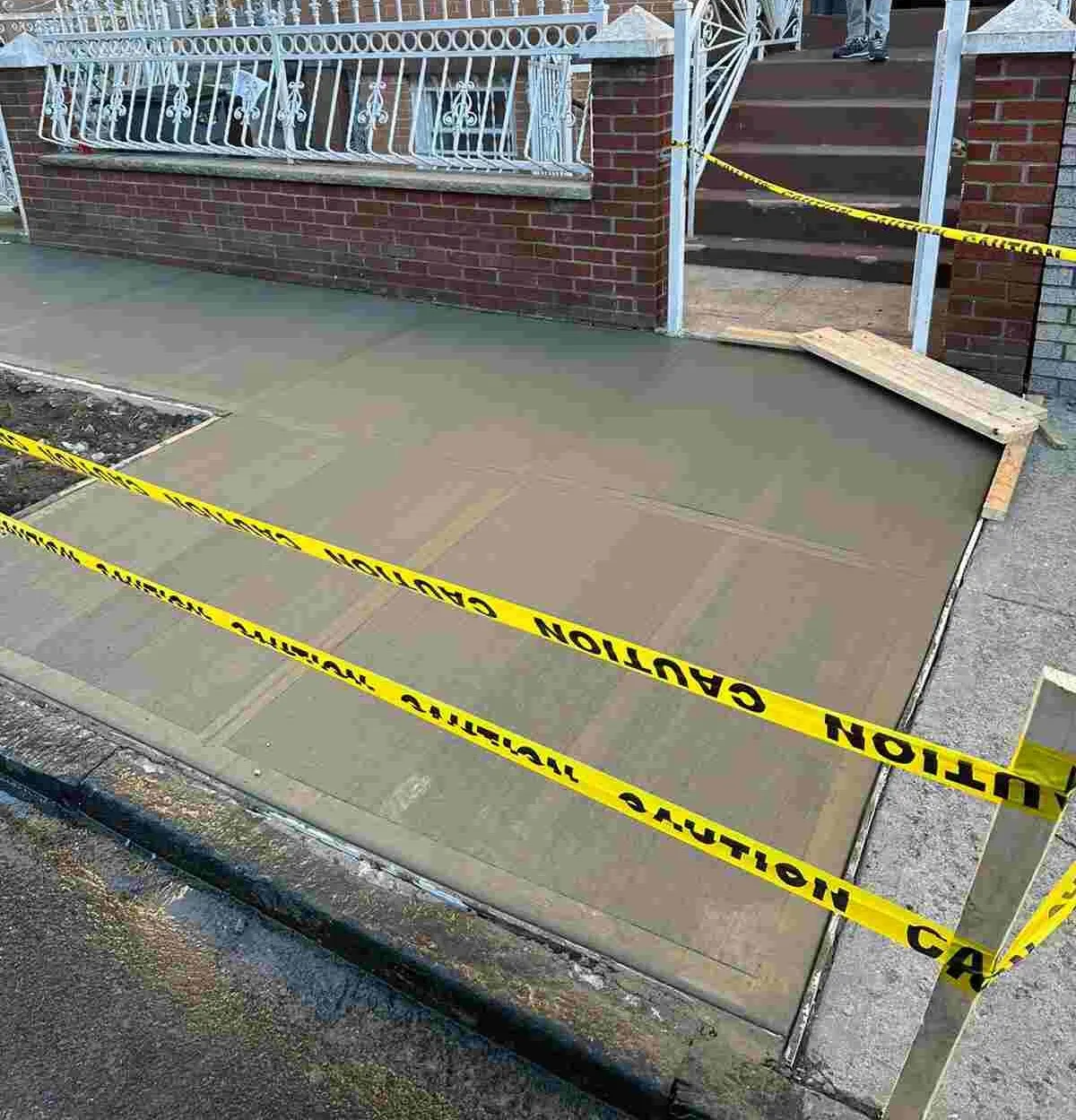
An inspector returning for a dismissal is measuring against the same rules that generated the violation. Patching will not pass: DOT does not permit patching of individual flags, and § 19-152 treats patchwork (less-than-full-depth repair, or asphalt and other unapproved non-concrete material in a flag) as a defect in its own right.
The rebuilt flags need to be 4-inch concrete on a 6-inch foundation (7 inches through a driveway or corner quadrant), 5' x 5' where feasible, with expansion joints at 20-foot intervals sealed to full depth, and pitched toward the curb between 1 and 3 inches per 5 feet.
Contractors performing this work must be registered with NYC DOT and must obtain permits. DOT also advises owners to check whether a contractor is licensed and whether consumer complaints are pending against them before hiring: the Department of Consumer and Worker Protection maintains that record.
Getting the violation dismissed
A dismissal inspection is always required to close a violation out: the work being finished is not, by itself, enough. Once repairs are complete the request goes to 311; where the owner arranged the work privately it is filed as a Sidewalk Violation Dismissal Request. A DOT inspector attends, verifies the repair, and if it is satisfactory the City notifies the County Clerk to remove the violation.
We handle that filing as part of the job and follow it through the inspection rather than handing you a paid invoice and leaving the paperwork with you.
Why we see so many of these in the Bronx
DOT selects properties for inspection using specific criteria, including blocks where injuries have been reported to the City or where complaints have been filed, and violations are issued in every neighbourhood. Practically, that means Bronx blocks tend to get inspected in clusters. If a neighbour two doors down has just received one, it is worth walking your own frontage before the inspector reaches it, because a defect repaired before it is cited never becomes a County Clerk record at all.