- Cutting roots
- No street tree roots may be cut without written permission from NYC Parks
- Tree Work Permit
- Required for sidewalk work within 50 feet of a City tree
- Apply by
- At least 45 business days before work; permit valid 90 days from issue
- Free City repair
- Trees & Sidewalks Program: 1-, 2- and 3-family Tax Class 1, owner-occupied, non-commercial
- Prioritisation
- Parks inspector scores the site 1-100 on damage, foot traffic, tree size and condition
- If the City repairs
- Tree-damaged flags are non-assessable. You are not billed for them
The root cannot simply be cut, and that changes everything
This is the fact that separates a lawful tree-root repair from an expensive mistake. Street trees are City property. No street tree roots may be cut without written permission from NYC Parks, and unauthorised cutting exposes both the property owner and the contractor.
It is worth being blunt about what that means when you are collecting quotes. A contractor who offers to "cut the roots back and pour a fresh flag" is describing unpermitted work on City property. The flag may look right for a season. The exposure sits with you as the owner.
Root cutting without authorisation is the usual reason a tree-root quote comes in far under the others. It is also the reason that job can cost more in the end than doing it correctly the first time.
Route one: see whether the City will do it for free
NYC Parks runs the Trees & Sidewalks Program specifically for sidewalk damage caused by City street tree roots. It is limited in who it covers and how fast it moves, but where you qualify it is genuinely free:
- Eligibility. One-, two- and three-family homes in NYC Tax Class 1, occupied by the owner and not used for commercial purposes.
- How to request: call 311 and ask for the Trees and Sidewalks Program. Parks receives the request and arranges a tree inspection.
- How requests are ranked. Funding is limited, so repairs are prioritised by a rating system. A Parks inspector evaluates the site and assigns a score from 1 to 100 based on the severity of damage, the amount of pedestrian traffic, and the size and condition of the tree.
The trade-off is time. If you are holding a DOT violation with a 75-day clock, or you are trying to close a sale, the programme's queue may not fit your deadline.
Route two: repair independently, the permitted way
You can use your own contractor. The permitting is what makes it lawful:
- Tree Work Permit from NYC ParksRequired for sidewalk repair or restoration within 50 feet of a City tree. Applications should be submitted at least 45 business days before the start of work, and the permit runs 90 days from issue.
- Site-specific guidanceParks issues the permit together with guidelines for repairing the sidewalk without damaging the tree. A consultation can also be requested through 311 so an inspector gives direction on the actual site, which is how you avoid unnecessary and unlawful root cutting.
- DOT sidewalk permitSeparate and still required. The concrete work sits in the roadway right of way regardless of the tree.
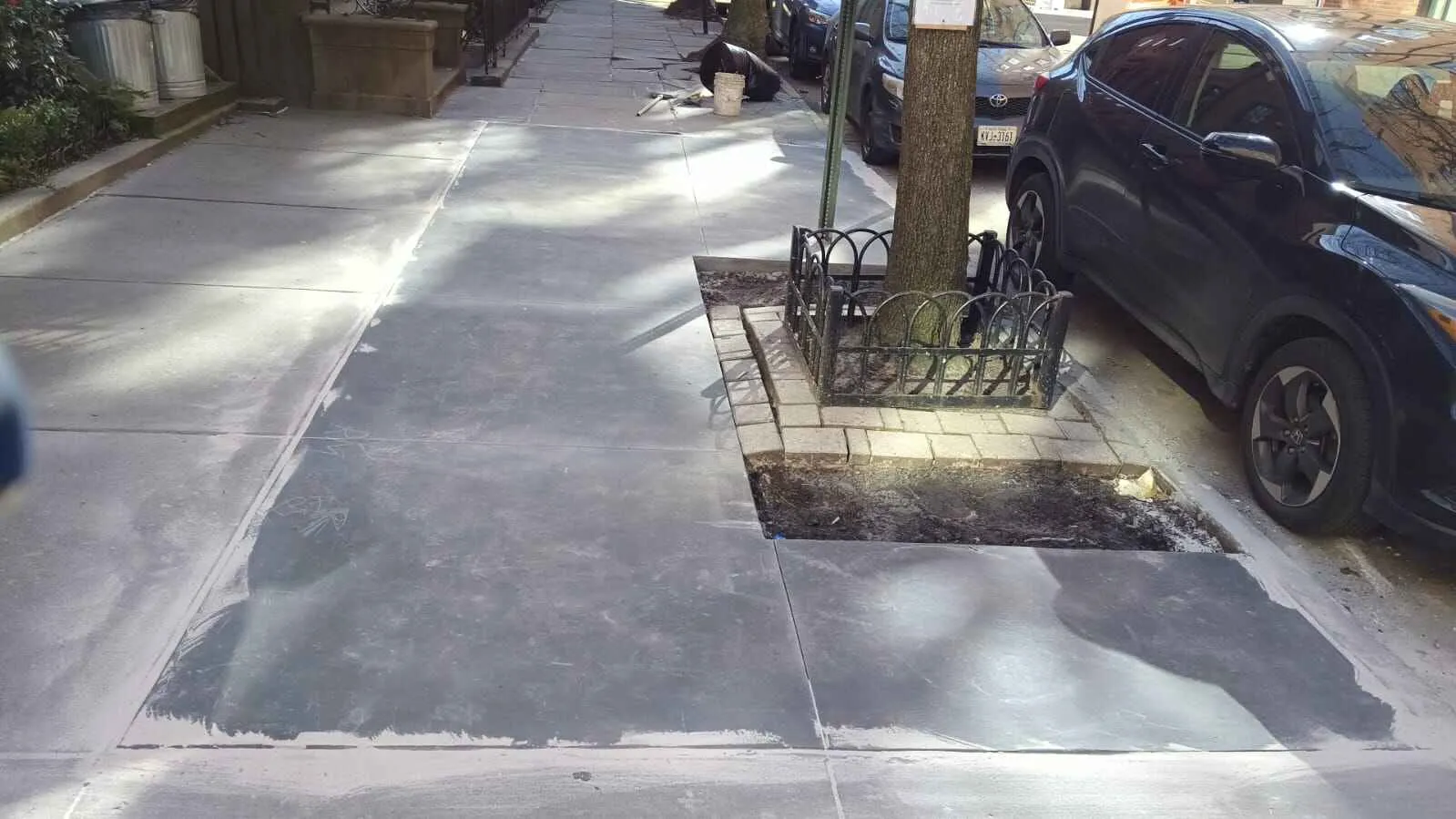
- Build around the conflictDepending on what Parks authorises, that can mean enlarging the tree pit, adjusting the flag layout, or reworking the base so the slab is not bearing directly on the root.
- Parks sign-offOnce repairs are complete, Parks inspects the tree and the repair and signs off if the work complies with the permit conditions and the tree's health has been preserved.
If you already have a DOT violation on a tree-damaged flag
Check the Preliminary Inspection Report before you pay anyone. DOT states that where a violation has been issued and the City makes the repair, the property owner is not charged for tree-damaged flags. They are treated as non-assessable. That is a meaningful carve-out on a frontage where the tree caused most of the damage, and it is not something a contractor has any incentive to mention.
Why the same flag lifts again
Because a root is a live, growing structure and a sidewalk flag is a rigid one. Replace the flag in the same geometry, on the same bearing, and the root wins again, usually within a few years on a vigorous Bronx street tree.
A repair designed to last has to give the root somewhere to go or take the slab off it. That is precisely what the Parks guidance and consultation exist to determine, which is why we treat that step as part of the work rather than as red tape to be routed around.