- Clears a DOT violation?
- No: flags numbered on the inspection report must be replaced
- DOT on patching
- Patching of individual flags is not permitted
- Patchwork status
- Less-than-full-depth repair is itself a listed defect under § 19-152
- Citable trip hazard
- Vertical difference of 1/2" or more between adjacent flags
- Where leveling helps
- Reducing live injury risk under § 7-210 while a proper repair is planned
Why this page is more cautious than most
"Sidewalk leveling" is marketed hard across NYC (grinding, shaving, slab lifting, foam injection), usually alongside the suggestion that it is the cheap way to deal with a DOT violation. We take a different line, and it costs us work, so it is worth explaining.
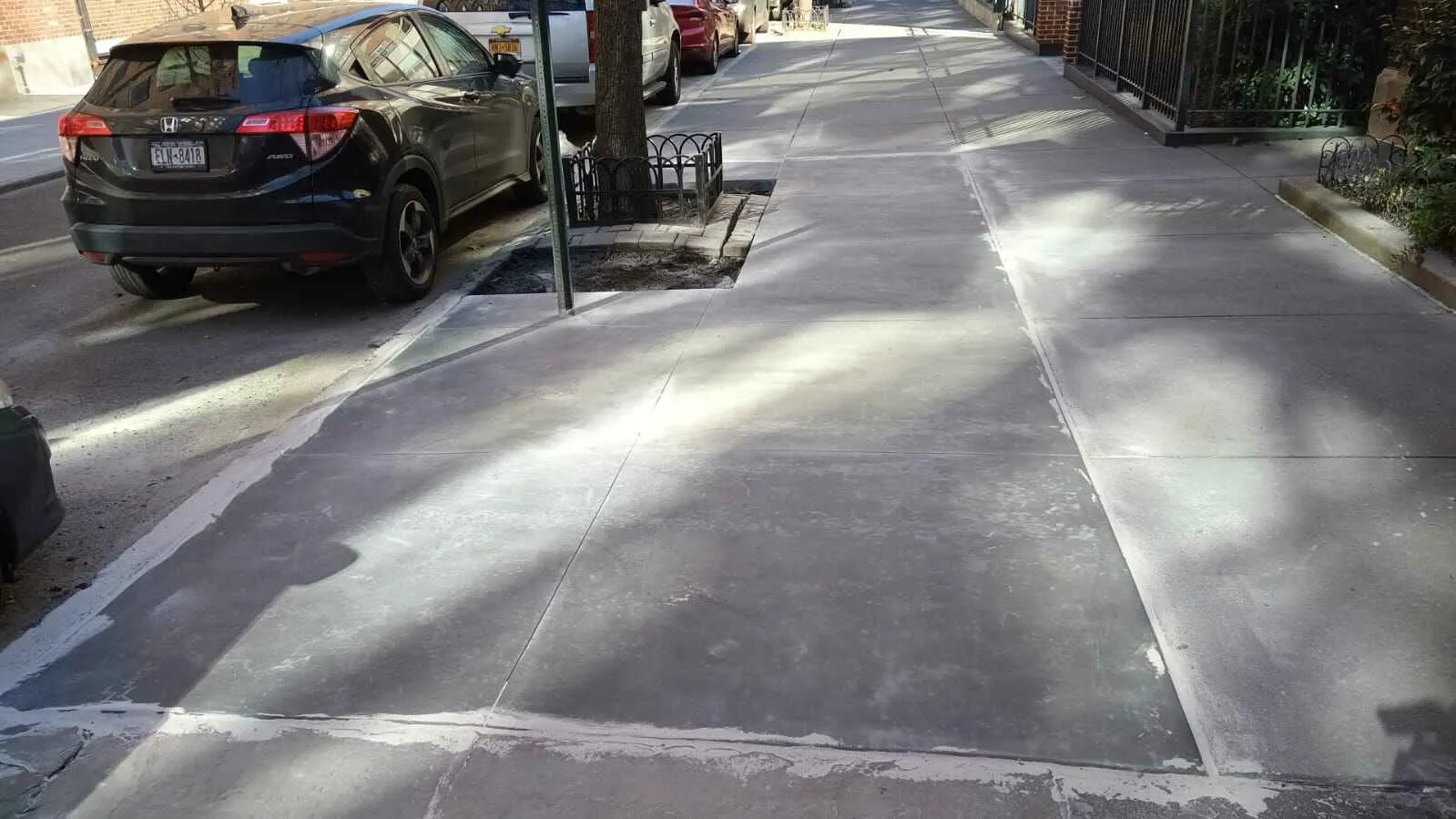
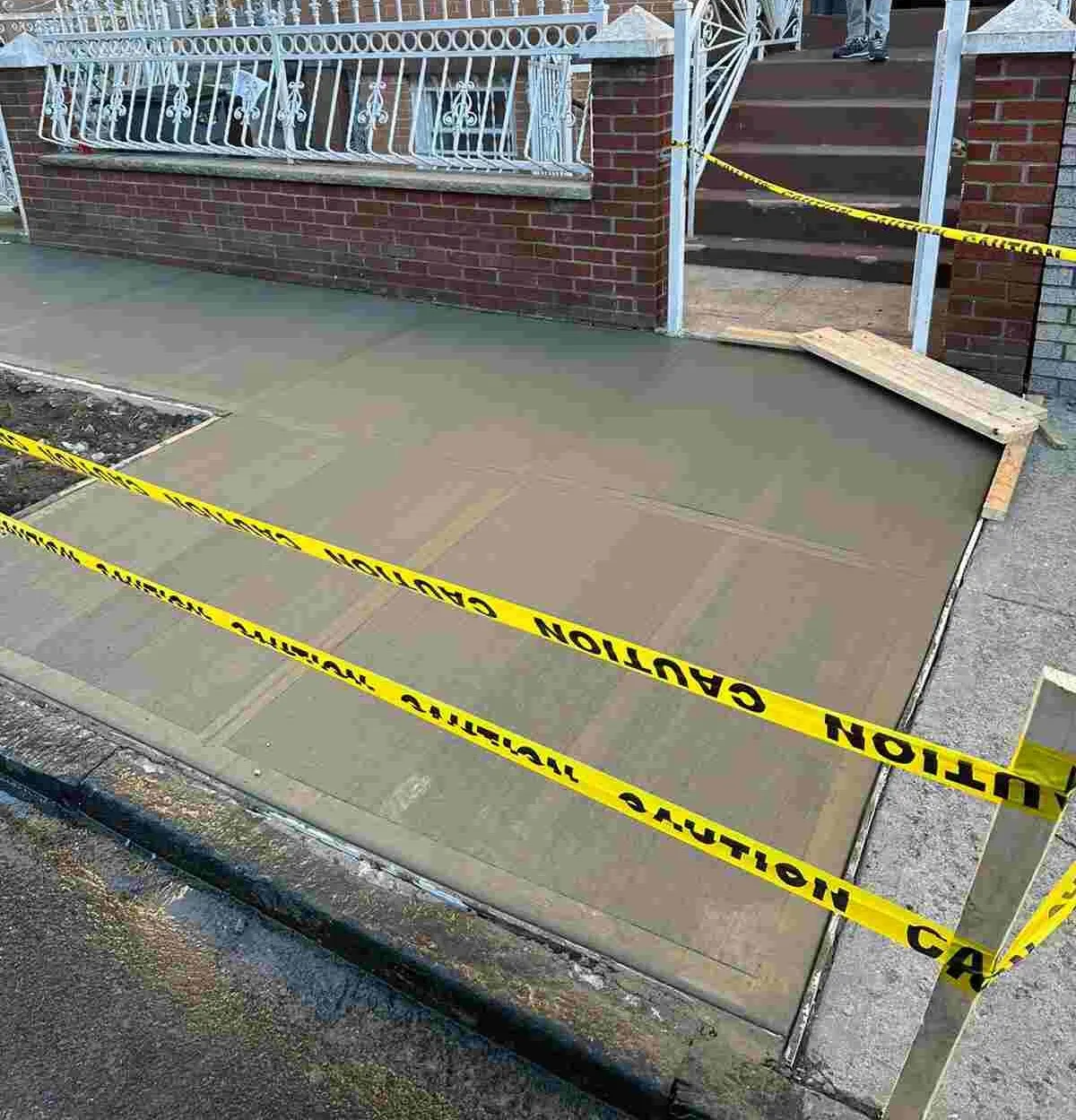
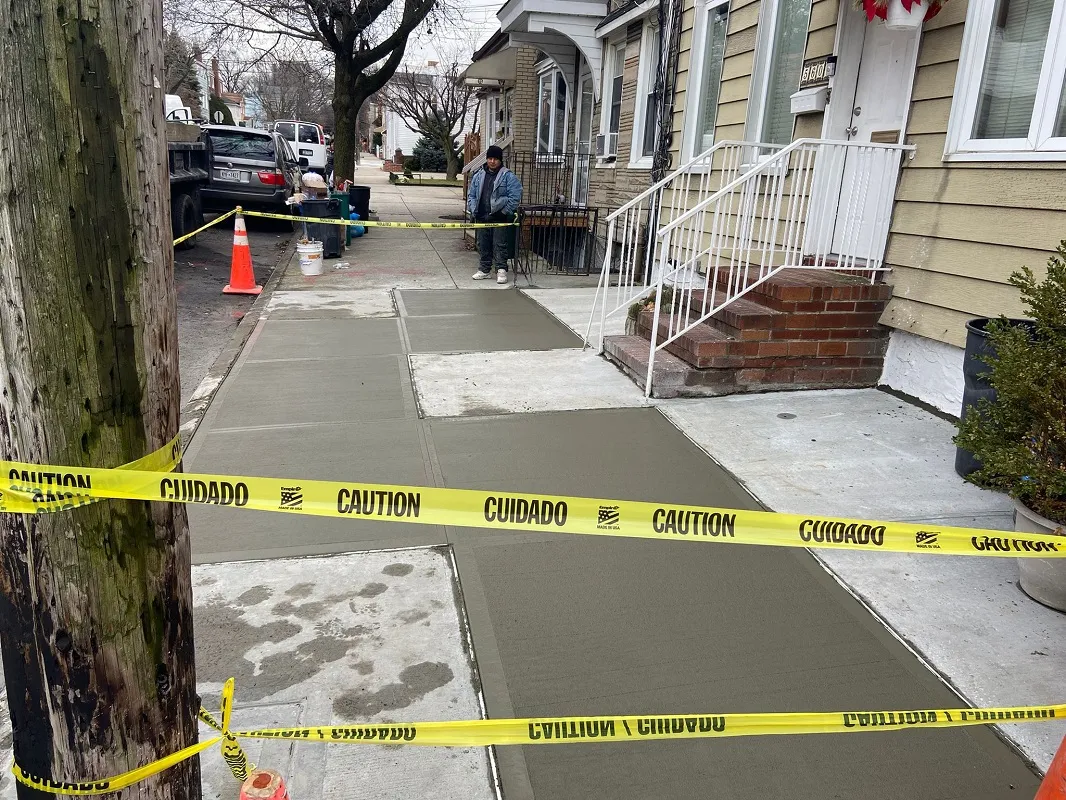
If your flag is numbered on a Preliminary Inspection Report, it has to be replaced. DOT's Street Works Manual states that patching of individual flags is not permitted, and § 19-152 defines patchwork (less-than-full-depth repairs to all or part of a broken, cracked or chipped flag) as a defect in its own right. A levelled flag does not survive a dismissal inspection, and you end up paying for the level and then for the replacement.
Ask directly: "will this pass a DOT dismissal inspection on a cited flag?" If the answer is anything other than a clear yes with the reasoning behind it, you are buying time, not compliance.
When leveling genuinely is the right call
There is a real use case, and it is about liability rather than compliance.
Section 7-210 makes property owners potentially liable for personal injuries caused by failure to maintain a reasonably safe sidewalk. That exposure exists the moment a hazard does. It does not wait for DOT to inspect. If you have a raised lip that someone is catching a foot on, and full replacement is weeks away because of budget, Parks permitting or scheduling, reducing that lip now has genuine value.
So: leveling as interim risk reduction on an uncited frontage, yes. Leveling as a violation fix, no.
The threshold you are working against
NYC gives you an actual number rather than a judgement call. A trip hazard exists where the vertical surface difference between adjacent sidewalk flags is greater than or equal to 1/2 inch. A single surface defect also qualifies if it measures 1 inch or more in all horizontal directions and 1/2 inch or more in depth.
Half an inch is less than most people picture. It is worth measuring your frontage rather than eyeballing it: a straightedge and a tape will tell you in ten minutes whether you are already at a citable condition.
Why the flag moved at all
Leveling treats the symptom. Whether that is acceptable depends entirely on the cause, and in the Bronx the causes are fairly predictable:
- Street tree roots: the most common by a distance on residential blocks. A growing root will re-lift a levelled flag, because nothing about grinding the lip has changed the root. Roots also cannot legally be cut without written NYC Parks permission.
- Base washout: water moving material out from under the slab, often from a downspout discharging at the walking line.
- Utility trench settlement: backfill that was never properly compacted, settling for years afterwards.
- Frost movement: freeze-thaw cycling lifting and dropping slabs seasonally.
- Vehicle loading on 4-inch sidewalk: a crossing that was never built as one.
Only the last two are ever plausibly stable after a level. The first three will come back.
What we recommend instead, and when
- Measure the differentialEstablish whether you are already at or past the half-inch citable threshold.
- Find the causeIf it is a root, that determines everything downstream, including Parks involvement.
- Check for an existing violationIf flags are already cited, replacement is the only route to dismissal and we will say so.
- Reduce immediate risk if replacement has to waitSensible interim measures on an uncited frontage where someone could genuinely be hurt in the meantime.
- Replace to specificationFull-depth flags, corrected base, slope set to fall toward the curb: the repair that both lasts and passes.