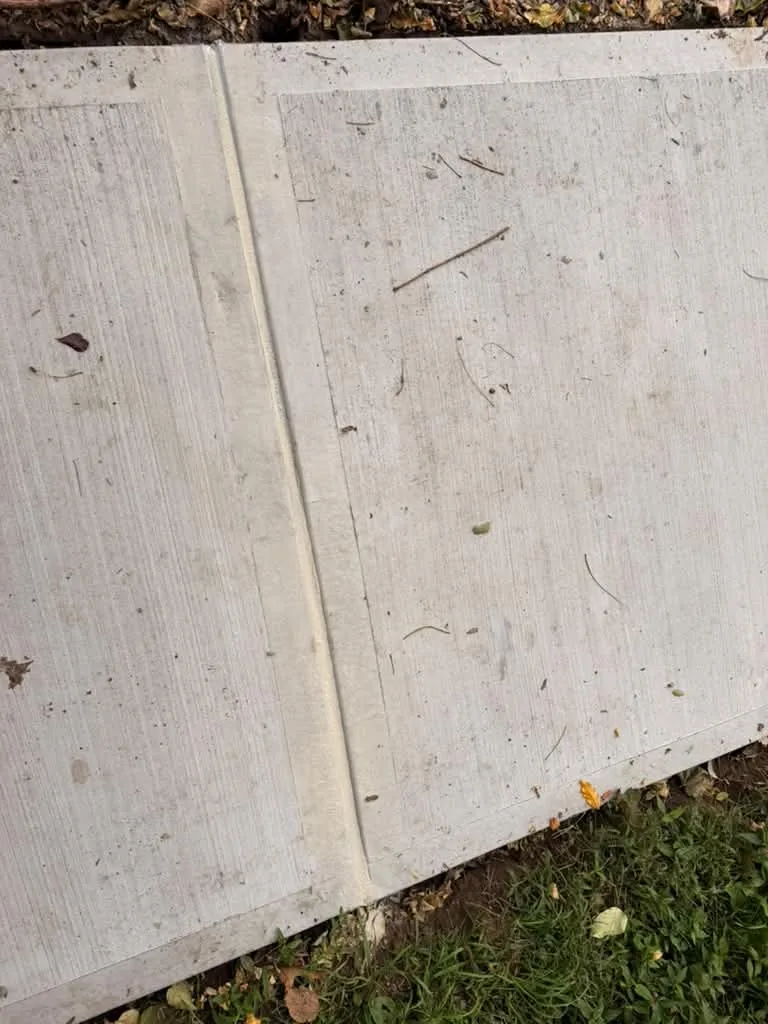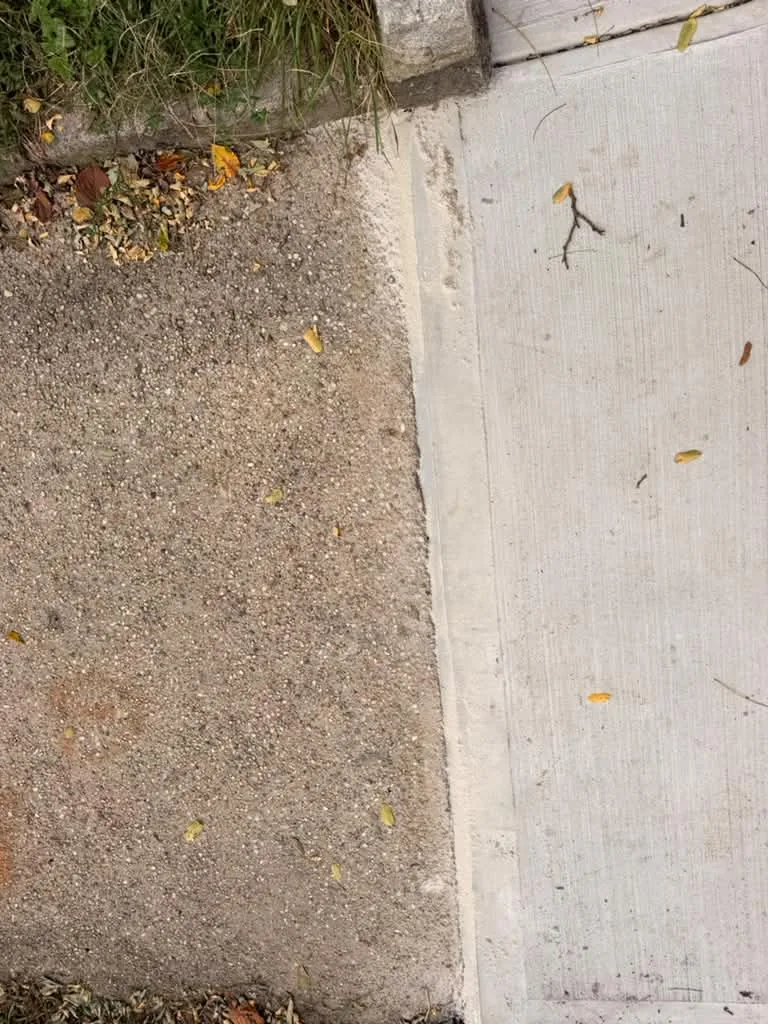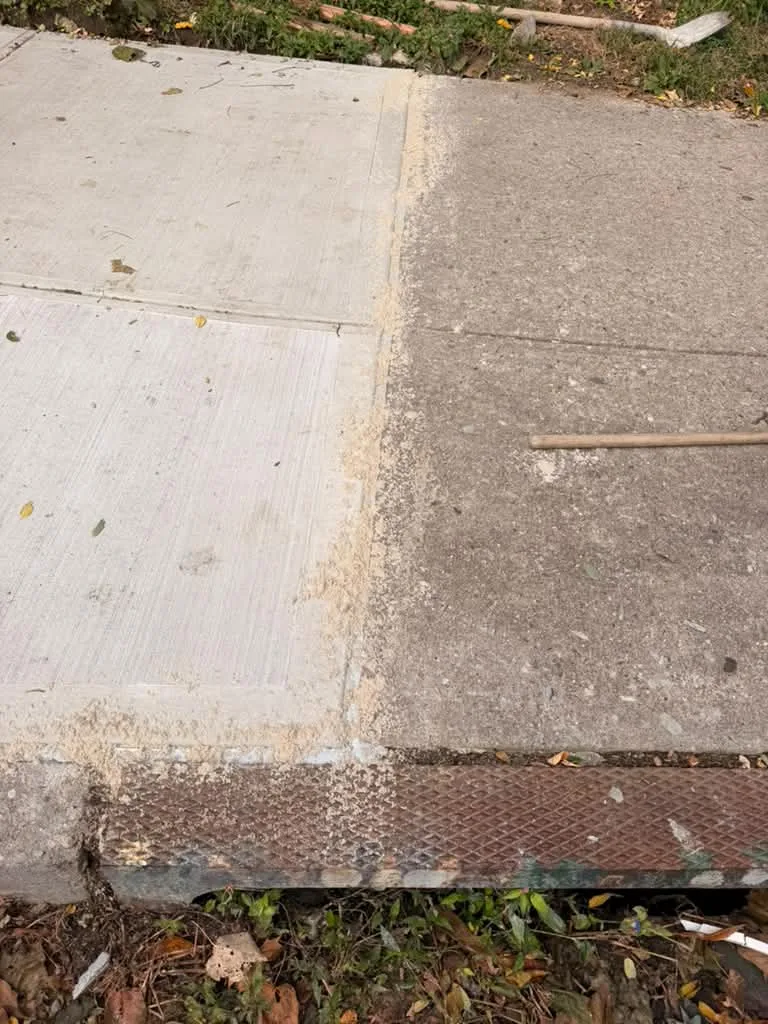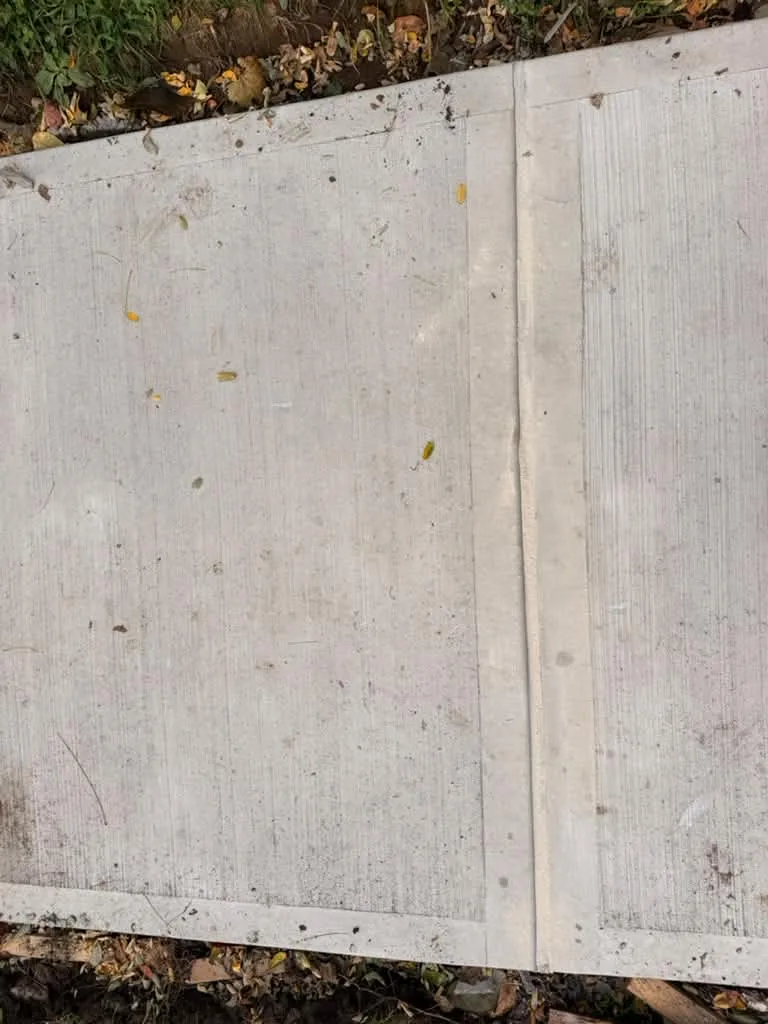
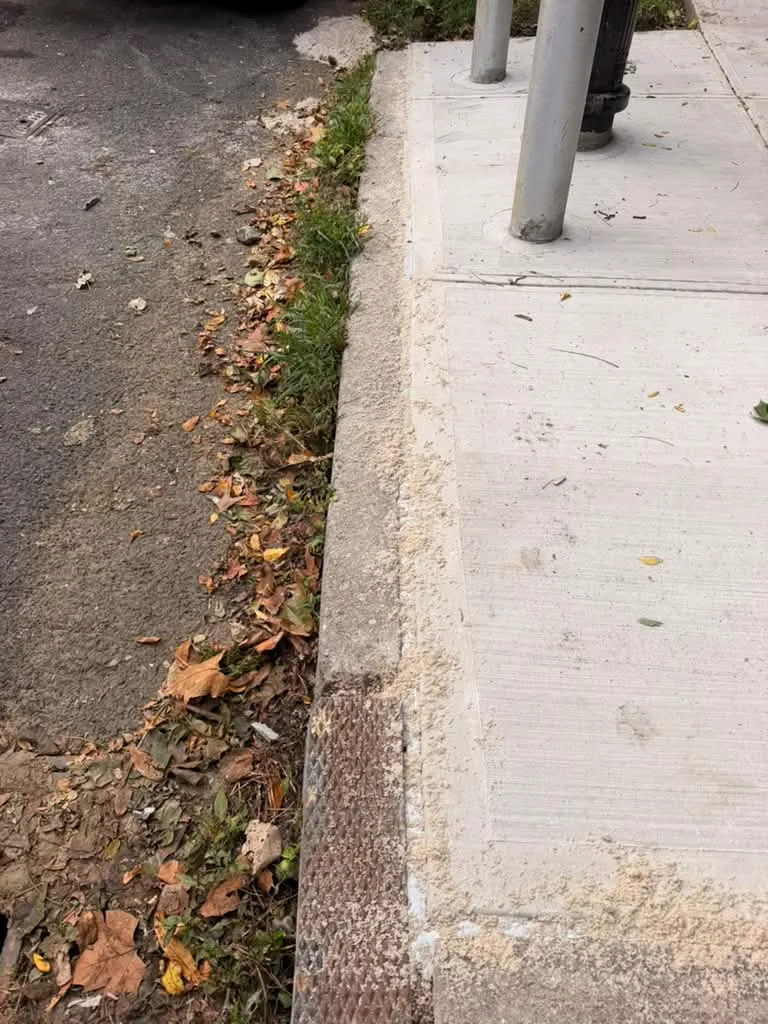
Fieldston is known for quiet, tree-lined streets, and those same large trees are often what quietly wreck the pavement beneath them. In front of a single-family home in the Riverdale section of the Bronx, the roots of an old street tree had been working under the sidewalk for a long time. Eventually seven slabs rose, split, and tilted enough that the city issued a DOT violation. The homeowner searched Google and called our team at Sidewalk Repair Contractors Bronx. Below is how we guided the job from the first notice to the final sign-off.
- Project
- Tree Root-Damaged Sidewalk Repair and NYC DOT Violation Removal
- Client
- Residential Property Owner
- Location
- 5517 Fieldston Rd, Bronx, NY 10471
- Neighborhood
- Riverdale / Fieldston
- Property Type
- Detached single-family residence
- Damage Cause
- Years of ordinary wear combined with the spreading roots of a mature street tree. Together they broke down and lifted 7 concrete sidewalk slabs, leaving uneven, cracked sections that created trip hazards in front of the home.
- Services Provided
- Removal and replacement of 7 damaged sidewalk slabs, NYC DOT sidewalk construction permit filing, sidewalk closing permit coordination, 811 utility mark-out coordination, NYC Parks Tree Work Permit coordination, authorized root pruning where required, new concrete sidewalk installation, and final NYC DOT violation dismissal inspection and sign-off.
- Estimated Project Cost
- Approximately $4,200, including required permits and approvals, concrete removal, root-related work, and sidewalk replacement.
- Total Sidewalk Area Repaired
- Approximately 175 square feet / 7 concrete slabs
- Project Completion Time
- Up to approximately 60 days, covering permit coordination, required approvals, construction, inspection, and final NYC DOT violation sign-off.
- How the Customer Found Us
- After the DOT violation arrived in the mail, the homeowner went online looking for a Bronx sidewalk contractor who understood tree-root problems and the city's approval process. A Google search led them to us. Our record of handling sidewalk violations across the borough, working with both NYC DOT and NYC Parks, and seeing each job through from filing to sign-off gave them the confidence to call.
Why This Sidewalk Failed
Two forces were at work on this walkway, and neither would have gone away on its own.
The first was time. Concrete that has endured decades of freezing winters, summer heat, and daily foot traffic slowly becomes brittle. Hairline cracks open, the surface flakes, and the slab loses its ability to flex.
The second was the tree growing at the curb. Year after year its roots grew thicker and pushed outward beneath the pavement. Once they pressed upward against slabs that were already weakened, the concrete had nowhere to go but up. Several sections cracked through and tipped out of line with their neighbors.
By the time the homeowner received the notice, seven slabs showed lifted edges, open cracks, and abrupt changes in height. On a residential block where neighbors, children, and delivery workers walk every day, that is exactly what an inspector is trained to cite.
Responsibility for the sidewalk rests with the property owner, even though the tree itself belongs to the city. Homeowners with a one-family house get some relief from the injury liability that larger buildings face under NYC Administrative Code §7-210, but the duty to keep the walkway in repair, and the violation that follows when it is not still land on the property.
What We Found on Site
Our walkthrough confirmed seven affected slabs covering about 175 square feet. The worst of the lifting was concentrated next to the tree, where joints had jumped upward and the concrete had fractured. The remaining slabs showed more routine age-related breakdown.
A quick fix was never going to hold. Grinding the raised edges or filling the cracks would have smoothed what could be seen while leaving the roots in place below. Within a few seasons the same slabs would have heaved again, and the violation could have returned. Our recommendation was to remove the damaged section entirely, address the roots under proper authorization, and pour new concrete onto a prepared base.
Our Approach, Step by Step
Here's how we went through the process
Securing the Right Permits First
The crew did not touch the slabs until the paperwork was in order. We prepared and coordinated each of the following:
- Sidewalk Construction Permitthe primary DOT approval to remove and rebuild the damaged slabs
- Sidewalk Closing Permitso people on foot could be routed safely around the work area
- 811 Utility Mark-Outrequested before any digging so buried lines were located and marked
- NYC Parks Tree Work Permitneeded because roots belonging to a street tree cannot be cut without Parks Department approval
Homeowners most often overlook the tree permit. Trimming roots without it can create new trouble with the city on top of the existing violation, so we handled it alongside everything else rather than leaving the owner to sort it out.
Carrying Out the Repair
With approvals in hand, the work moved through these stages:
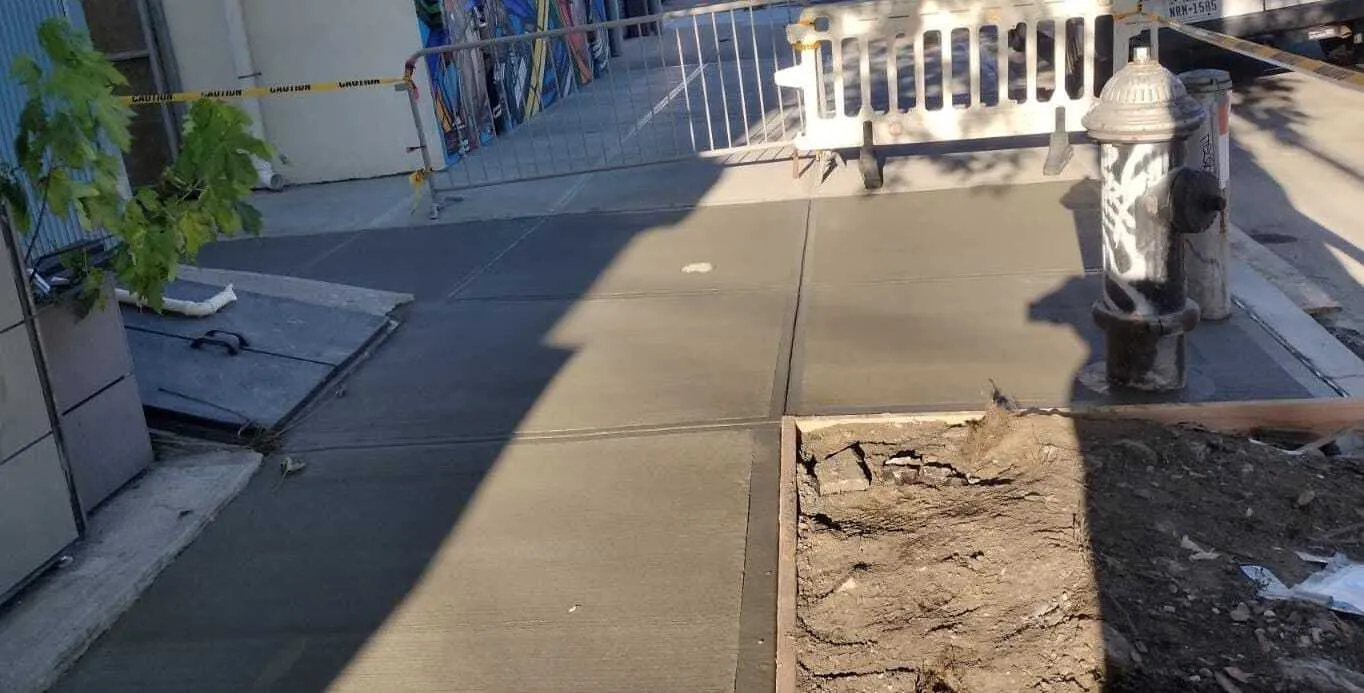
- Breakout and removalAll seven failed slabs were broken up and carted away, exposing the soil and the roots beneath.
- Careful root workWhere roots intruded into the new slab area, they were pruned only as far as the Parks permit allowed, protecting the long-term health of the tree.
- Subgrade preparationThe ground was cleared, leveled, and compacted so the new concrete would rest on a firm, uniform surface.
- Pouring the new slabsConcrete was placed to the thickness DOT requires, with expansion joints positioned to absorb ground movement and keep cracks from reforming in the same places.
- Finishing and curingThe surface was finished flush with the neighboring sidewalk and protected while it cured, before anyone was allowed to walk on it.
Inspection and Violation Sign-Off
Once the concrete had cured, we booked the DOT inspection and attended it for the homeowner. The work passed, and the violation was dismissed and signed off.
The Outcome
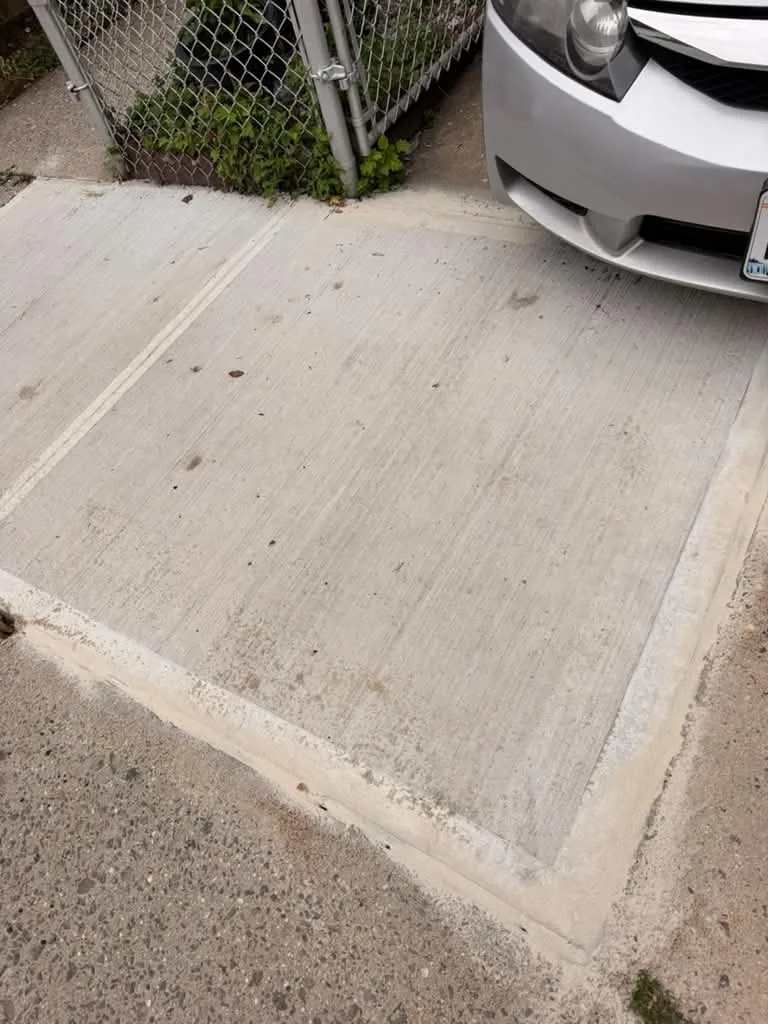
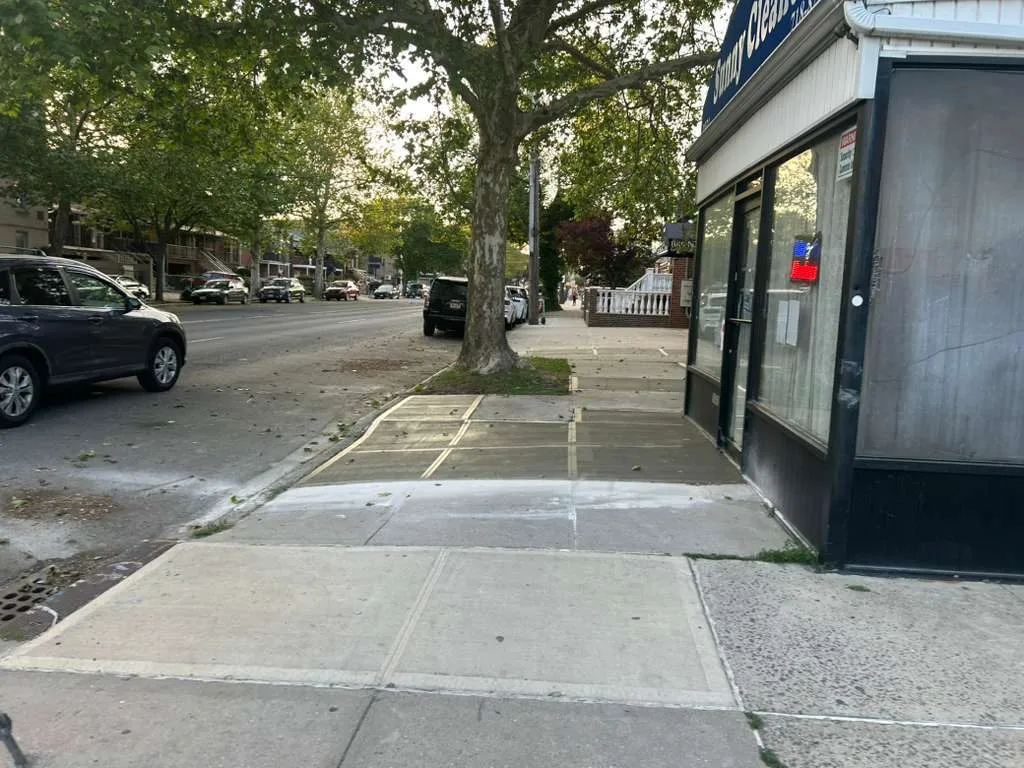
Seven slabs, about 175 square feet of walkway in front of the home, now sit flat, continuous, and solid underfoot. The trip hazards are eliminated, the roots were dealt with under the correct permit, and the DOT violation is closed. The homeowner has a compliant sidewalk and no loose ends with either agency.
What the Homeowner Said
"When the violation letter came, I had no idea where to begin, especially with the tree involved. They handled the DOT filing and the Parks permit, checked in with me along the way, and got the violation dismissed. The new sidewalk looks clean, and I no longer worry about someone tripping in front of my house."
Homeowner, Riverdale/Fieldston, Bronx
Why Fieldston and Riverdale Homeowners Call Us for Root Damage
Replacing concrete is the easy part of a root-damage job. The harder part is making the DOT permit, the Parks approval, the tree, and the inspection happen in the right order, because one skipped step can leave a violation open for weeks. We manage that whole sequence for you, and our working relationships with both NYC DOT and NYC Parks mean you never have to referee between agencies yourself.
Got a Sidewalk Violation in Riverdale, Fieldston, or Elsewhere in the Bronx?
If tree roots, cracked slabs, or simple age have left your sidewalk out of compliance, Sidewalk Repair Contractors Bronx handles everything, from permits and tree coordination through construction and final DOT sign-off. Reach out today for a free estimate and a consultation with our experienced sidewalk team.
Photos From This Job