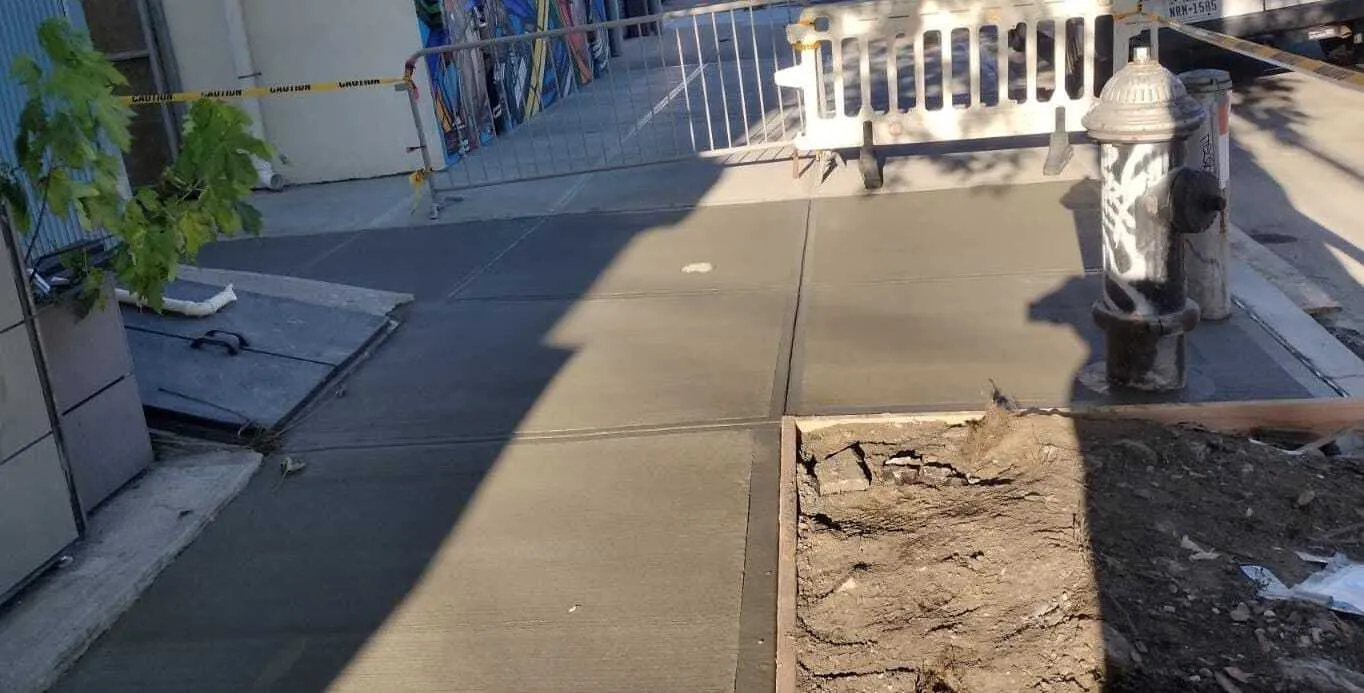
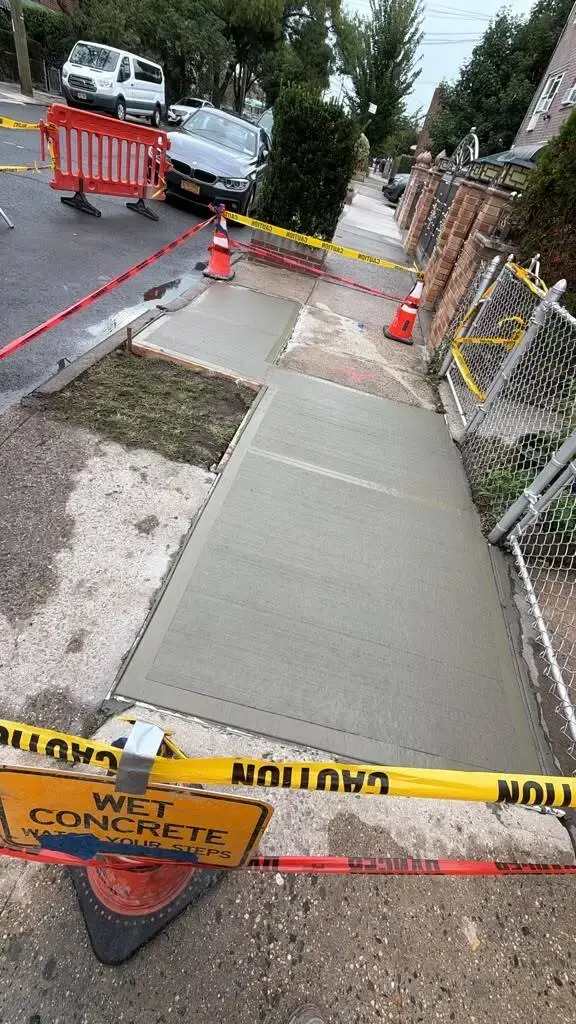
A few hairline cracks in a sidewalk rarely stay small for long. Left alone, weeds find their way into the gaps, and every growing season they push those cracks a little wider until what started as a cosmetic issue turns into an uneven, DOT-flagged trip hazard. That's exactly what happened at a home near Pelham Parkway in Allerton, and here's how our crew at Sidewalk Repair Contractors Bronx took it from violation notice to full compliance.
- Project
- Sidewalk Violation Removal
- Client
- Residential Property Owner
- Location
- 2473 Matthews Ave, Bronx, NY 10467
- Neighborhood
- Allerton, near Pelham Parkway, Bronx
- Property Type
- Residential Property
- Historic/Landmark Status
- The property does not appear to be located within an NYC LPC-designated historic district or designated as an individual NYC landmark.
- Damage Cause
- General age-related wear and tear, combined with weed growth developing through small cracks and joints in the sidewalk. Over time, the vegetation widened minor openings and contributed to further surface deterioration and uneven concrete conditions.
- Services Provided
- Sidewalk slab removal and replacement, NYC DOT sidewalk permit filing, sidewalk closing permit coordination, 811 utility mark-out coordination, and final NYC DOT violation sign-off.
- Estimated Project Cost
- Approximately $4,700, including required permits, approvals, concrete removal, and sidewalk replacement.
- Total Sidewalk Area Repaired
- Approximately 100 square feet / 4 concrete slabs
- Project Completion Time
- Up to approximately 60 days, covering permit coordination, construction, inspection, and final NYC DOT sign-off.
How the Damage Happened
Sidewalk slabs don't need a dramatic cause to fail, sometimes ordinary age is enough. At this Matthews Ave property, small cracks that started as normal wear became an entry point for weeds. Once vegetation takes root in a joint or hairline crack, it doesn't just sit there: the roots expand the opening every time the plant grows, and that slow widening eventually turns a minor blemish into an uneven surface DOT inspectors flag as a hazard.
Because tree roots and vegetation were part of what drove the damage, this project also called for coordination around tree-root-related repair work and, where applicable, an NYC Parks Tree Work Permit, a step that's easy to miss if a homeowner tries to handle a violation without a contractor familiar with how root growth and sidewalk permitting interact.
Under NYC Administrative Code §7-210, the property owner carries responsibility for sidewalk conditions in front of their home, regardless of what caused the damage. Weed-driven cracking is just as much the owner's obligation to fix as damage from heavy traffic or weather.
Site Assessment
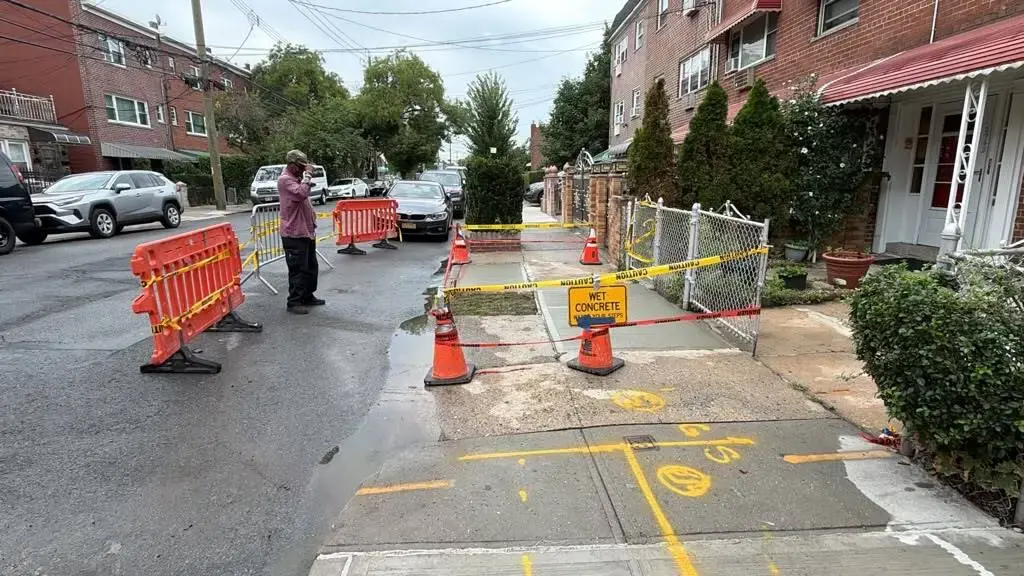
Our team inspected the frontage and identified four damaged slabs, roughly 100 square feet in total, with cracking concentrated around joints where weed growth had taken hold. Because the deterioration traced back to vegetation rather than a single structural failure, we planned the repair around full slab replacement in the affected area rather than a surface patch, which wouldn't stop new growth from returning through the same weak points.
How We Execute the Process
Filing and Approvals
Before any concrete came out, we filed for:
- Sidewalk Construction Permitthe core DOT authorization for slab replacement
- Sidewalk Closing Permitto keep the work zone clear of pedestrian traffic during construction
- 811 Utility Mark-Out Ticketfiled ahead of excavation to flag utility lines beneath the sidewalk
- NYC Parks Tree Work Permitcoordinated given the vegetation and root involvement in the damage
With no historic district overlay on the property, approvals moved through DOT's standard review track.
Construction
Once permits cleared, the crew handled the repair in a single mobilization:
- DemolitionThe four affected slabs were broken out and removed, along with root material contributing to the cracking.
- Base preparationThe subgrade was cleared of remaining root intrusion and compacted to give the new slabs a stable, level base.
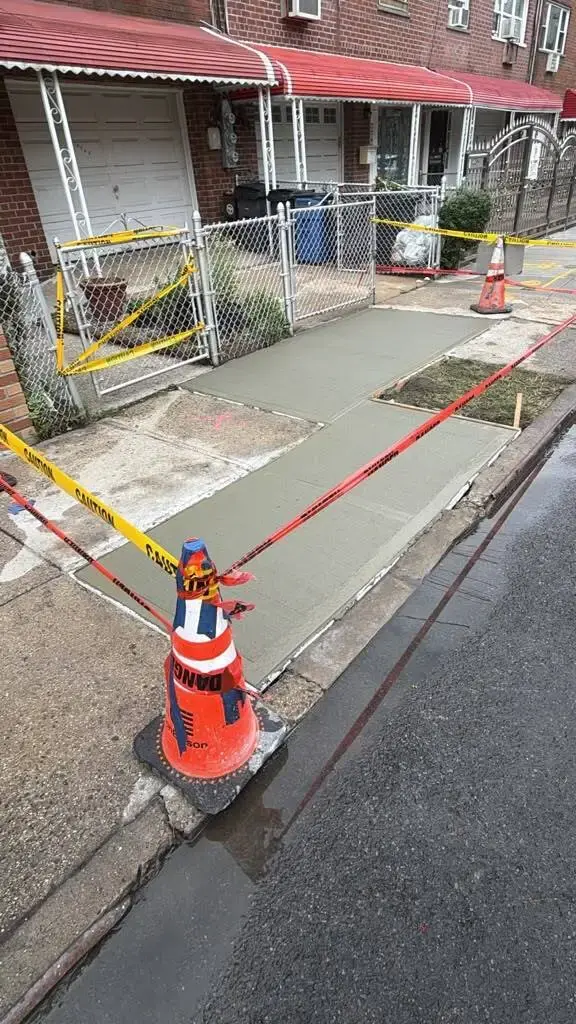
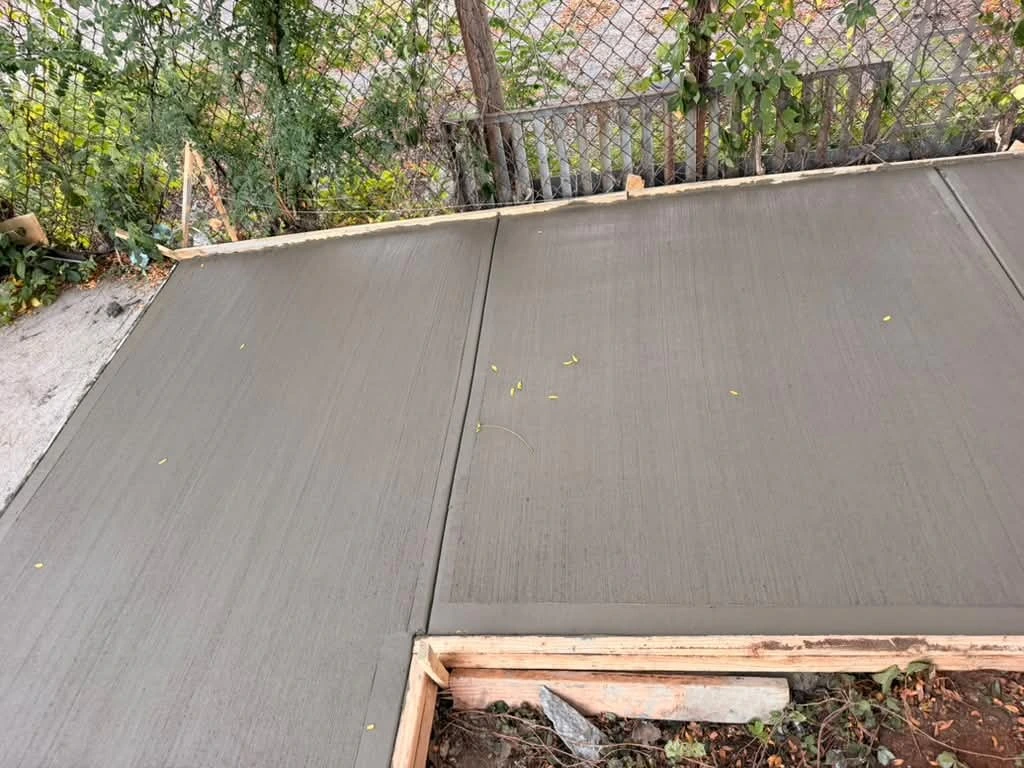
- Concrete pourNew slabs were poured to DOT-required thickness, with expansion joints set to manage future ground movement and reduce the odds of a repeat crack in the same spot.
- Finishing and cureSections were finished to grade and left to cure fully before reopening the sidewalk to foot traffic.
Final Inspection
Once cured, we scheduled and attended the DOT inspection on the homeowner's behalf. The repaired sidewalk passed on the first visit, closing out the violation.
Results
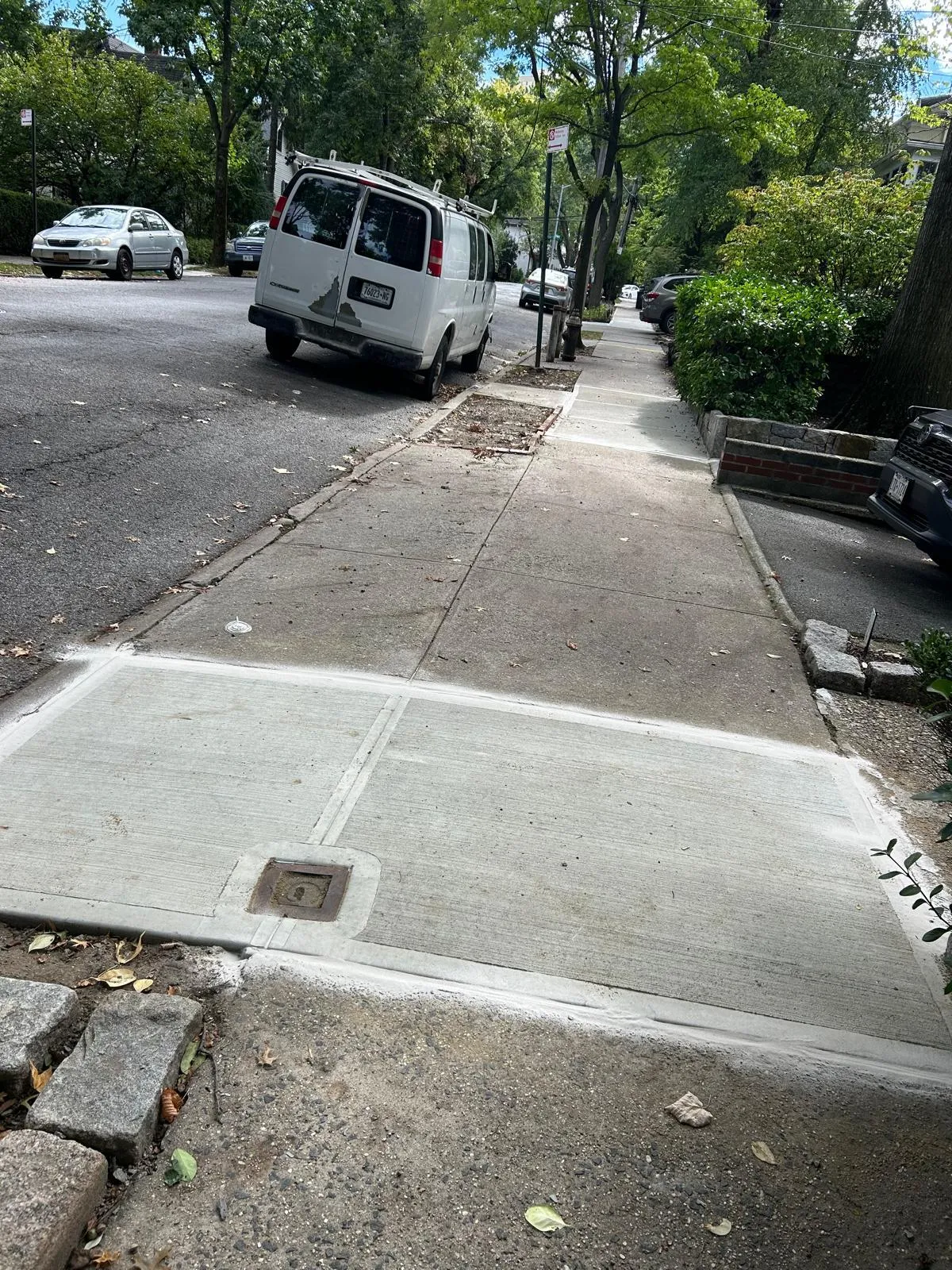
Four slabs and roughly 100 square feet of sidewalk were replaced, removing both the trip hazard and the root cause literally of the original cracking. The repaired stretch passed DOT inspection without a second visit, and the violation was fully cleared.
Client Testimonial
"I honestly didn't think weeds could cause a DOT violation, but apparently that's exactly what happened. They explained the tree permit part clearly, which I wouldn't have known I needed on my own. Everything was done in a day, and it passed inspection for the first time."
Property Owner, Allerton, Bronx
Why Allerton Homeowners Choose Sidewalk Repair Contractors Bronx
Vegetation-driven sidewalk damage comes with a permitting wrinkle a lot of homeowners don't expect. If roots or tree growth contributed to the cracking, a Parks Department tree permit can come into play alongside the standard DOT paperwork. We handle that coordination as part of the same project rather than leaving homeowners to sort it out mid-repair.
Need Sidewalk Violation Repair in Allerton or Anywhere in the Bronx?
If cracking, root growth, or general wear has your sidewalk out of DOT compliance, Sidewalk Repair Contractors Bronx handles the entire process, from permitting and tree coordination to construction and final sign-off. Contact us today to get a free estimate and schedule a consultation with our trusted sidewalk experts.
Photos From This Job