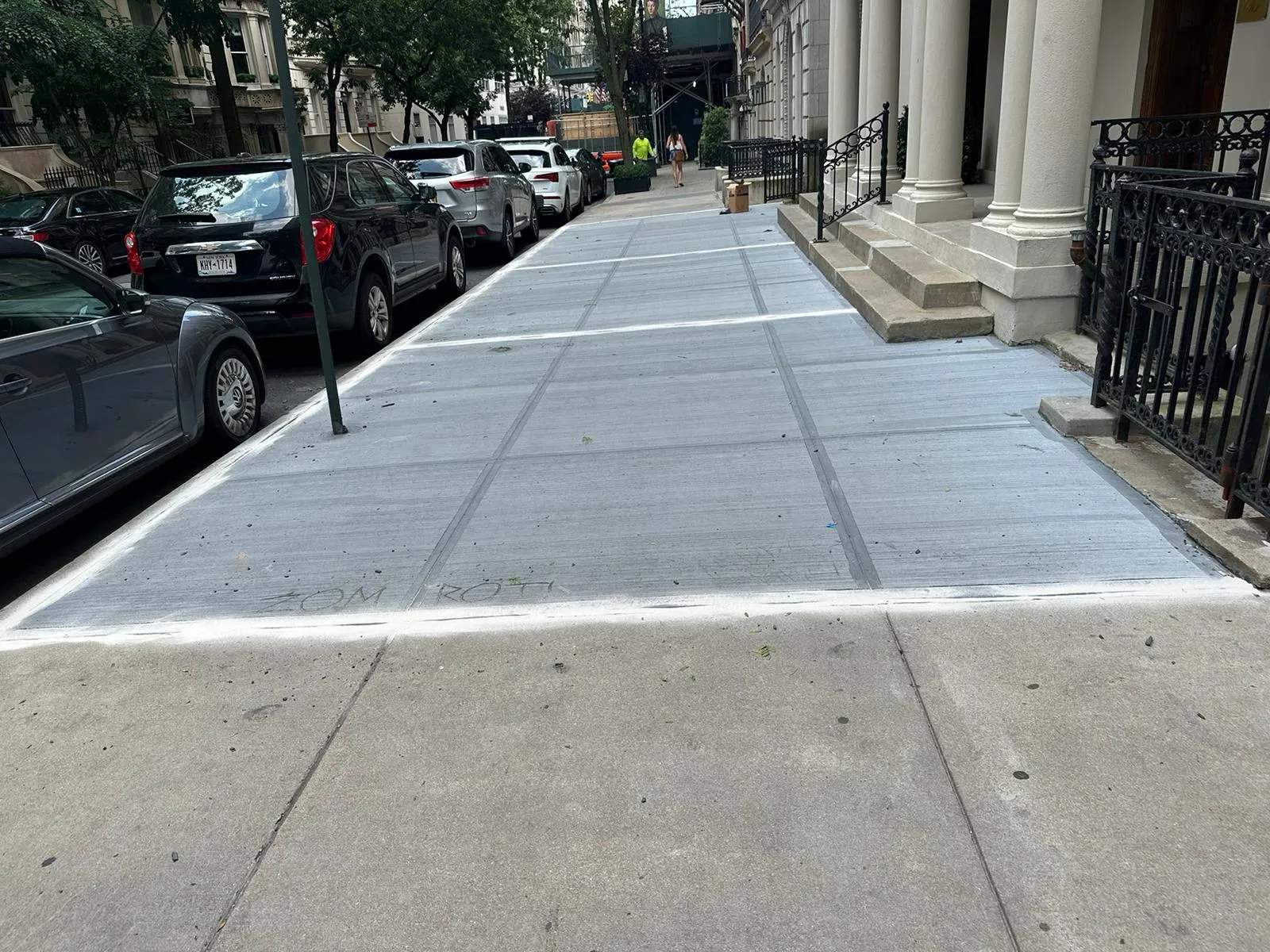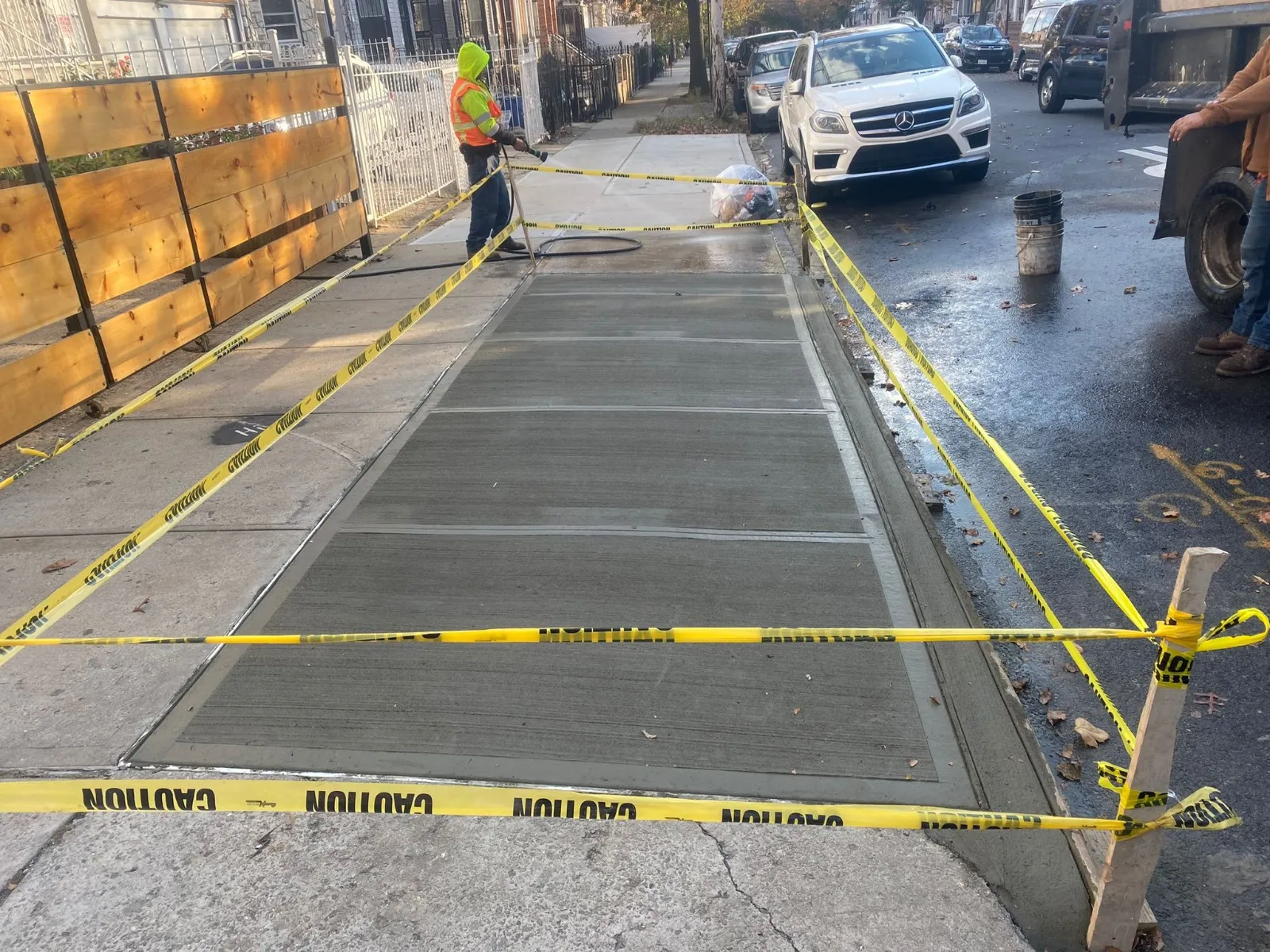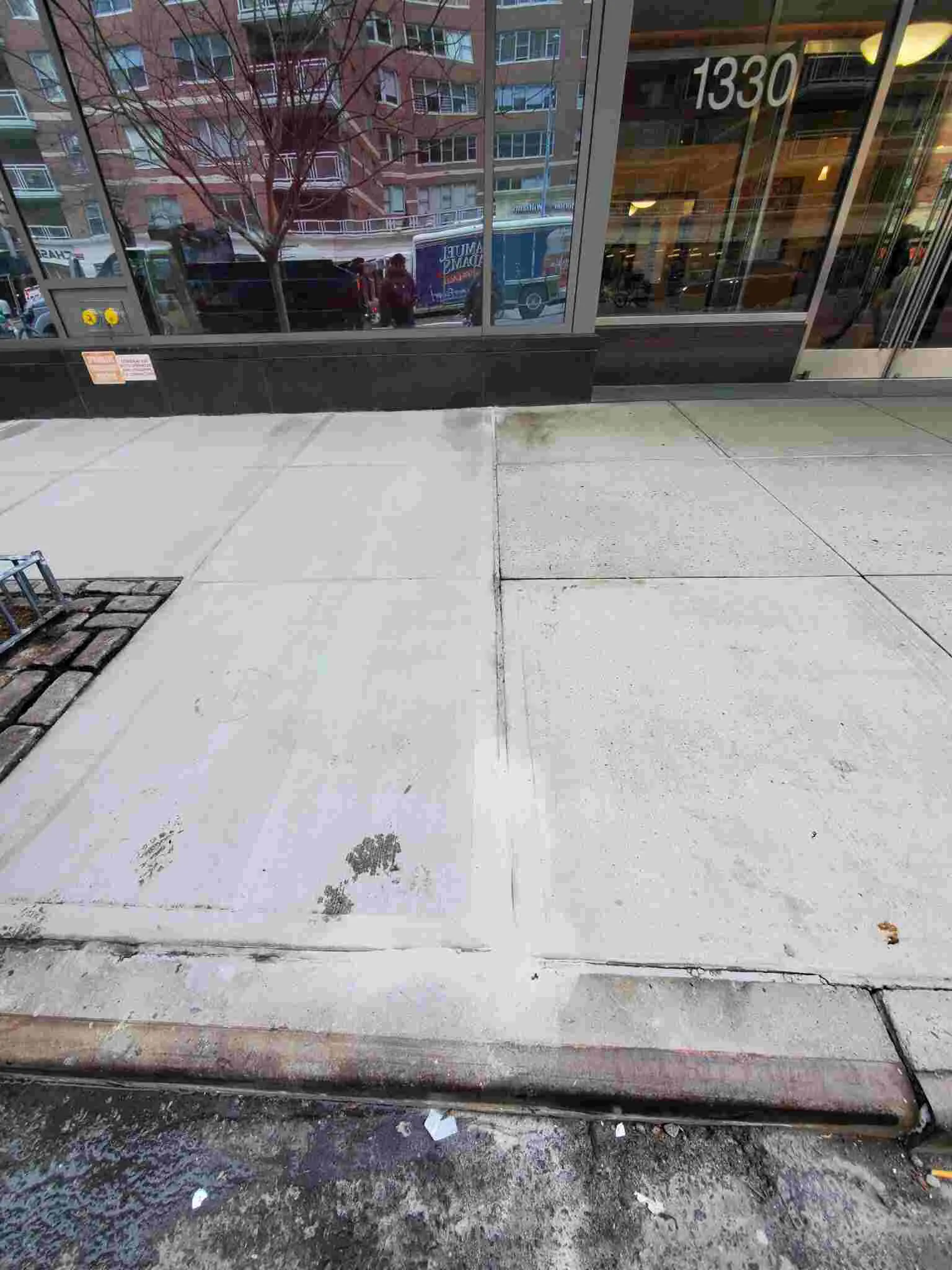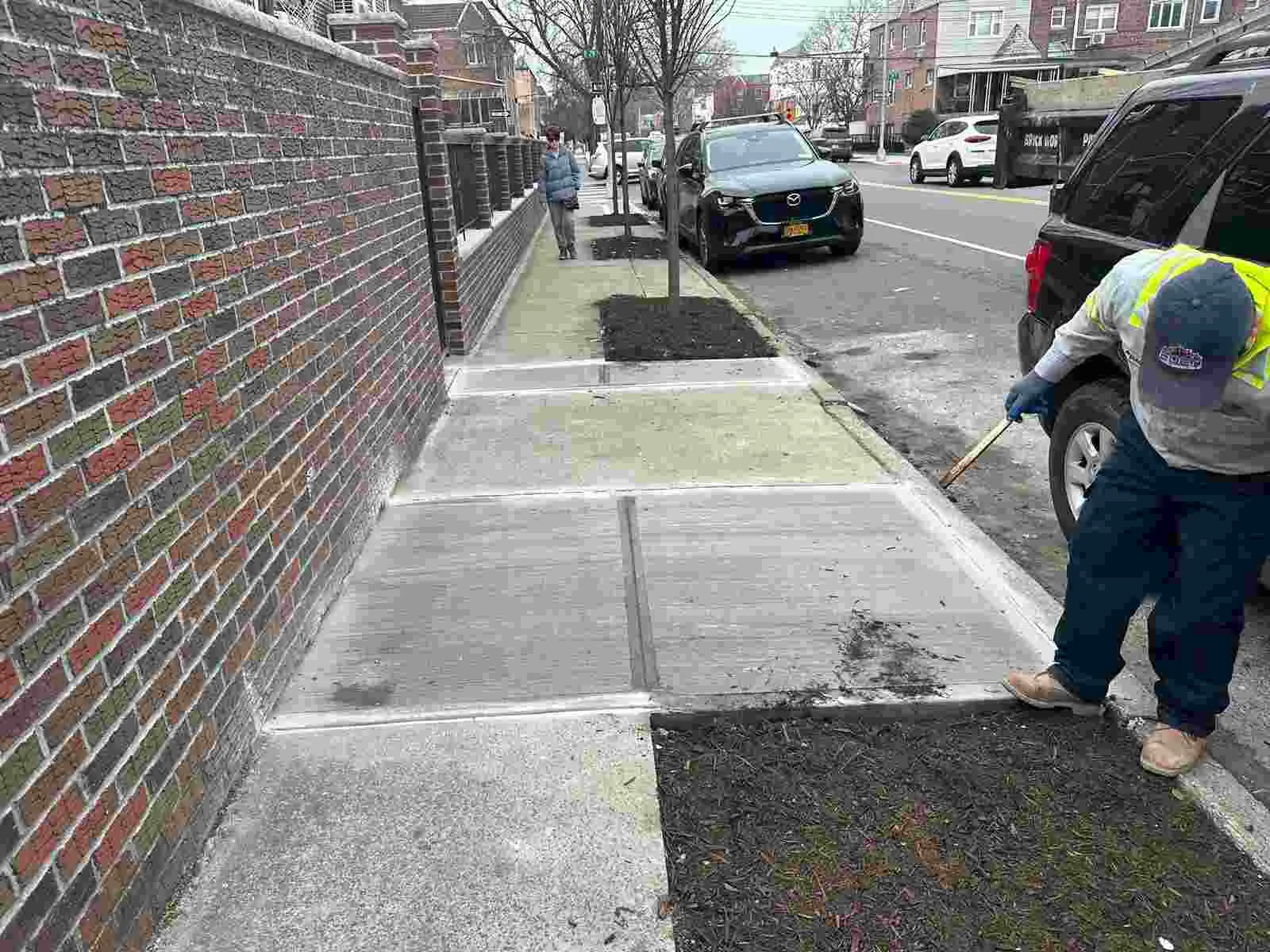
- Undermined flag
- A visible void beneath, or a flag that rocks or seesaws, is a listed defect
- Improper slope
- Flags that do not drain toward the curb and retain water are a defect
- Trip hazard
- Once the level difference reaches 1/2", it is citable on that ground too
- Required fall
- 1"-3" in 5' toward the curb
- The real fix
- Rebuild the 6" foundation: replacing only the slab repeats the failure
A sunken flag is a report on what is underneath it
Concrete does not settle. Whatever is supporting it does. So the useful question is never "how do we lift this slab". It is "where did the support go".
NYC's defect list reflects that. An undermined flag below which there is a visible void, or a loose flag that rocks or seesaws, is a listed defect in its own right. So is improper slope, which includes flags that do not drain toward the curb and retain water. A settled flag frequently triggers both at once, and if it has dropped enough relative to its neighbour it picks up the half-inch trip hazard citation as well.
Where the support usually goes
- Water carrying the base away. The most common cause we find. A downspout discharging at the sidewalk line, a leaking service, or roof water with nowhere to go will move fine material out from under a slab over a few seasons and leave a void.
- Trench backfill that was never compacted. Utility cuts settle for years if the backfill went in loose. The give-away is settlement in a band that runs across the walk rather than in a single flag.
- Organic material left in the subgrade. Roots, stumps or topsoil that were built over rather than removed decompose and consolidate.
- Structure below. Where a vault or cellar extends under the sidewalk, settlement can mean structural movement rather than base loss: a different job entirely, covered on our vaulted sidewalk repair page.
Long before a flag becomes an obvious dip, it will hold a puddle after rain that its neighbours do not. That is worth acting on. It is already a citable improper-slope condition, and it accelerates the freeze-thaw damage that follows.
Why lifting the slab is not our default answer
Techniques that raise a settled slab restore its position without opening the ground. On the right site: a stable void, no ongoing water, no violation attached. That is a legitimate approach.
Our hesitation is twofold. First, if water is still moving through, the void re-forms and the slab drops again; filling it seals the symptom while the cause carries on. Second, if the flag is cited, lifting does not satisfy DOT: flags numbered on an inspection report must be replaced, and patching individual flags is not permitted. We would rather open it up, see the actual condition, and fix the reason.
How we rebuild a settled section
- Find the waterDownspouts, grading, services, the curb line. If water caused it, nothing else matters until that is addressed.
- Check the extentHow many flags are affected, whether the neighbouring flags are undermined too, and whether the curb has moved with them.
- PermitsDOT sidewalk permit, plus a Parks Tree Work Permit where a City tree is within 50 feet.
- Excavate and remove unsuitable materialNot levelled over: taken out. Foundation material that still meets specification can be retained and graded to subgrade; anything that does not is removed.
- Rebuild the baseThe 6-inch foundation the specification calls for, compacted in a way that will not consolidate again under its own weight.
- Pour and set the fall4-inch course (7 at driveways and corner quadrants), joints at spec, and slope re-established toward the curb between 1 and 3 inches per 5 feet so the water leaves.
The Bronx pattern
On older Bronx housing stock the single most frequent cause we trace is roof water. Downspouts that discharge directly onto or beside the sidewalk, often installed decades ago and never reconsidered, quietly wash the base out flag by flag. Replacing the concrete without redirecting that water produces a beautiful new sidewalk that starts settling on the same schedule as the old one, which is why we raise it at the estimate rather than after.