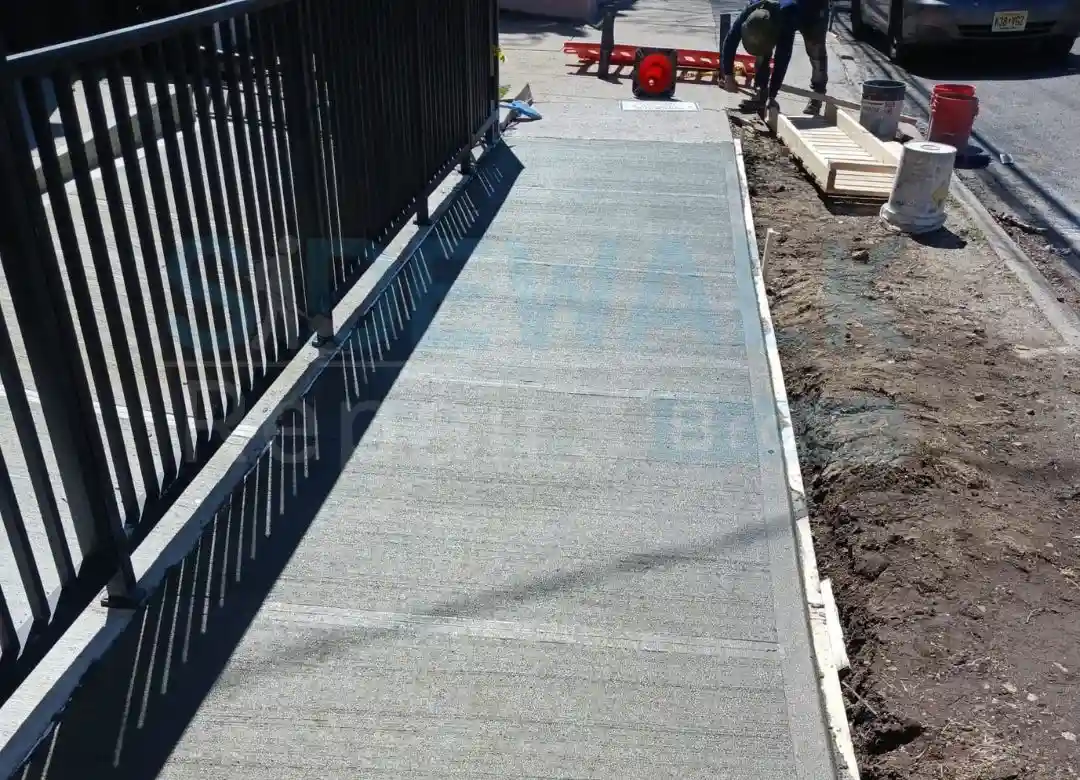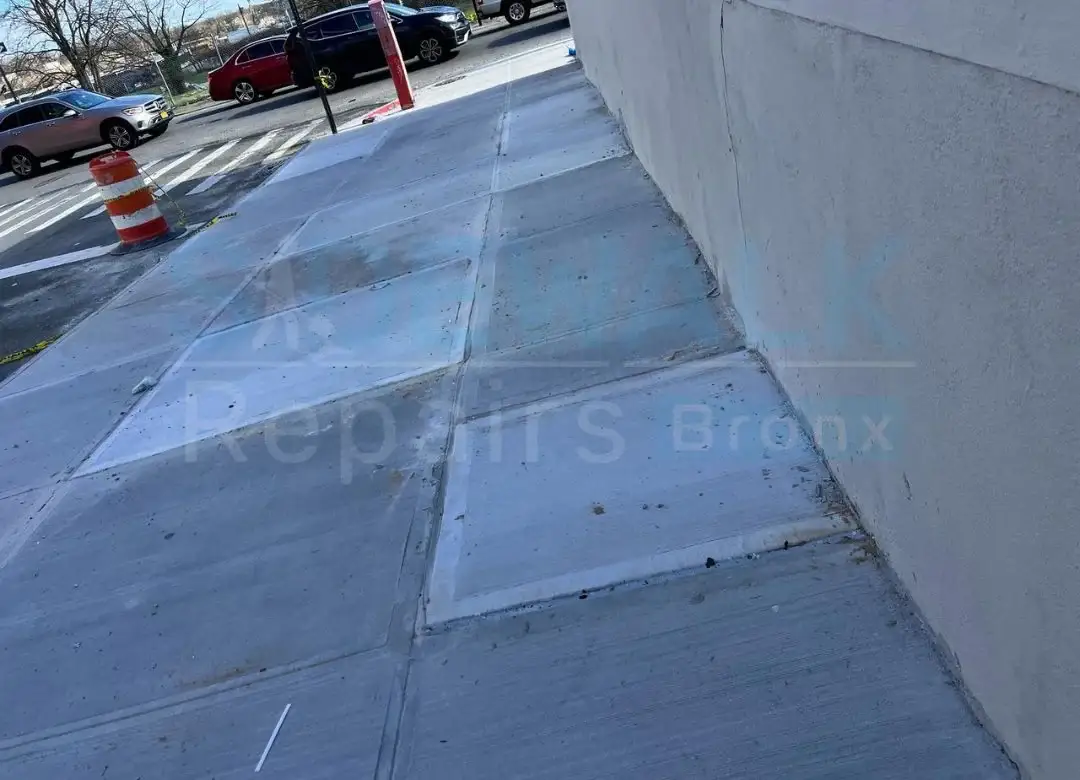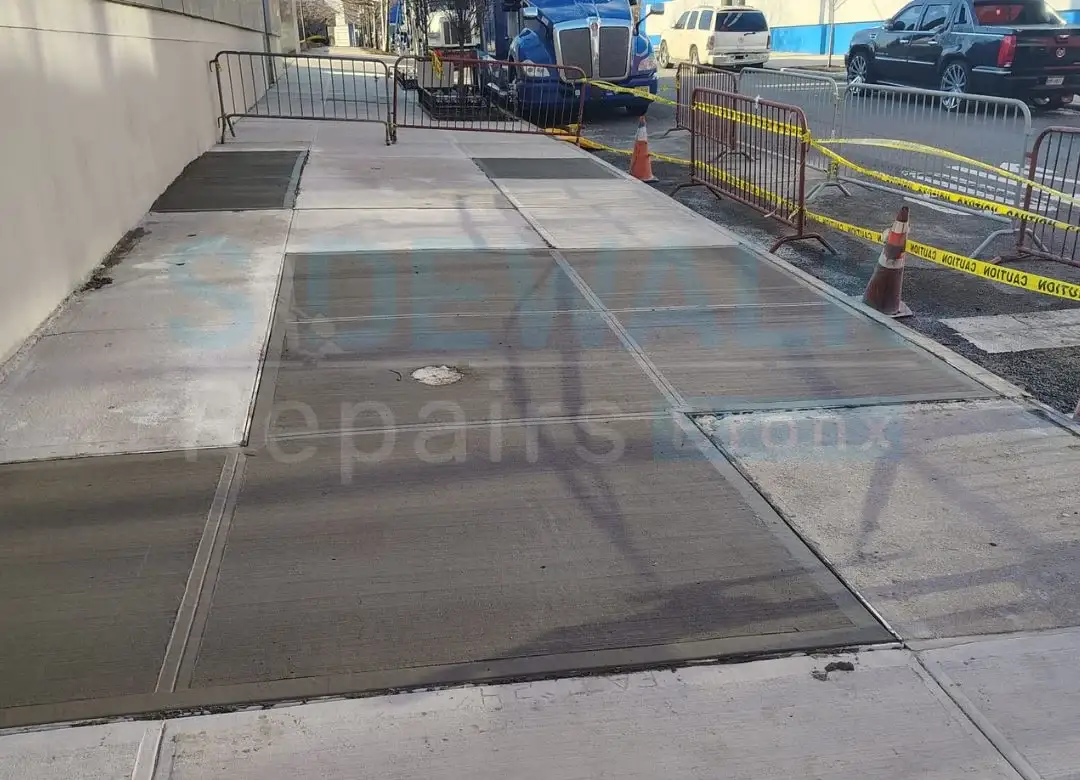

The sidewalk is the first part of your property anyone touches. Buyers, tenants and customers walk across it before they reach the door, and a cracked, lifted or patched sidewalk tells them the building is not cared for. In the Bronx, a damaged sidewalk can also slow down a sale, complicate a refinance and expose you to injury claims. This guide explains how sidewalk condition affects curb appeal, property value and liability, and which repairs make the biggest difference.
First Impressions Start at the Sidewalk
Homes
For one-, two- and three-family homes, the sidewalk and driveway apron frame the front of the house in every listing photo. Broken flags, weeds in the joints and mismatched patches make a well-kept house look neglected. A clean, level sidewalk with straight score lines does the opposite, and it is one of the few exterior upgrades that also removes a safety risk.
Storefronts and Mixed-Use Buildings
On commercial strips, the sidewalk is part of the storefront. Customers decide in seconds whether a business looks open, safe and easy to enter. A level entrance with no lips or holes also matters for people using wheelchairs, walkers and strollers. Our guide to ADA sidewalk requirements in NYC covers the measurements that matter.
Selling or Refinancing With a Damaged Sidewalk
A sidewalk problem rarely stops a deal on its own, but it can add delays, costs and negotiation at the worst time.
| Situation | How it can affect a sale or refinance | What to do |
|---|---|---|
| Visible cracks, lifts or patches | Buyers and inspectors flag them and may ask for a price reduction or credit | Get a written estimate so the cost is known, or repair before listing |
| Open DOT sidewalk violation | Can turn up in the municipal searches done before closing and become a condition of the deal | Repair to DOT standards and get the violation dismissed |
| Unpaid City repair bill | An unpaid bill for City sidewalk work can become a lien on the property, which must be cleared | Pay the bill and keep proof of payment |
| Recent repair with no paperwork | Raises questions about whether the work was permitted and accepted | Keep the permit, invoice, photos and any dismissal notice |
If you plan to sell in the next year or two, check your sidewalk now. A repair takes days, but permits, tree work approvals and a 75-day violation deadline can take much longer. See what happens if you ignore sidewalk repairs for how a violation moves toward a City bill and lien.
Safety and Liability
Looks are only half of it. Under Section 7-210 of the NYC Administrative Code, most property owners are liable for injuries caused by a poorly maintained sidewalk next to their property. The main exception is owner-occupied one-, two- and three-family homes used only as residences.
Sidewalk falls are common. In fiscal year 2023, New Yorkers filed 2,350 personal injury claims over sidewalk conditions against the City alone, according to the NYC Comptroller's annual claims report. Claims against private owners and their insurers come on top of that. A height difference of 1/2 inch or more between flags is both a defect DOT can cite and a classic trip hazard. Our guide to uneven sidewalk trip hazards shows how to measure it.
Repairs That Improve Both Safety and Curb Appeal
- Full flag replacement instead of patches. Patches never match the surrounding concrete and crack again. Replacing defective flags is also what DOT requires. See sidewalk replacement.
- Straight, even score lines. NYC rules call for 5 by 5 foot flags where feasible. Clean, uniform lines make a sidewalk look new and orderly.
- Sealed joints. Weeds and dirt in open joints look untidy and let water in. Our guide to expansion joints explains what DOT requires.
- Curb and driveway apron. A chipped curb or broken apron spoils an otherwise good sidewalk. See curb repair and replacement and driveway apron repair.
- Consistent finish. When several flags are replaced at once, the new concrete matches itself, which looks far better than one new flag next to old ones.
How to Plan a Sidewalk Upgrade
- Walk the frontage and note every lifted, broken or patched flag. Our checklist of 5 signs your Bronx sidewalk needs repair helps.
- Get a written quote that lists the flags, curb or apron work and permits. See typical sidewalk repair cost in NYC.
- Allow time for permits. Every repair needs a DOT permit, and work near a City tree also needs a NYC Parks Tree Work Permit. See NYC sidewalk permit requirements.
- Schedule the work between spring and fall, when concrete cures properly.
- Keep every document. They answer buyer, lender and insurer questions later.
- Keep it looking good with a simple routine. Our year-round sidewalk maintenance checklist covers each season.
Get Your Bronx Sidewalk Ready to Impress
Our licensed Bronx crew replaces damaged flags, curbs and aprons to DOT standards and leaves a clean, uniform finish. Selling with an open notice? We handle sidewalk violation removal in the Bronx through final dismissal.
Call (718) 619-4844 | Get a Free Estimate
Frequently Asked Questions
Does a damaged sidewalk lower property value?
It can affect what buyers are willing to pay. Cracked or lifted flags hurt first impressions and listing photos, and buyers often ask for a credit or price cut to cover the repair. An open DOT violation or unpaid City repair bill adds problems that must be cleared before closing.
Can I sell a house with an open sidewalk violation in NYC?
Often yes, but it can complicate the deal. Open violations can show up in the municipal searches done before closing, and buyers or lenders may require the repair or a credit. Fixing the sidewalk and getting the violation dismissed before listing avoids that.
Will an unpaid sidewalk repair bill affect a refinance?
It can. If the City repaired your sidewalk and the bill goes unpaid, it can become a lien on the property, and liens generally have to be cleared before a refinance or sale can close.
Is sidewalk repair worth it before selling?
Usually, if the sidewalk has visible defects. A repair is a known, fixed cost, while a buyer's credit request is often higher. It also removes a liability risk while the property is being shown.
Who is liable if a customer trips in front of my store?
In most cases the property owner, under Section 7-210 of the Administrative Code. A lease may shift costs to a commercial tenant, but the owner's duty to keep the sidewalk reasonably safe generally remains.
Do patched sidewalks look bad to buyers?
Usually. Patches rarely match the surrounding concrete in color or texture, and they tend to crack and loosen. They also do not clear a DOT violation, since NYC rules require defective flags to be fully replaced.
How long does a sidewalk upgrade take?
The concrete work itself usually takes a few days. Permits add lead time, especially a NYC Parks Tree Work Permit, which should be requested at least 20 business days before work near a City tree.
Should I replace the whole sidewalk or only the damaged flags?
Only the damaged flags are required. But replacing several adjacent flags at once often gives a more uniform look and costs less per square foot than separate small jobs.