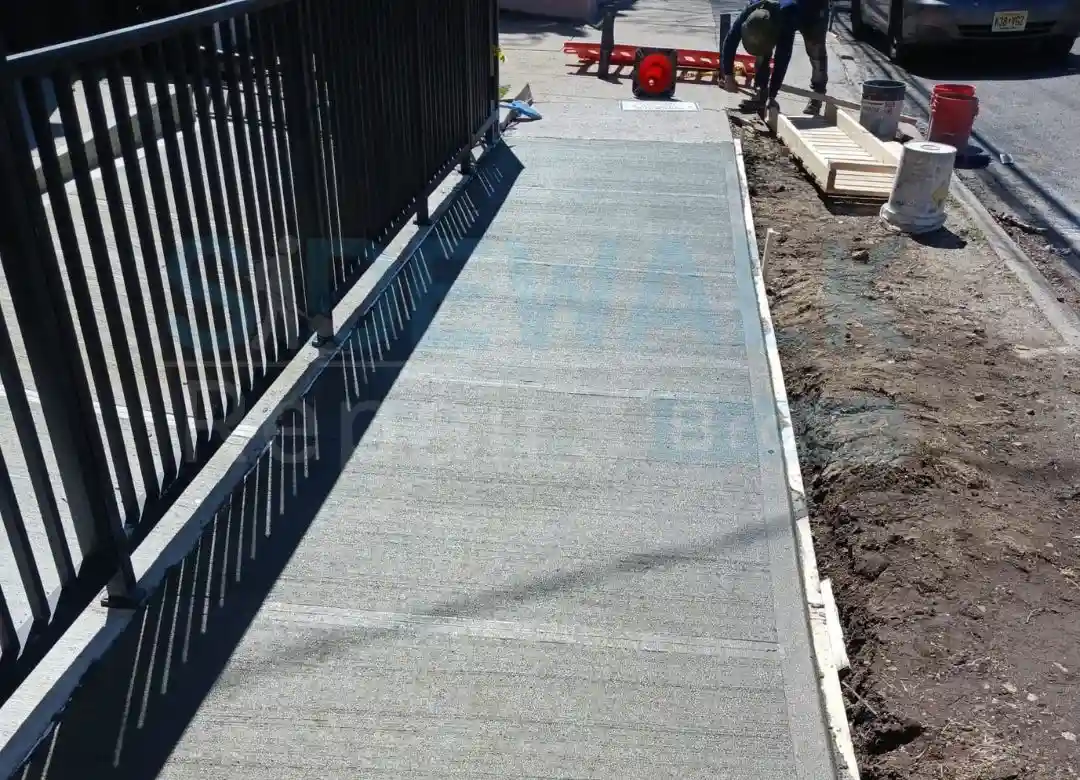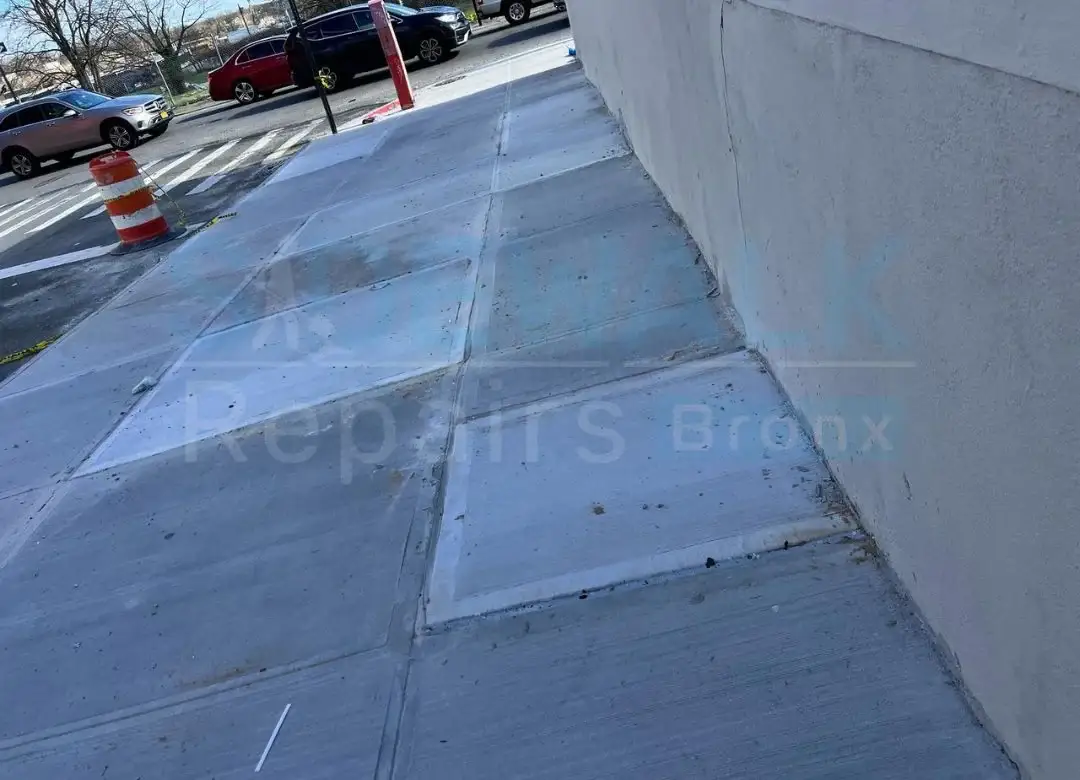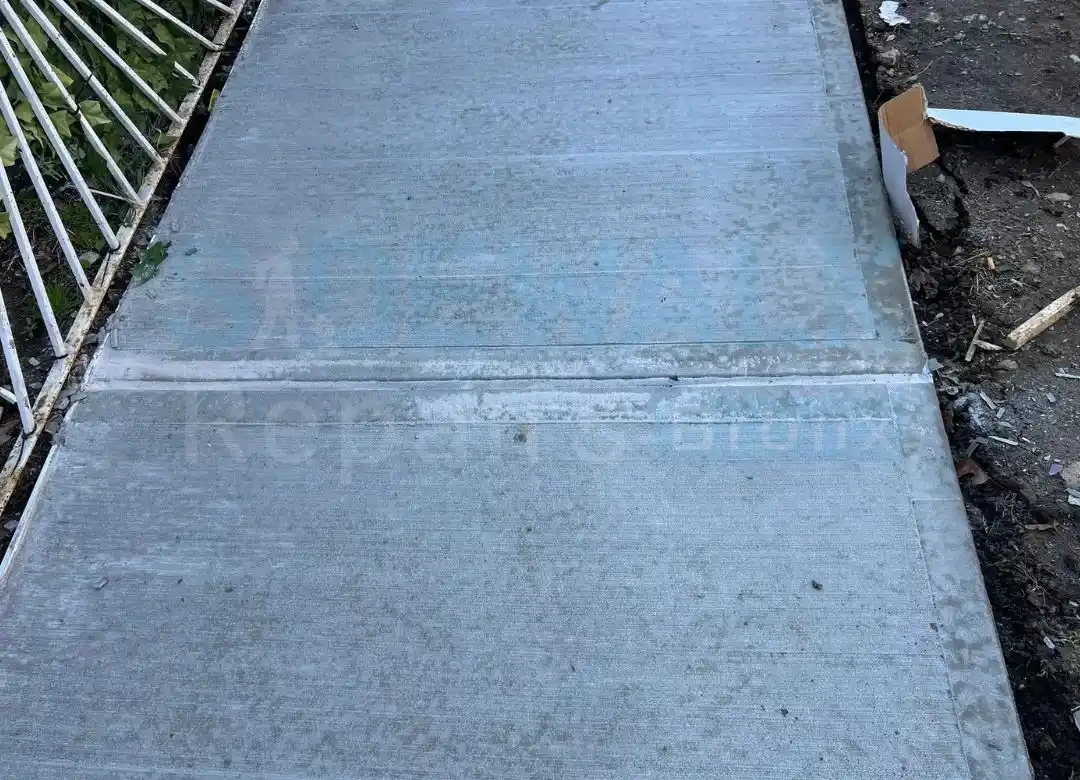
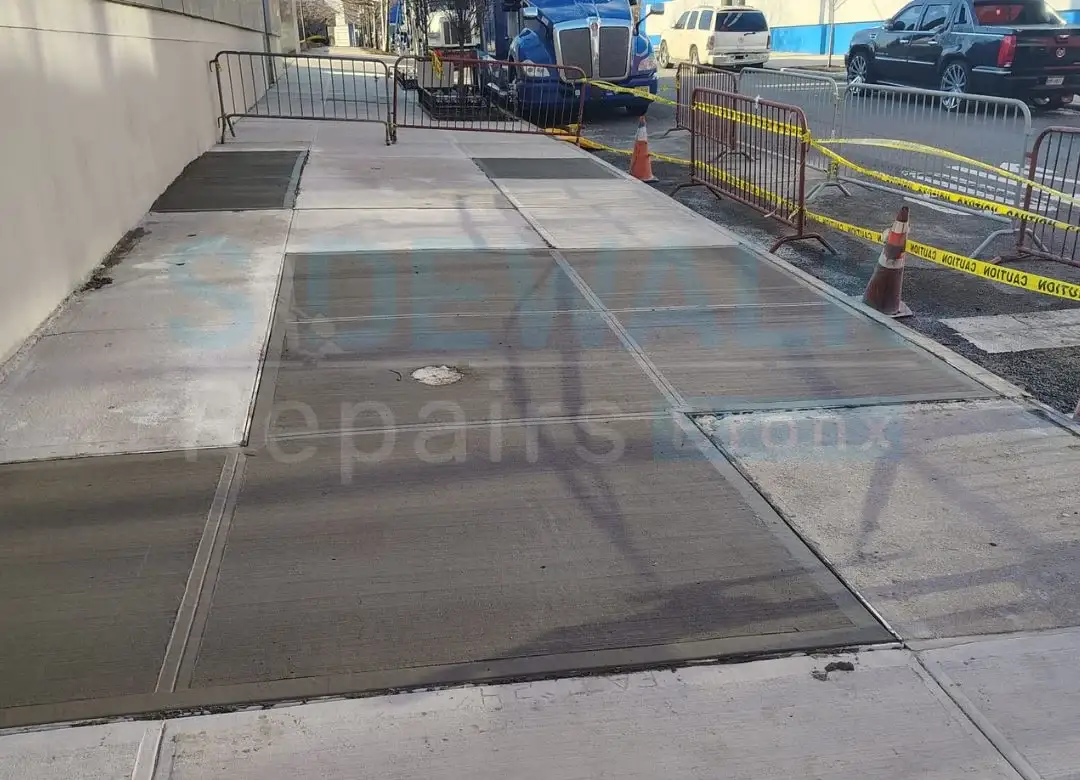
Most sidewalk cracks in the Bronx are cosmetic, but some are the first sign of a DOT violation. The difference is not how wide the crack is. It is whether the flag is loose, lifted or broken apart. This guide covers the 11 common crack types, what causes each one, and when NYC treats a crack as a defect. If a flag on your property is already failing, see our cracked sidewalk repair in the Bronx.
What Causes Sidewalk Cracks
Freeze-Thaw Cycles
Water seeps into small cracks and pores in the concrete. When it freezes, it expands and pushes the concrete apart. Every NYC winter repeats this cycle dozens of times, which is why a hairline crack in November can be a wide one by March.
Deicing Salt and Chemicals
Rock salt and other deicers speed up freeze-thaw damage and eat at the surface, causing flaking and scaling. See which de-icers are safe for concrete. Oil, fertilizer and cleaning chemicals soak into concrete over time and weaken it from the top down.
Tree Roots
Street tree roots grow toward moisture under the pavement. As they thicken, they lift and crack the flags above them. Many Bronx blocks have mature street trees, so root heave is one of the most common causes of lifted sidewalks in the borough.
Soil Settlement and Poor Drainage
When the ground under a sidewalk was not compacted properly, or water keeps washing soil away, the base sinks and the concrete cracks as it loses support. This often happens near utility lines where soil was dug up and not backfilled correctly.
Heavy Loads
Sidewalks are built for foot traffic. Dumpsters, trucks, moving pods and delivery vehicles put far more weight on a flag than it was designed for, especially when the soil below is soft after rain.
Sidewalk Crack Types at a Glance
| Crack type | What it looks like | Risk | Usual fix |
|---|---|---|---|
| Hairline | Very thin lines, often only visible when dirt settles in | Low | Monitor, seal if it widens |
| Crazing | Web of shallow lines, like cracked glass | Low | Surface sealer |
| Crusting | Flaky, brittle surface layer | Low | Surface sealer |
| Shrinkage | Random spiderweb cracks soon after pouring | Low | Seal to keep water and salt out |
| Re-entrant corner | Diagonal cracks from corners, poles or driveway edges | Low to medium | Seal; control joints on new pours |
| Overloading | Stress cracks where heavy weight sat | Medium | Check the base; replace if broken |
| Internal reinforcement | Cracks with rust stains or crumbling edges | Medium to high | Seal early; replace if spreading |
| Settlement | Long, deep cracks with a sunken section | Medium to high | Level or replace |
| Heaving | Slab pushed upward, often by roots or frost | High | Replace the flag |
| Structural | Deep crack through the slab, usually 1/4 inch or wider | High | Replace the flag |
| Shifted slab | Flags no longer line up, with gaps or height differences | High | Replace the flag |
Surface Cracks That Are Mostly Cosmetic
Hairline Cracks
Hairline cracks form as concrete finishes curing and the last moisture leaves the slab. They are not a structural problem at first. Watch them through the winter: once water gets in and freezes, a hairline crack can widen into a structural one. If it starts growing or holding water, seal it with a flexible concrete sealant.
Crazing Cracks
Crazing is a network of thin, shallow lines across the surface. It happens when the top of the concrete dries faster than the rest during curing, usually in hot or windy weather. It does not run deep, so a concrete sealer is enough to keep water and debris out.
Crusting Cracks
Crusting shows up as a flaky or brittle top layer, also caused by the surface drying too fast when the concrete was poured. It does not reduce strength but makes the surface look worn. Good contractors prevent it with curing compounds or covers during the pour.
Shrinkage Cracks
Shrinkage cracks appear soon after pouring, as water evaporates and the concrete shrinks unevenly. They rarely affect strength, but they let water and salt in, which leads to deeper freeze-thaw damage later. Keeping new concrete damp for at least the first week helps prevent them.
Cracks That Point to Movement or Damage Below
Settlement Cracks
Settlement cracks are long and deep, and one side of the slab often sits lower than the other. A crack that looks pinched at one end and wider at the other is a common warning sign. The cause is soil below the flag sinking or washing away.
Heaving Cracks
Heaving happens when something pushes the slab up. In the Bronx, the usual causes are frost and street tree roots. Heaving creates height differences between flags, and that is exactly the condition DOT inspectors measure. Our uneven sidewalk repair page explains how lifted flags are fixed.
Overloading Cracks
Overloading cracks form where something heavier than foot traffic sat on the flag, such as a dumpster or parked vehicle. The damage is worse when rain has softened the soil underneath. If the flag has broken into loose pieces, it needs replacement.
Re-Entrant Corner Cracks
These cracks run diagonally from corners, such as where the sidewalk meets a pole, post or driveway edge. Corners concentrate stress as concrete expands and shrinks. On new sidewalks, properly cut control joints guide cracking into straight, less visible lines. Learn more about expansion joints in concrete sidewalks.
Internal Reinforcement Cracks
Some sidewalks contain steel rebar or wire mesh. When water reaches the steel, it rusts and expands, pushing the concrete apart from the inside. Rust stains or crumbling along a crack are the warning signs. Sealing early can slow it, but once corrosion spreads, the flag has to be replaced.
Cracks That Need Replacement
Structural Cracks
Structural cracks run through the full depth of the slab and are usually 1/4 inch wide or more. Shifting soil, overloading and poor original construction are the common causes. They let in water that makes the damage worse every winter, and they often lead to loose pieces.
Shifted or Heavily Settled Slabs
When flags no longer line up, with one sitting higher or lower than the next, the crack has become a trip hazard. Erosion, plumbing leaks and poor drainage are typical causes. This is one of the most common conditions behind DOT sidewalk violations, and the fix is full sidewalk flag replacement.
When Does NYC DOT Cite a Cracked Sidewalk?
The Conditions DOT Treats as Substantial Defects
A crack alone is not a violation. Section 19-152 of the NYC Administrative Code and DOT's sidewalk rules list specific conditions that count as substantial defects:
- A flag cracked so badly that pieces can be loosened or removed
- A flag with a visible void underneath, or a loose flag that rocks
- A height difference of 1/2 inch or more between adjacent flags
- A surface hole at least 1 inch across in every direction and 1/2 inch deep
- Missing flags
- Improper slope, such as a flag that holds water instead of draining toward the curb
Why Crack Width Alone Doesn't Decide It
A wide crack in a flag that is still solid and level may never be cited. A narrow crack next to a 1/2 inch lift will be. What DOT measures is looseness, height difference and holes, not crack width. That is why heaving, settlement and shifted slabs are the crack types that most often turn into violations.
What Happens After a Violation
The owner has 75 days to make the repair. If the work is not done, the City can do it and bill the owner. The violation is filed with the County Clerk and stays open until DOT confirms the repair, which can complicate a sale or refinance. NYC rules also call for a defective flag to be fully replaced, so patching or sealing a cited flag will not clear the violation. If you already have a notice, see our sidewalk violation removal in the Bronx service and what happens if you ignore sidewalk repairs.
Tree Root Cracks in the Bronx
Owner-Occupied 1 to 3 Family Homes
Much of the East Bronx, including Throggs Neck, Morris Park and Van Nest, is made up of 1 and 2 family homes. If you live in a 1, 2 or 3 family home you own, it is not used commercially, and the damage comes only from a City street tree, DOT no longer issues violations for that damage. The NYC Parks Trees and Sidewalks Program can repair it, but funding is limited and repairs are ranked by severity, so many owners choose to hire a contractor sooner. In that case, you can file a claim with the NYC Comptroller within 90 days of the repair.
Apartment Buildings, Co-ops and Commercial Properties
Apartment buildings along corridors like the Grand Concourse and Pelham Parkway, co-ops and commercial properties do not qualify for the Parks program. Their owners are responsible for tree root damage like any other defect, and DOT can cite it. Our tree root sidewalk repair in the Bronx covers permits and repairs around City trees.
Why Roots Can't Just Be Cut
Street trees belong to the City. Any sidewalk repair near a City tree needs a NYC Parks Tree Work Permit on top of the DOT sidewalk permit, and roots cannot be cut or removed without Parks approval. A Parks inspector can recommend repair methods that work around the tree.
How to Handle Sidewalk Cracks
Inspect Twice a Year
Walk your sidewalk in spring and late fall. Look for new cracks, lifted edges, loose pieces and any spot where one flag sits higher than the next.
Seal Cosmetic Cracks Early
A flexible concrete sealant keeps water and salt out of hairline, crazing and shrinkage cracks before winter widens them.
Fix Drainage Around the Sidewalk
Point downspouts away from the sidewalk and keep nearby soil graded so water drains off instead of washing out the base.
Measure Height Differences
If two flags differ by 1/2 inch or more, treat it as a defect even if no inspector has come yet. That is also the kind of condition that leads to trip-and-fall claims on Bronx sidewalks.
Call a Contractor for Movement Cracks
Settlement, heaving, structural and shifted slab cracks need a professional repair. A contractor doing sidewalk work must be registered with DOT and pull the permit.
Get Your Cracked Sidewalk Checked
Not sure whether a crack on your property is cosmetic or a violation waiting to happen? Our team inspects Bronx sidewalks, measures lifts and loose flags against DOT standards, and tells you whether you need sealing, leveling or a full flag replacement. Contact us for a free estimate.
Sidewalk Crack FAQs
Does NYC give violations for cracked sidewalks?
Only when the crack creates a substantial defect. That means a flag broken into loose pieces, a lift of 1/2 inch or more between flags, a void or rocking flag, or a hole at least 1 inch across and 1/2 inch deep.
How wide does a crack have to be to get a DOT violation?
There is no crack width rule. DOT looks at whether the flag is loose, lifted, undermined or has holes. A wide crack in a solid, level flag may never be cited.
Can I patch a cracked flag to clear a DOT violation?
No. NYC rules call for a defective flag to be fully replaced, so a patch or sealant will not pass the dismissal inspection.
Are hairline cracks in a sidewalk a problem?
Usually not at first. Hairline cracks are cosmetic, but water can freeze inside them and widen them, so seal any that start growing.
Who pays for tree root damage to a Bronx sidewalk?
It depends on the property. Owner-occupied 1 to 3 family homes not used commercially may qualify for the NYC Parks Trees and Sidewalks Program, while apartment buildings, co-ops and commercial owners pay for repairs themselves.
Can I cut the tree roots under my sidewalk?
No. Street trees are City property, and roots cannot be cut without NYC Parks approval. Repairs near a City tree need a Parks Tree Work Permit.
How long do I have to fix a sidewalk violation in NYC?
75 days. The clock starts when you receive the notice by certified mail, or when it is posted on the property.
What happens if I ignore a sidewalk violation?
The City can make the repair and bill you. The violation stays on file with the County Clerk until the repair is confirmed, which can delay a sale or refinance.
Do I need a permit to repair a cracked sidewalk?
Yes. A DOT sidewalk permit must be in place before repair work starts, including any repair made to remove a violation. If a contractor does the work, the contractor must be DOT-registered and pull the permit. See our guide to NYC sidewalk permit requirements.