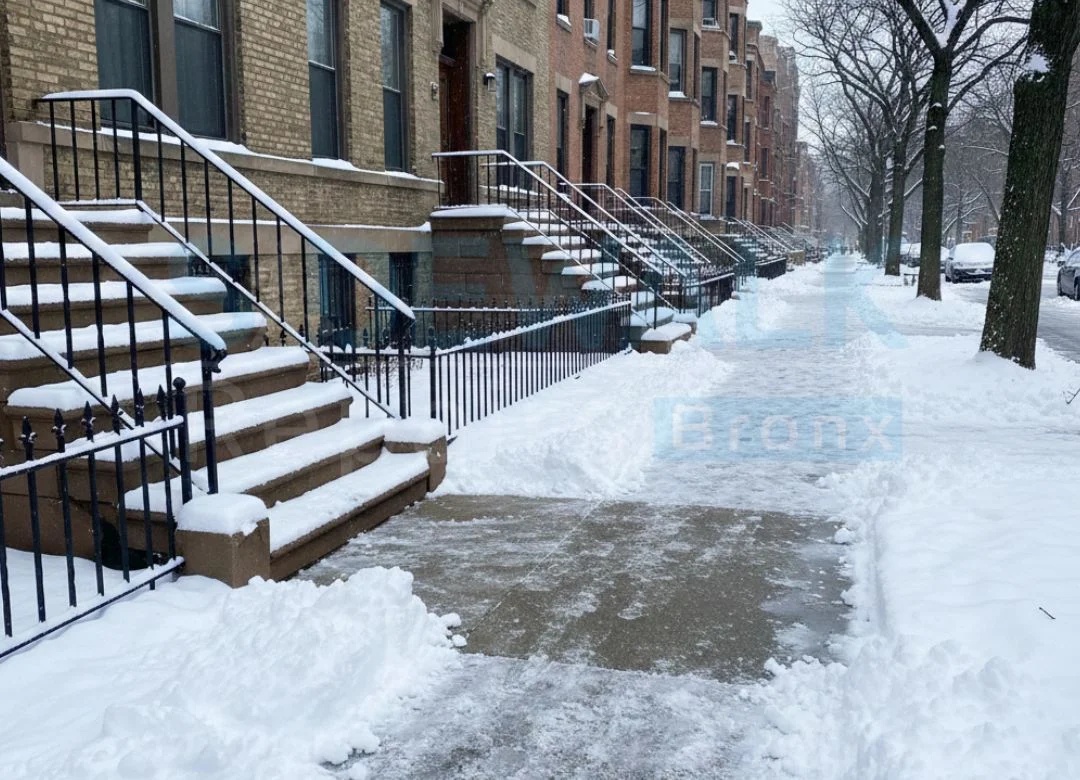
When snow hits New York City, everything slows down. The sidewalks get slippery, the streets get messy, and suddenly everyone is bundled up trying not to fall. If you’re a tenant, you’ve probably wondered: “Do I have to shovel the snow… or is that my landlord’s job?”
It’s a fair question, and luckily the NYC rules make it pretty clear. Let’s break it down so you always know what’s expected when winter arrives.
Who Is Responsible for Clearing Snow and Ice From Sidewalks?
According to NYC law, snow and ice removal isn’t just a nice thing to do, it’s required. The Section (16-123) says every owner, lessee, tenant, occupant, or anyone in charge of a property must clear the sidewalk next to their building. That includes the front, side, and even the back if a sidewalk runs behind the property.
But here’s the important part:
In most rental situations, the landlord or property owner is the one “in charge”, which means they are usually responsible for snow removal unless your lease says otherwise.
If your lease clearly states that you, the tenant, must shovel snow in front of your property, then you are responsible. If it doesn’t, the responsibility almost always falls on the property owners or building management.
The Department of Sanitation will clear the snow if you failed to remove it from your sidewalk and the cost will be added to the property tax for the next fiscal year. The city might sue you to recover the cost.
How Much Time Do You Have to Clear the Sidewalk?
NYC gives a specific time window for cleaning snow once it stops falling. Here’s the rule in easy-to-understand terms:
- If snow stops between 7:00 a.m. and 4:49 p.m.
You have 4 hours to clear it. - If snow stops between 5:00 p.m. and 8:59 p.m.
You have 14 hours to clear it. - If snow stops between 9:00 p.m. and 6:59 a.m.
You must clean it by 11:00 a.m. the next morning.
So, if the snow ends at 7 p.m, the sidewalk must be clean by 9 a.m. the following day.
For tenants, this timeline usually applies to the landlord or management, unless your lease specifically makes you responsible.
How Should Snow Be Cleared Safely?
Whether you’re a tenant or an owner, the rules for clearing snow are the same:
- Clear the sidewalk next to your property without pushing snow into the street.
- Clear around fire hydrants so firefighters can reach them during emergencies.
- Keep crosswalks, corners, and ramps open so people with strollers or wheelchairs can pass.
- Make a path at least four feet wide so people can walk safely.
- Spread ice melt, salt, or sand to improve traction and prevent slipping.
If your building is on a corner, you must also clear from the sidewalk to the crosswalk.
Are Tenants Ever Responsible for Snow Shoveling?
Yes, but only in certain situations:
1. If Your Lease Says You Must Shovel Snow
Some leases, especially for basement apartments, private homes, or small multi-family buildings give the tenant responsibility for snow removal. In that case, it becomes your job.
2. Private Streets or Shared Areas
If you live on a private street with a homeowner association (HOA), the residents may share snow-removal duties. The HOA usually forms a plan before winter starts.
3. Small Buildings
In two-family or three-family homes, sometimes the tenant living on the ground floor agrees to handle shoveling in exchange for lower rent. Again, this must be stated in writing to be enforceable.
If your lease says nothing about it, then the landlord or owner is responsible, not you.
Who Clears Fire Hydrants and Catch Basins?
NYC rules say the person in charge of the adjoining property must clear fire hydrants. They must be free of ice, snow, or anything else blocking access.
Catch basins (street drains) don’t have a rule requiring you to clear them, but keeping them open helps meltwater drain away so sidewalks don't flood or freeze over later.
Most blocks handle this together since it benefits everyone.
What Happens If Snow Isn’t Cleared?
If a sidewalk stays snowy or icy past the allowed time, the city can issue fines:
- $100–$150 for the first offense
- $150–$350 for the second
- $250–$350 for the third and later offenses
This is another reason landlords usually handle snow removal, they don’t want repeated fines.
If a property near you doesn’t clear the sidewalk, you can report it to NYC 311.
What to Do About the Damage After Snow Removal
Snow removal might keep your sidewalk walkable, but it can also reveal, or even create cracks, chips, and loose edges. The tricky part is that winter isn’t the season for full sidewalk repairs. The city actually pauses final restoration during the winter because cold temperatures stop concrete from curing correctly. If concrete freezes before it sets, it weakens almost instantly, and no one wants a brand-new repair turning into a brand-new problem.
So what can you do in the meantime?
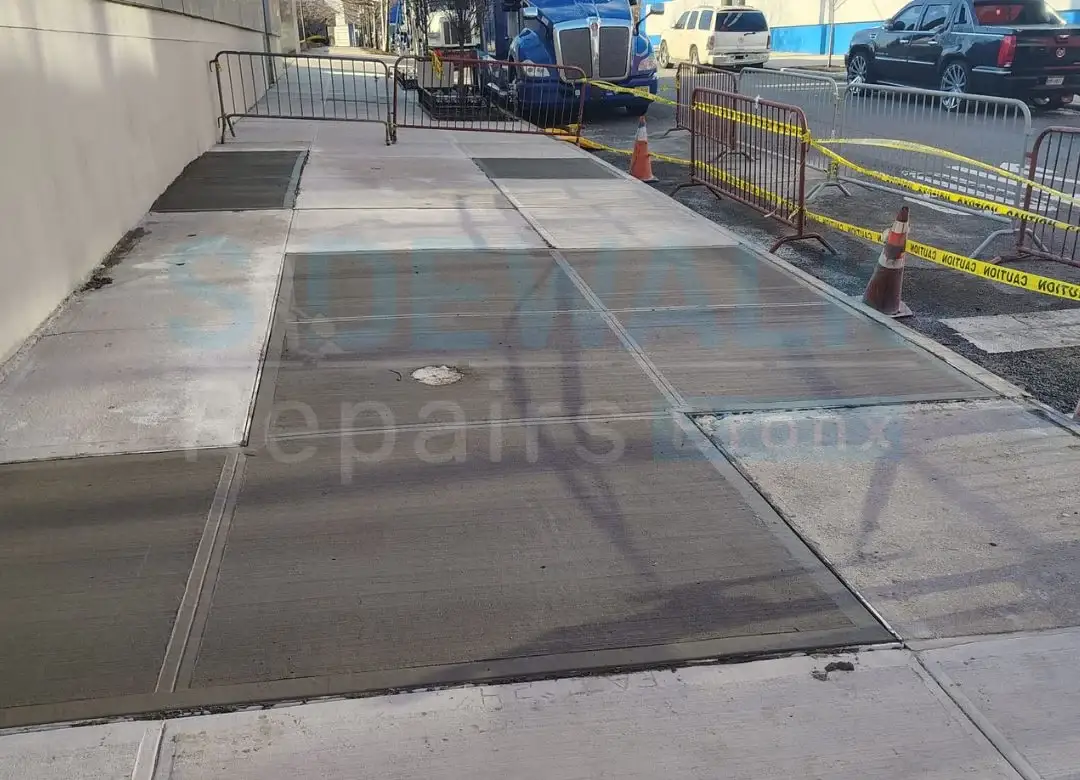
The simple answer is: you can prepare the site, but you can’t finish the repair. Winter is more of a holding period. You can secure the area, keep it safe for pedestrians, and make sure your permits stay active. You can also cover the damaged sections with countersunk steel plates and proper signage, which keeps you compliant and protects your property from violations.
If you already received a DOT violation or you know your sidewalk needs a full rebuild, the smartest move is to plan ahead. Schedule your repair work before winter ends so your project gets handled as soon as temperatures rise. Hiring a licensed and insured contractor like Sidewalk Repair Contractors Bronx early will place you at the front of the line for spring restorations.
Until the weather warms up, we take care of everything from DOT permits and safety measures to plate installation, and site protection. Then, once spring hits and the temperature stays above freezing, we return to complete the repair properly and make sure your sidewalk is strong, durable, and built to last.
Conclusion
Most of the time, no, the landlord or building owner is responsible. But if your lease clearly says that you must handle snow removal, then yes, it becomes your job.
Winter can be tough in every borough of NYC, but staying safe starts with knowing the rules and having a clear plan. If you’re unsure, check your lease, talk to your landlord, and keep the walkways clear for everyone.
If you need sidewalk restoration once you remove the snow to maintain safe and compliant walkways and avoid violations, contact our team today. We are here to maintain the safety and compliance of your sidewalks until the city allows final restoration in spring.